



Car maintenance Skoda Yeti

Vehicle settings and maintenance — specifications
Types and volumes of lubricants and fluids used Note: The fuel type is indicated on the sticker located on the back of the fuel filler cap. Fuel type Petrol models¹ — Unleaded petrol according to DIN EN228...
Types and volumes of lubricants and fluids used Note: The fuel type is indicated on the sticker located on the back of the fuel filler cap. Fuel type Petrol models¹ — Unleaded petrol according to DIN EN228...

General information about maintenance
This chapter has been compiled to help the car owner maintain his vehicle in a state of maximum readiness for operation, obtaining effective output from it while meeting the requirements for economy and safety. The...
This chapter has been compiled to help the car owner maintain his vehicle in a state of maximum readiness for operation, obtaining effective output from it while meeting the requirements for economy and safety. The...
General information about settings and adjustments
In this Manual, "settings" do not mean a single procedure for adjusting any of the parameters of a vehicle's systems, but a whole range of adjustments that allow you to achieve maximum efficiency. If the owner of a new...
In this Manual, "settings" do not mean a single procedure for adjusting any of the parameters of a vehicle's systems, but a whole range of adjustments that allow you to achieve maximum efficiency. If the owner of a new...
Schedule of current maintenance
Maintenance intervals depend on the PR number variant indicated in the lower left corner of the vehicle data sticker (see illustrations 2a-b of the Introduction). The number "QG1" indicates extended interval servicing...
Maintenance intervals depend on the PR number variant indicated in the lower left corner of the vehicle data sticker (see illustrations 2a-b of the Introduction). The number "QG1" indicates extended interval servicing...

Checking fluid levels, leak control
Note: Regardless of the inspection intervals according to the maintenance schedule ( see Section 3 ), do not allow fluids to leak under the vehicle - such leaks indicate a malfunction that should be corrected...
Note: Regardless of the inspection intervals according to the maintenance schedule ( see Section 3 ), do not allow fluids to leak under the vehicle - such leaks indicate a malfunction that should be corrected...
Checking the condition and replacing hoses and tubes in the engine compartment, localizing leaks
Caution: Replacement of the air conditioning system refrigerant lines must be performed at a service station or workshop with equipment for safely relieving pressure in this system. Never disconnect refrigerant lines or...
Caution: Replacement of the air conditioning system refrigerant lines must be performed at a service station or workshop with equipment for safely relieving pressure in this system. Never disconnect refrigerant lines or...
Changing engine oil and oil filter
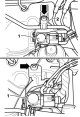
Caution: Long-term skin contact with used engine oil can be quite hazardous to health. Use barrier cream or wear rubber gloves when performing the procedures described below. Note: Frequent engine oil changes are the...
Caution: Long-term skin contact with used engine oil can be quite hazardous to health. Use barrier cream or wear rubber gloves when performing the procedures described below. Note: Frequent engine oil changes are the...

Servicing windshield wipers and washer fluid nozzles
Note: If the wash pattern is uneven due to dirty nozzles, remove them, rinse them in the opposite direction, and then blow them out with compressed air in the opposite direction. Do not use any objects to clean the...
Note: If the wash pattern is uneven due to dirty nozzles, remove them, rinse them in the opposite direction, and then blow them out with compressed air in the opposite direction. Do not use any objects to clean the...

Checking the brake system and clutch
Caution: Dust from brake lining wear that accumulates on brake components may contain asbestos, which is hazardous to health. Do not blow out this dust with compressed air or inhale it! Do not use gasoline-based...
Caution: Dust from brake lining wear that accumulates on brake components may contain asbestos, which is hazardous to health. Do not blow out this dust with compressed air or inhale it! Do not use gasoline-based...

Replacement of brake fluid, bleeding of the brake system and clutch hydraulic drive
Caution: Contact with brake fluid is hazardous to health. Do not suck it out with your mouth through a hose. Store brake fluid only in a container that is out of the reach of children. 1. Brake fluid has the ability to...
Caution: Contact with brake fluid is hazardous to health. Do not suck it out with your mouth through a hose. Store brake fluid only in a container that is out of the reach of children. 1. Brake fluid has the ability to...

Checking the condition of suspension and steering components
Note: Steering and suspension components should be inspected regularly as wear can cause excessive and dangerous tire wear, poor ride and handling, and increased fuel consumption. For more detailed information on...
Note: Steering and suspension components should be inspected regularly as wear can cause excessive and dangerous tire wear, poor ride and handling, and increased fuel consumption. For more detailed information on...

Checking the condition of the CV joint boots of the drive shafts
1. Drive shaft boots are very important elements, as they protect constant velocity joints (CV joints) from dirt, water and other foreign bodies that cause damage. External contamination of the anthers with oil and...
1. Drive shaft boots are very important elements, as they protect constant velocity joints (CV joints) from dirt, water and other foreign bodies that cause damage. External contamination of the anthers with oil and...

Checking the condition of the tires and their inflation pressure
Note: The tires and rims suitable for use on your vehicle, as well as the tire inflation pressure, are indicated on the sticker located on the driver's side B-pillar. 1. For sporty driving, it is recommended to increase...
Note: The tires and rims suitable for use on your vehicle, as well as the tire inflation pressure, are indicated on the sticker located on the driver's side B-pillar. 1. For sporty driving, it is recommended to increase...
Checking the condition of the exhaust system
Note: Additional information on the exhaust system is provided in Chapter 4 . 1. The check should be carried out with a cold engine, so it is better to do it before the first trip of the day or no earlier than three...
Note: Additional information on the exhaust system is provided in Chapter 4 . 1. The check should be carried out with a cold engine, so it is better to do it before the first trip of the day or no earlier than three...
Replacing spark plugs in gasoline engines
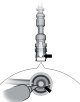
Caution: Spark plugs should only be replaced when the engine is cold or slightly warm. Removing spark plugs on a hot engine can damage the threads in the cylinder head. 1. Spark plug installation details are given in...
Caution: Spark plugs should only be replaced when the engine is cold or slightly warm. Removing spark plugs on a hot engine can damage the threads in the cylinder head. 1. Spark plug installation details are given in...

Replacing the cabin filter of the climate control system
Note: The cabin filter is located in the front passenger footwell. 1. Remove the two plastic screws (2 in the illustration) and remove the shield (1) of the climate control unit. 15.1. Removing the climate control unit...
Note: The cabin filter is located in the front passenger footwell. 1. Remove the two plastic screws (2 in the illustration) and remove the shield (1) of the climate control unit. 15.1. Removing the climate control unit...
Replacing the air cleaner filter element
1. The air cleaner is located in the front left part of the engine compartment ( 7 in the illustrations of Section 1 ). The details of the installation of the air cleaner and its components are given in Section 4...
1. The air cleaner is located in the front left part of the engine compartment ( 7 in the illustrations of Section 1 ). The details of the installation of the air cleaner and its components are given in Section 4...

Checking and caring for your battery
Note: Please also refer to the materials Chapters 5 . The battery is located on the left side of the engine compartment ( 6 in the illustrations of Section 1 ). Caution: Certain safety precautions must be taken when...
Note: Please also refer to the materials Chapters 5 . The battery is located on the left side of the engine compartment ( 6 in the illustrations of Section 1 ). Caution: Certain safety precautions must be taken when...

Checking the condition of drive belts
Note: Replacement of the accessory drive belt and timing belt is described in Chapter 2 . 1. Belt tension is adjusted by automatic tensioners. However, the tension should be checked periodically along with the condition...
Note: Replacement of the accessory drive belt and timing belt is described in Chapter 2 . 1. Belt tension is adjusted by automatic tensioners. However, the tension should be checked periodically along with the condition...
Top hatch maintenance
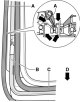
1. When sliding and raising/lowering the top hatch cover, pay attention to the absence of excessive noise and dirt. If there are any, open the top hatch and follow these steps. 2. Clean the guides under the outer seal...
1. When sliding and raising/lowering the top hatch cover, pay attention to the absence of excessive noise and dirt. If there are any, open the top hatch and follow these steps. 2. Clean the guides under the outer seal...
Conducting a road check
1. During the test drive, perform the following checks. 2. For the engine: power, misfires, idle speed, acceleration, hot start behavior. 3. For the clutch: clutch slippage, pedal resistance, smell. 4. For gear...
1. During the test drive, perform the following checks. 2. For the engine: power, misfires, idle speed, acceleration, hot start behavior. 3. For the clutch: clutch slippage, pedal resistance, smell. 4. For gear...

6-speed DSG fluid and filter replacement
1. Set the selector lever to position "P", turn off the engine. 2. Connect the diagnostic tool to the diagnostic connector ( see Chapter 5 ) and use it to make sure that the DSG fluid temperature is no more than 35°C....
1. Set the selector lever to position "P", turn off the engine. 2. Connect the diagnostic tool to the diagnostic connector ( see Chapter 5 ) and use it to make sure that the DSG fluid temperature is no more than 35°C....
Haldex Clutch Fluid Replacement
1. The Haldex clutch and rear differential have separate oil circuits. Don't confuse the plugs ( see illustration 4.41d ), so as not to accidentally fill with the wrong liquid. 2. Jack up the car horizontally and place...
1. The Haldex clutch and rear differential have separate oil circuits. Don't confuse the plugs ( see illustration 4.41d ), so as not to accidentally fill with the wrong liquid. 2. Jack up the car horizontally and place...
Replacing the fuel filter of diesel models
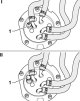
Caution: Do not allow diesel fuel to come into contact with engine compartment components. 1. Loosen the drain plug (1-1 in the illustration, upper part) or unscrew it completely (11-1). Put a transparent hose with a...
Caution: Do not allow diesel fuel to come into contact with engine compartment components. 1. Loosen the drain plug (1-1 in the illustration, upper part) or unscrew it completely (11-1). Put a transparent hose with a...
This section is available on russian, bulgarian, belarusian, ukrainian, serbian, croatian, romanian, polish, slovak, hungarian
Read similar sections on other Skoda models
➧ General information: Maintenance Skoda Fabia 2 (2007-2014)
➧ General information: Maintenance and care Skoda Rapid 1 (2012-2022)
➧ General information: Maintenance Skoda Octavia 3 (2013-2019)
➧ General information: Maintenance Skoda Superb 2 (2008-2015)
➧ General information: Maintenance Skoda Kodiaq 1 (2016-2024)
➧ General information: Maintenance Skoda Favorit (1987-1994)
Link to this section in various formats
TEXTHTMLBB Code
- General information
- Introduction to manual
- Controls and instruments
- Maintenance
- Power unit
- Petrol engine 1.2 l
- Petrol engine 1.4 l
- Petrol engine 1.8 l
- Diesel engine 2.0 l
- Cooling system
- Power and control system
- Exhaust system
- Ignition and preheating systems
- Starting and charging system
- Transmission
- Clutch
- Manual gearbox
- 7-speed gearbox DSG «0AM»
- 6-speed gearbox DSG «02E»
- Drive shafts
- Chassis (running gear)
- Brake system
- Front suspension
- Rear suspension
- Steering
- Body and interior
- Heating and air conditioning
- Exterior (external elements)
- Interior (internal elements)
- Electrical equipment
- Equipment and devices
- Lighting and signaling
- Electrical diagrams