



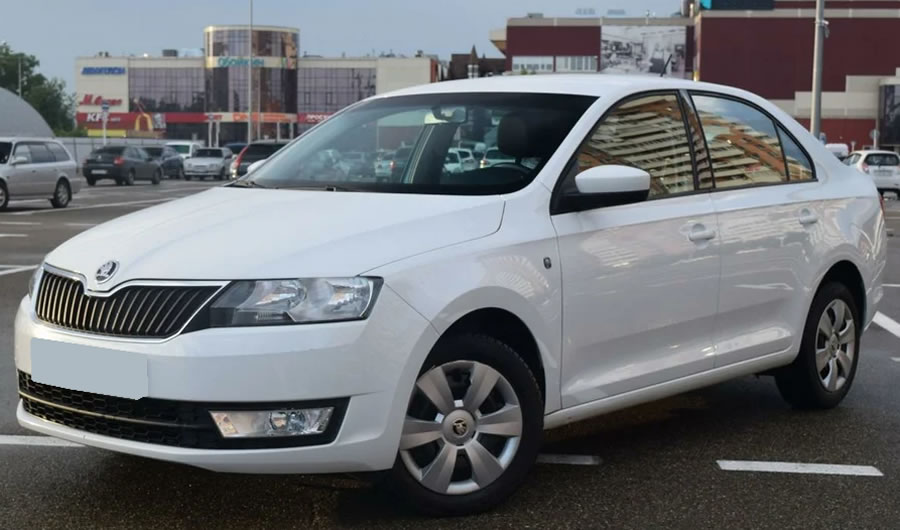
Rapid, 2015 year, liftback
Today, the main competitors and classmates of the Skoda Rapid are the following cars: VAZ-2107, Chery Bonus, Chevrolet Aveo, Daewoo Nexia, Ford Focus, Honda Civic, Hyundai Solaris, KIA Rio, Lada Vesta, Lifan Solano, Mitsubishi Colt, Nissan Almera, Opel Astra, Peugeot 301 (2012), Renault Sandero, Renault Logan, SEAT Ibiza, Toyota Yaris, Volkswagen Polo and ZAZ Chance.
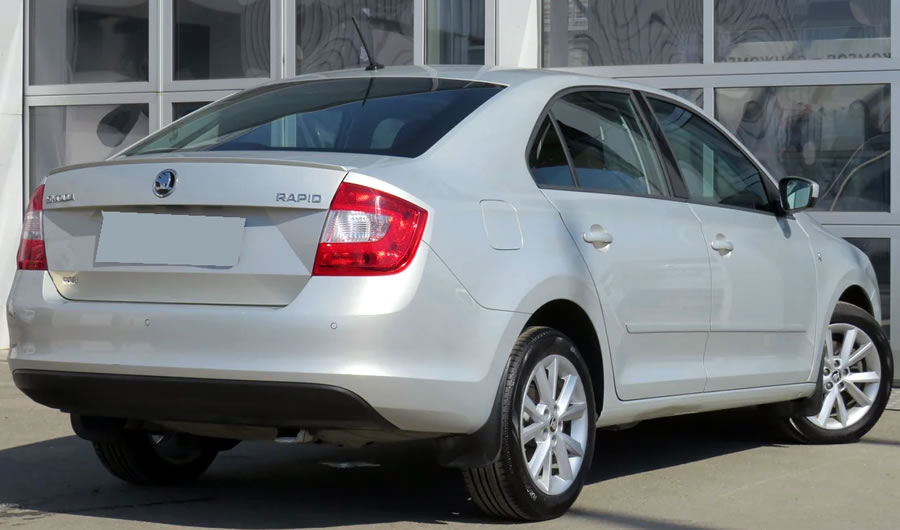
Rapid, 2014 year, back view
Five-door hatchback (NH1) with the name "Rapid Spaceback" was shown at the Frankfurt Motor Show in September 2013 and sales began immediately. The length of the car was 4304 mm, the width was 1706 mm, the height was 1459 mm, the wheelbase was 2602 mm and the unladen weight was 1155 kg. The volume of the luggage compartment was from 415 to 1380 liters, depending on whether the rear seat was folded.
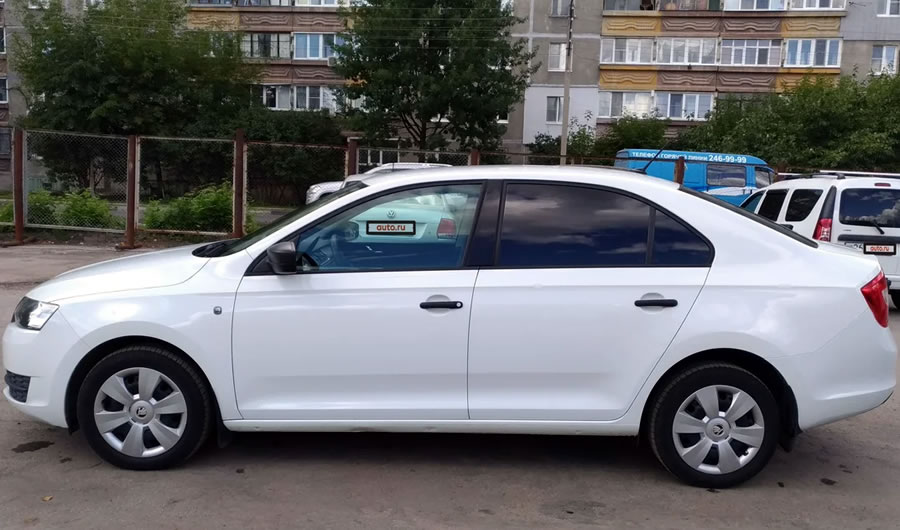
Rapid, 2016 year, side view
The range of petrol engines installed on the Rapida included the following models:
- 1.0 liter (999 cm³, I3, TSI, 12V, DOHC, turbo, 94/109 hp)
- 1.2 liters (1198 cm³, I3, CGPC, MPI, 12V, DOHC, 74 hp)
- 1.2 liters (1197 cm³, I4, CBZA/CBZB, TSI, 8V, SOHC, turbo, 85/103 hp)
- 1.2 liters (1197 cm³, I4, CJZC/CJZD, TSI, 16V, DOHC, turbo, 89/108 hp)
- 1.4 liters (1390 cm³, I4, CAXA, TSI, 16V, DOHC, turbo, 121 hp)
- 1.4 liters (1390 cm³, I4, CZEA, TSI, 16V, DOHC, turbo, 123 hp)
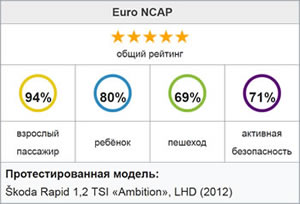
The 2012 model was crash tested by the European committee "Euro NCAP" and received the maximum five stars, more detailed results are shown in the table.
The car was updated in 2017. It received modified headlights and a mask that can be equipped with bi-xenon headlights with LED backlighting. Driver assistance systems were added, and the dashboard was slightly modified in the cabin.
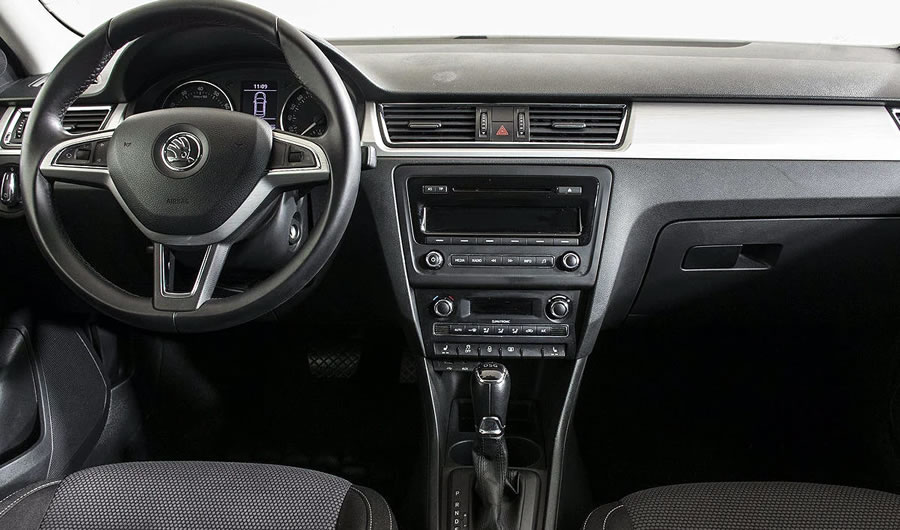 Rapid, 2013 year, interior | 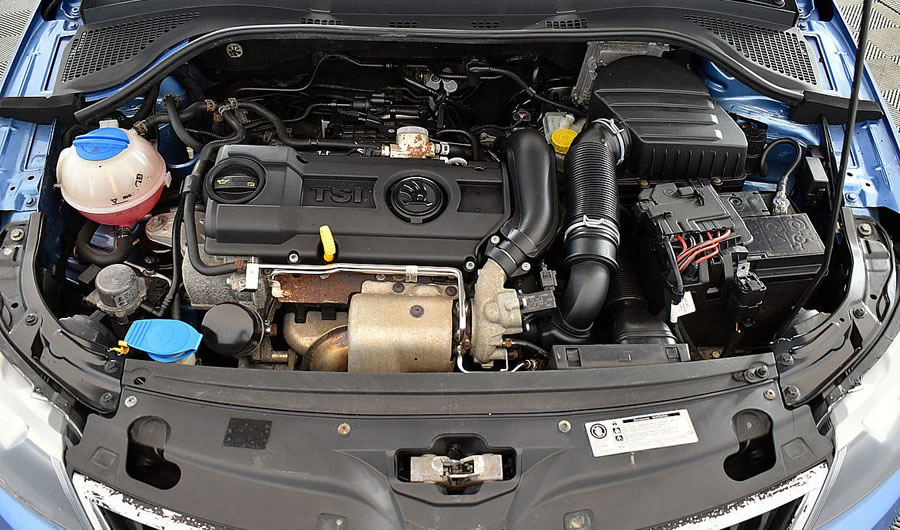 Rapid, 2014 year, engine | 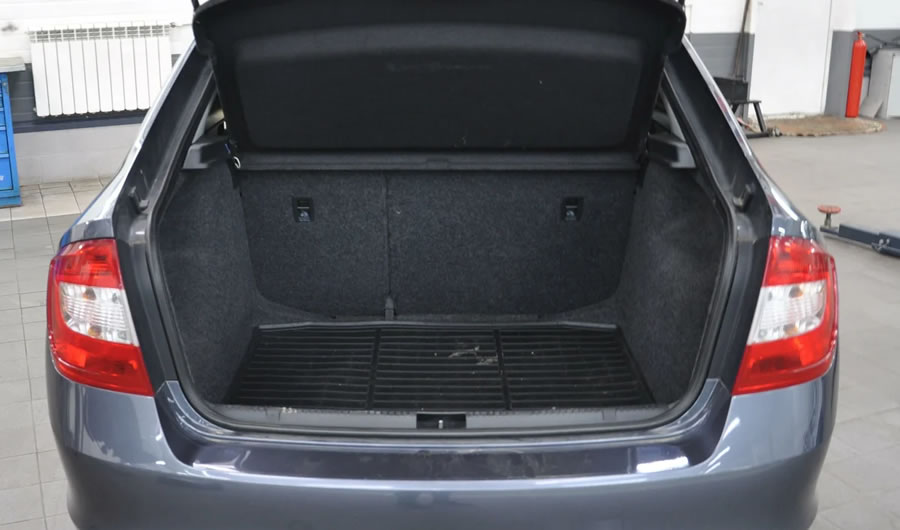 Rapid, 2012 year, trunk |
Skoda Scala (2019-present)
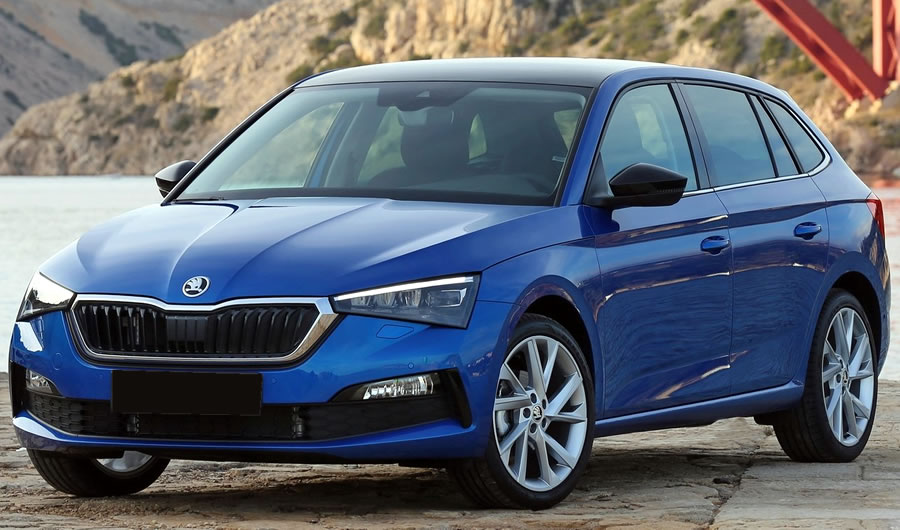
Scala, 2019 year, hatchback
"Scala" means "ladder" in Latin and represents a major step forward in the compact car segment, according to the carmaker. The name was already used for a small car "Renault Scala" (2012-2017 years) and a Serbian car "Zastava Skala" (1971-2008 years).
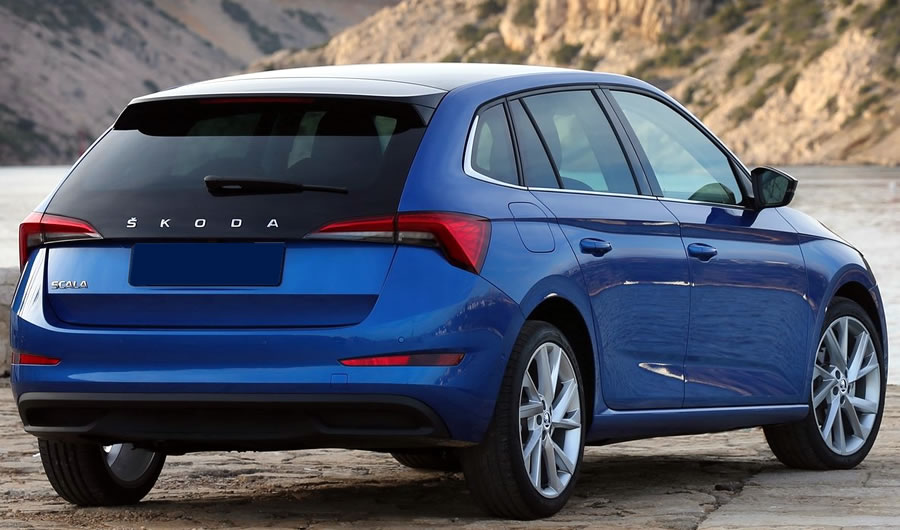
Scala, 2019 year, back view
Petrol engines were installed with the following characteristics: 1.0 liter (999 cm³, I3, TSI, 12V, turbo, 94/114 hp) and 1.5 liters (1498 cm³, I4, TSI, 16V, turbo, 148 hp). There was one diesel engine with a capacity of 1.6 liters (1598 cm³, I4, TDI, 16V, turbo, 114 hp). A 1.0 liter natural gas engine was also installed (999 cm³, I3, G-Tec, 12V, 90 hp). The transmission is a five- or six-speed manual, as well as a seven-speed automatic robotic (DSG).
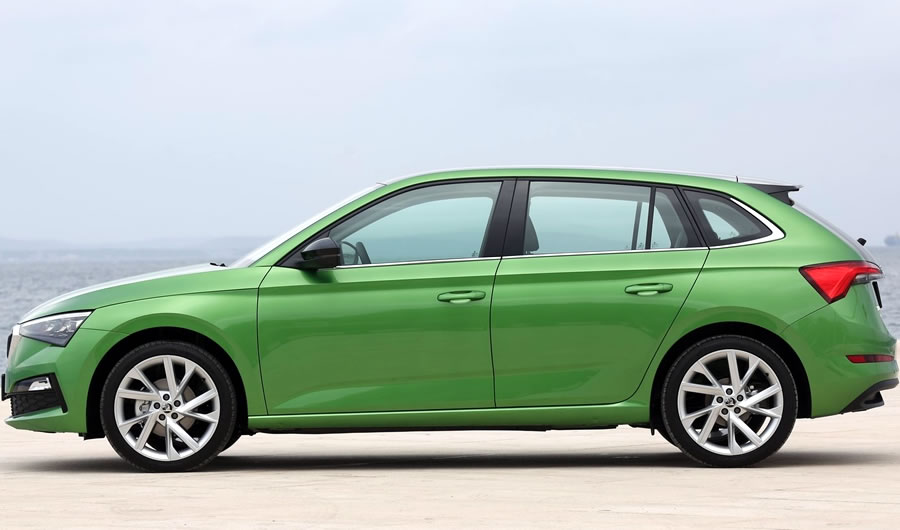 Scala, 2019 year, side view | 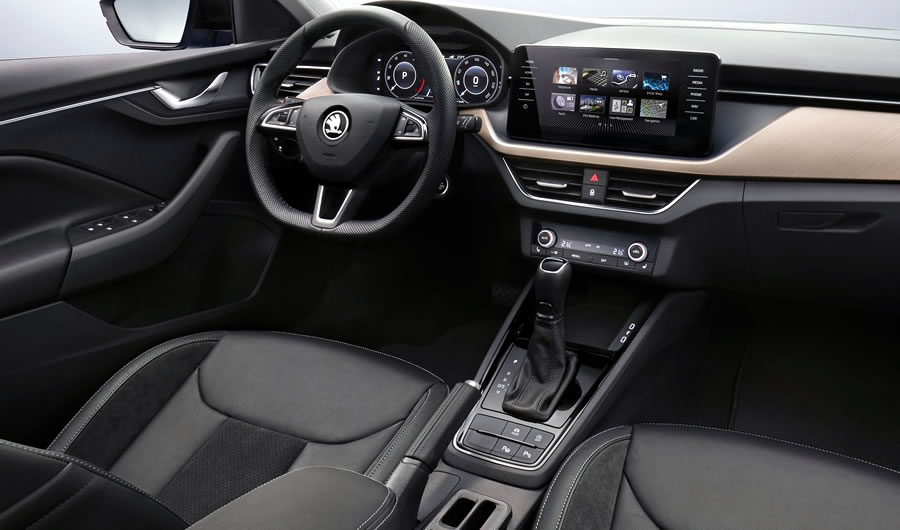 Scala, 2019 year, interior | 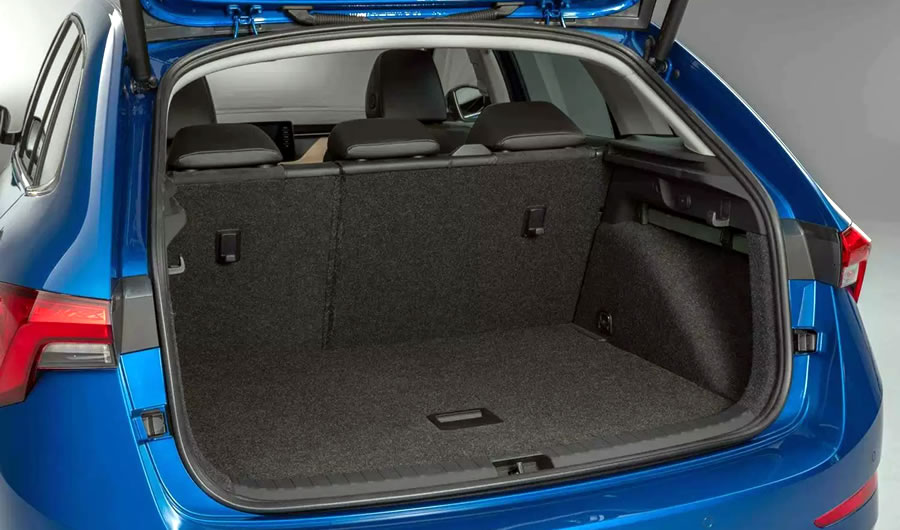 Scala, 2019 year, trunk |