Skoda Favorite (1987-1995)
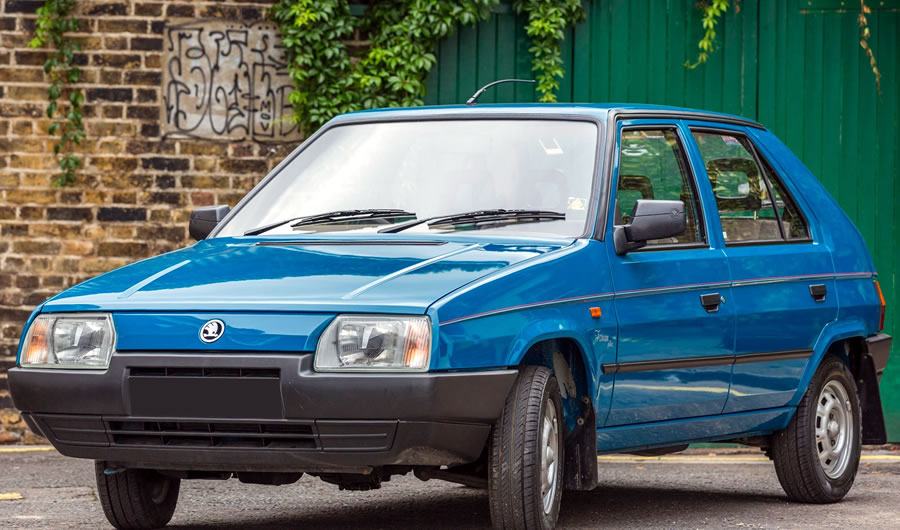
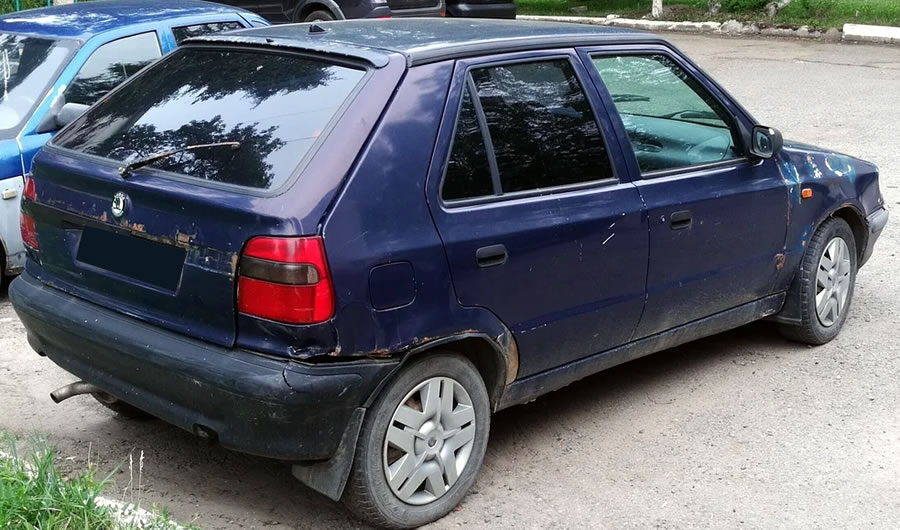
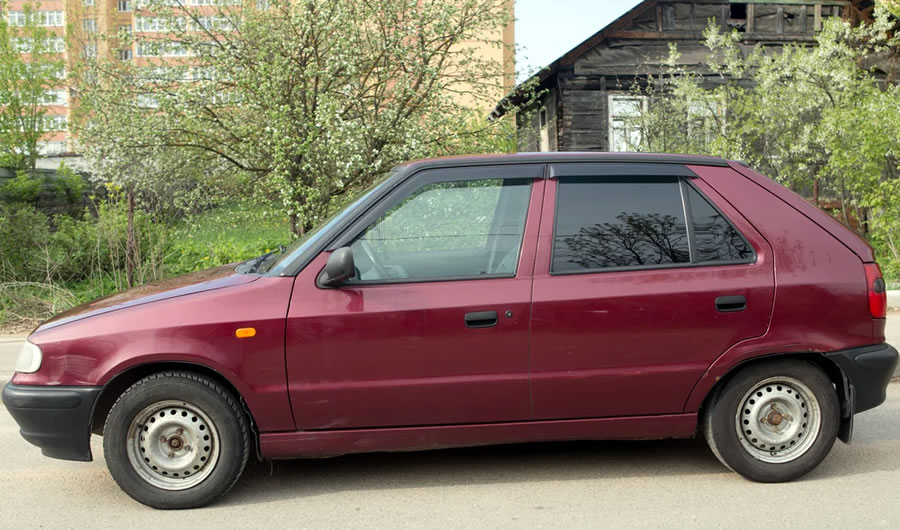
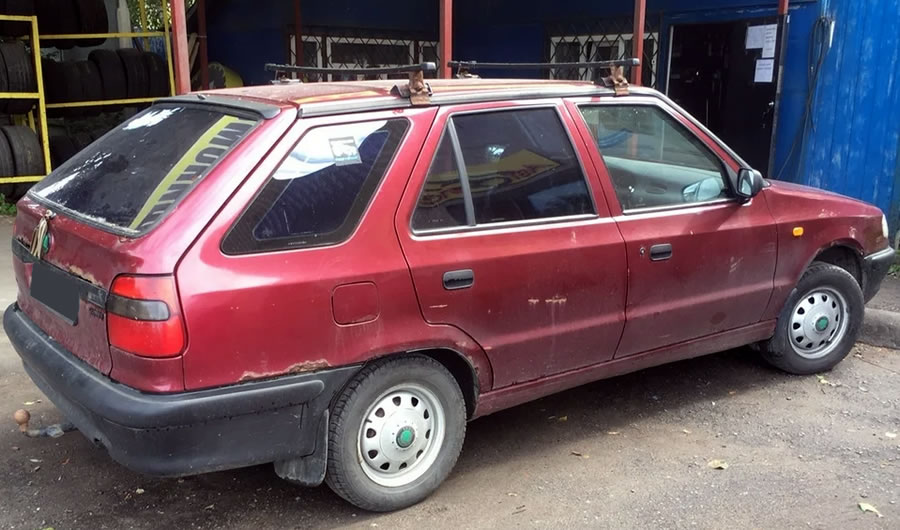
Skoda Favorit — a small car (B-segment), produced from 1987 to 1995 by the Czech company "Skoda Auto". After production ended, it was replaced "Skoda Felicia" (see description below). The name had already been used for a mid-size car produced from 1936 to 1941 (Type 904 and Type 923) and was not a commercial success. It was first shown in July 1987 at the Brno Engineering Fair. In 1987, it was the first Skoda with a front transverse engine and front-wheel drive. It replaced "Skoda 105/120 Estelle" with rear-wheel drive and rear-engine. The development of the car began in 1982. It was one of the popular cars in Central Europe. In total, more than 1 million copies were produced.
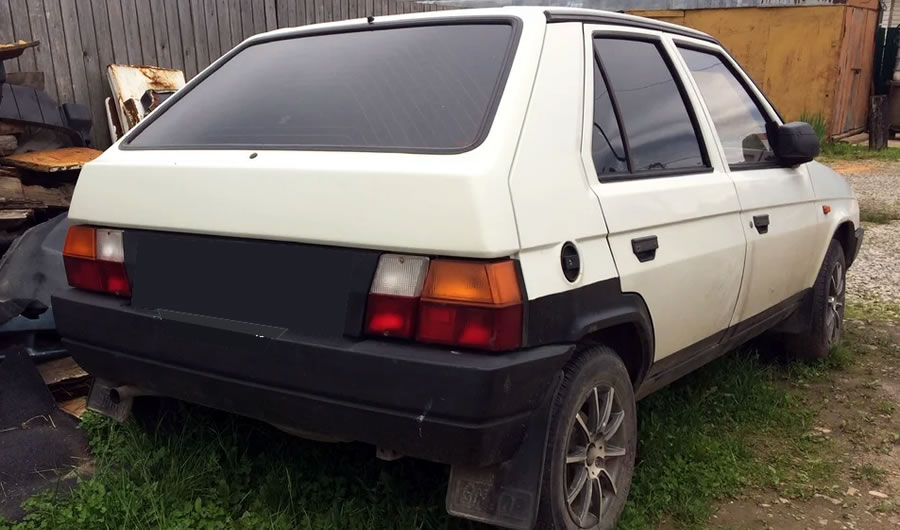
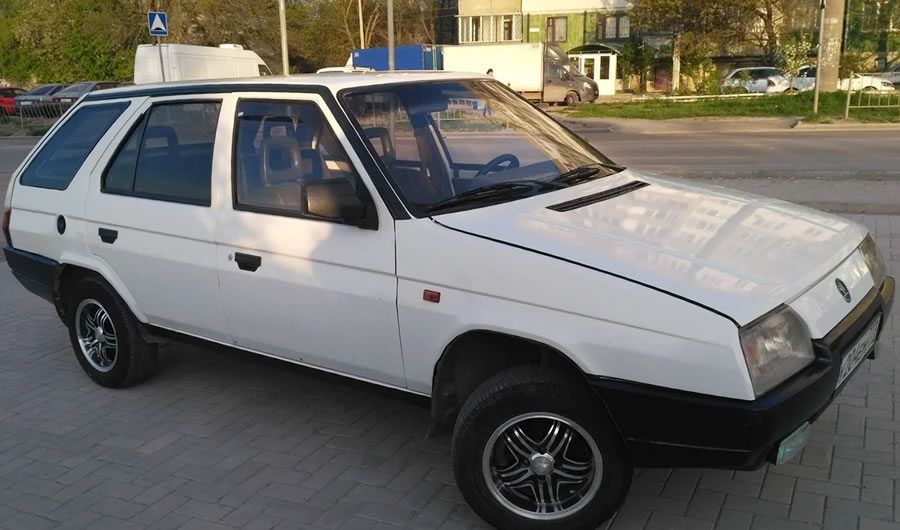
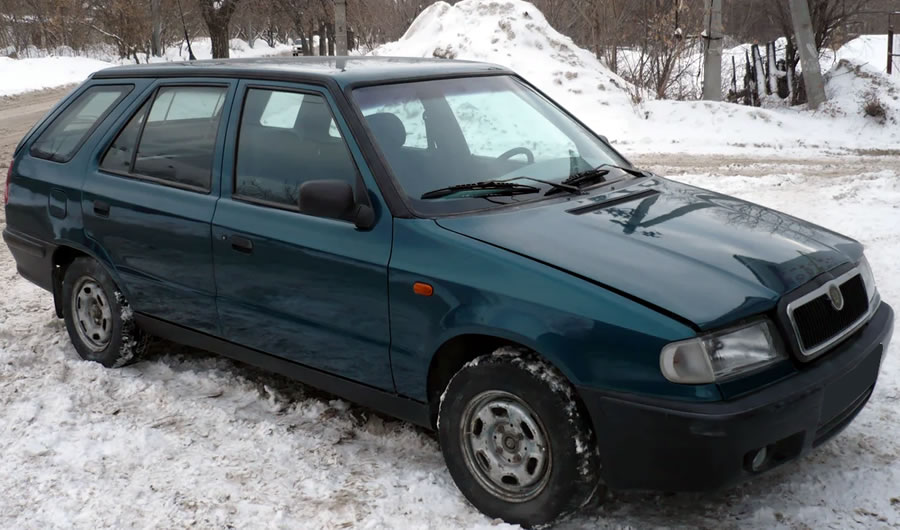
The Favorite was produced as a five-door hatchback ("Favorit" Type 781, length 3815 mm, width 1620 mm, height 1415 mm), five-door station wagon ("Forman", Type 785, length 4160 mm, width 1620 mm, height 1425 mm) and a two-door pickup ("Pick-up", Type 787, length 4065 mm, width 1620 mm, height 1415 mm). The wheelbase was 2450 mm and the curb weight was 840 kg. The luggage compartment volume in the hatchback body was 251 liters, with the rear seats folded down to 1038 liters, and for more luggage, the rear seat can be removed completely.
The engine was a four-cylinder petrol engine with a capacity of 1.3 liters (1289 cm³) and a power of 54, 56, 58, 62 and 67 hp. At first they were equipped with carburetors "Pierburg 2E-E" or "Pierburg Ecotronic", which were then replaced by a single-point fuel injection system "Bosch Mono-Motronic ECU". The only transmission available was a five-speed manual.
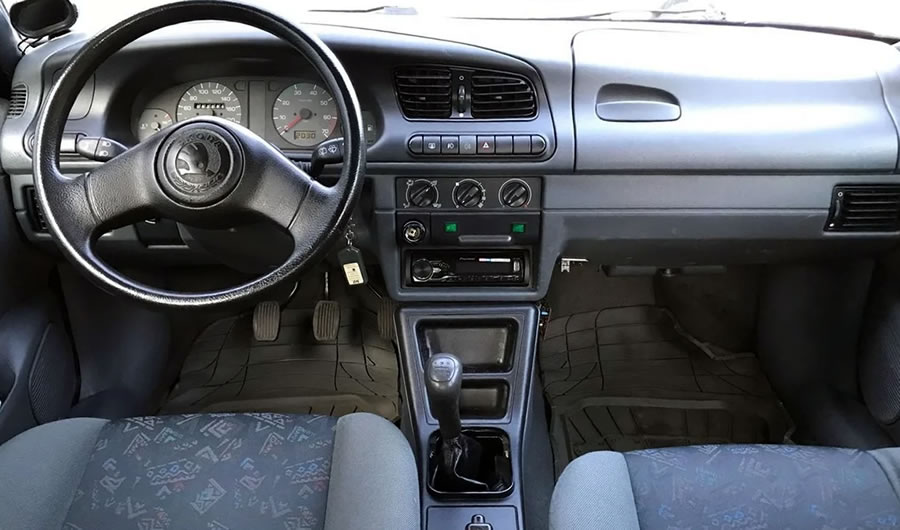
After the takeover "Skoda Auto" by the company "Volkswagen Group" in 1991, the "Favorit" quickly incorporated new developments and improvements such as new versions of the catalytic converter, fuel injection, and many cosmetic improvements such as new door hinges, seats and interior elements "Volkswagen", instrument panels and control and measuring instruments. Quality control, safety functions have also been improved (reinforced beams in doors) and the design of the front of the car.
During 1993, another modernization took place, which included mechanical and electrical improvements to the engine, a redesigned body and larger bumpers.
Skoda Felicia (1994-2001)
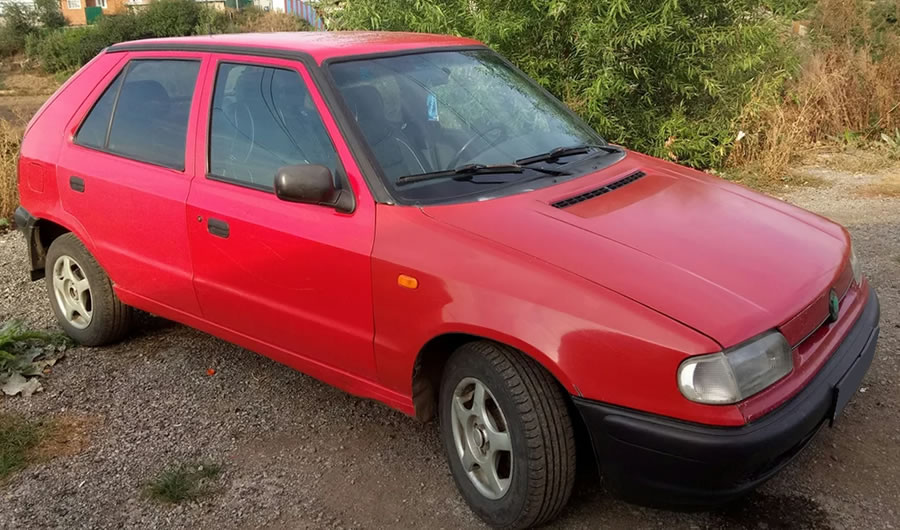
Skoda Felicia — a compact car from a Czech car manufacturer "Skoda Auto", which was produced from 1994 to 2001. It was the last model on Skoda's own platform. The name had already been used earlier for a two-door convertible produced from 1959 to 1964. It is the successor to the "Skoda Favorit" (see description above). The car premiered in October 1994 on the Charles Bridge in Prague. It is a front-wheel drive car with a front transverse engine. Production of the hatchback began in October 1994, the station wagon in June 1995 and the pickup in August 1995. In total, more than 1.4 million cars were produced. The official successor of Felicia is "Skoda Fabia".
The body styles were as follows: five-door hatchback (length 3855 mm, width 1635 mm, height 1415 mm), five-door station wagon ("Felicia Combi", length 4205 mm, width 1635 mm, height 1420 mm), two-door pickup ("Felicia Fun", length 4245 mm, width 1680 mm, height 1465 mm) and a two-door van (Felicia VanPlus). The wheelbase was 2450 mm and the curb weight was 920-1060 kg. The luggage compartment volume in the hatchback body was 272 liters and increased to 976 liters with the rear seats folded. For the station wagon, the space was 447 and 1366 liters, respectively. The trim levels and equipment were called "LX", "LXi", "GLX" and "GLXi".
Some models were equipped with air conditioning and velour upholstery. All models were equipped with anti-lock braking system (ABS), driver's airbag and seat belt tensioners.
Two models of 1.3-liter gasoline engines were installed (1289 cm³, I4, OHV, 8V, 54/67 hp) and 1.6 liters (1598 cm³, I4, SOHC, 8V, 74 hp). For the first time, Skoda cars were equipped with a 1.9-liter diesel engine (1896 cm³, I4, SOHC, 8V, 63 hp). The gearbox was only a five-speed manual.
In January 1998, the car received a facelift that brought many new Volkswagen technologies. The exterior changes were minor. The most obvious visual change was a new grille and larger bumpers. The changes also included minor updates to the chassis and body to improve crash safety.