



Note: The trailer towing specifications are specified in Section 27.
If you are transporting cargo in the passenger compartment, secure it securely, for example with seat belts. Place the largest and heaviest items as low and as close to the center of the vehicle as possible. Transport small pets in special bags, also secured. Do not place heavy items on the rear shelf. In the event of an accident, maneuvering, or braking, they may cause injury. In addition, friction of cargo against the rear and side windows may damage the antennas and heating element.
Transportation of cargo on the roof
When transporting cargo on the roof of a car, the car's behavior on the road and its controllability change due to the change in the center of gravity, and fuel consumption increases. When loading the roof rack, distribute the cargo evenly, placing heavy objects at the bottom and in front. Also ensure that the cargo is securely fastened. Check the cargo is secured and the fastening of the roof rack/cross rails is securely tightened before starting the trip, after the first 50 km of the trip, and then every 1000 km of the trip. Remove the roof rack before going through an automatic car wash, and also if it is not needed (to save fuel and reduce noise).
Please observe the maximum roof load and maximum permissible vehicle weight requirements as stated in the Specifications.
If necessary, crossbars can be attached to the roof, on which various roof racks from the Skoda range can be installed. The mounting holes are located on the inside of the door openings (see illustration 26.1). Please follow all instructions in the enclosed roof rack installation manual carefully. When placing the load, make sure that it does not interfere with the opening of the tailgate or roof hatch.
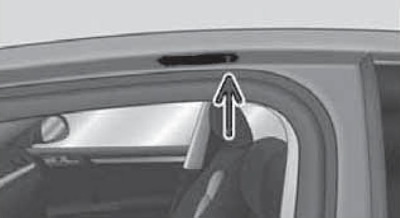
26.1 Roof rack crossbar mounting points