



Side wall panels
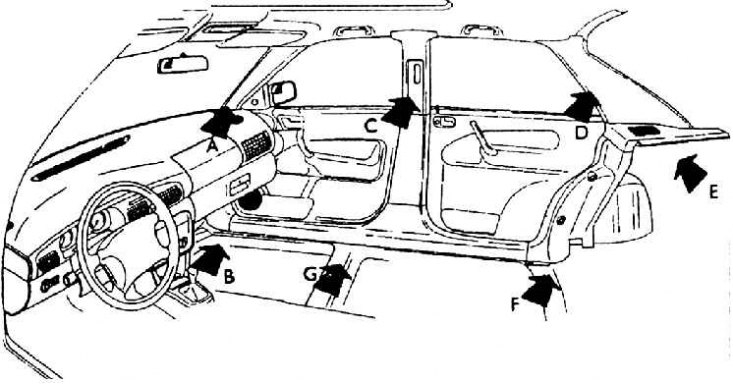
A - front pillar panel (top part); B - front pillar panel (Bottom part); C - two-piece middle rack panel; D – the panel of a back rack; E - side panel assembly; F - covering panel of the rear pillar; G - threshold panel
A-pillar panels (A, B)
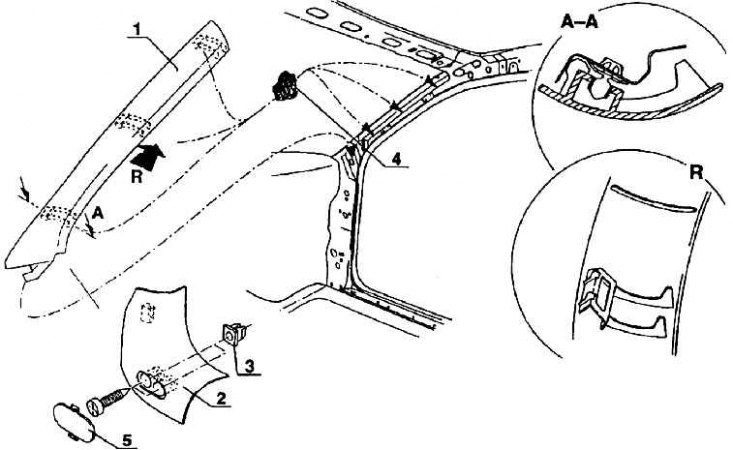
1 - the upper part of the panel; 2 – lower part of the panel; 3 - piston; 4 - piston; 5 - bolt cover
B-pillar panels (WITH)
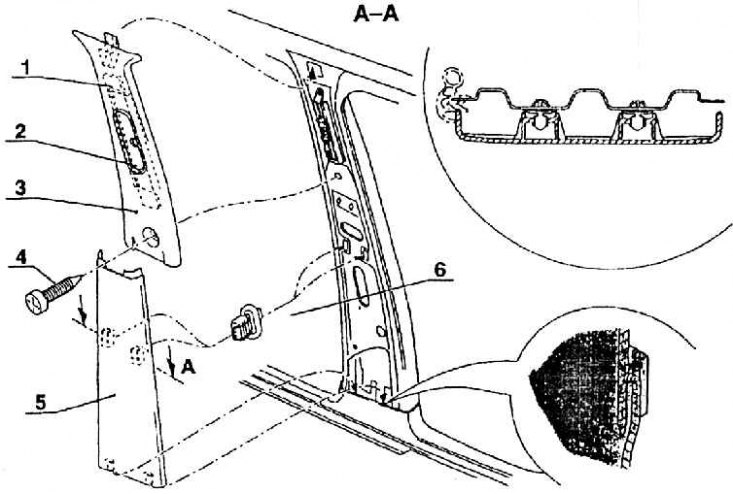
1 - sliding cover; 2 - cap; 3 – top part of the panel; 4 - screw; 5 – lower part of the panel; 6 - piston
C-pillar panels (D, F)
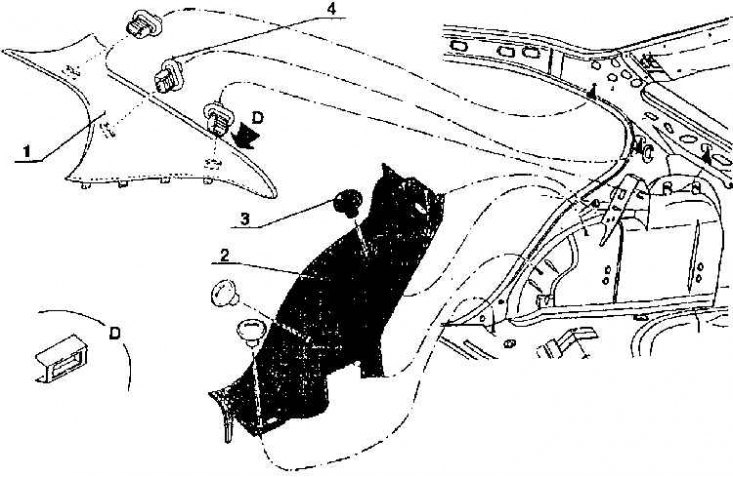
1 – the top part of the panel of a back rack; 2 – the bottom part of the panel of a back rack; 3 - plastic nut; 4 - piston
Side trim above the rear fender (E)
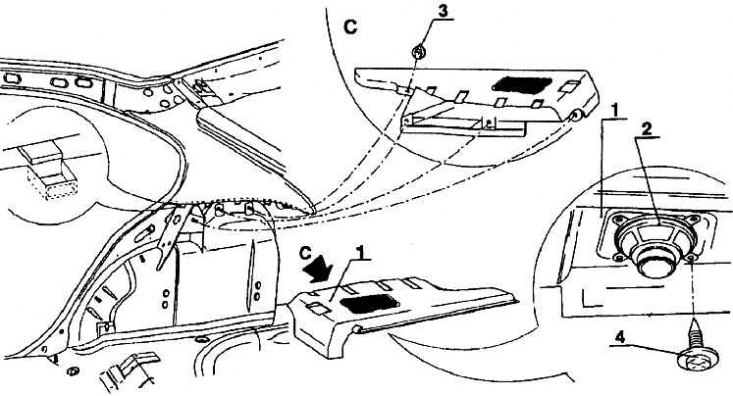
1 - side lining, 2 - speaker; 3 - piston; 4 - screw
Threshold panel (G)
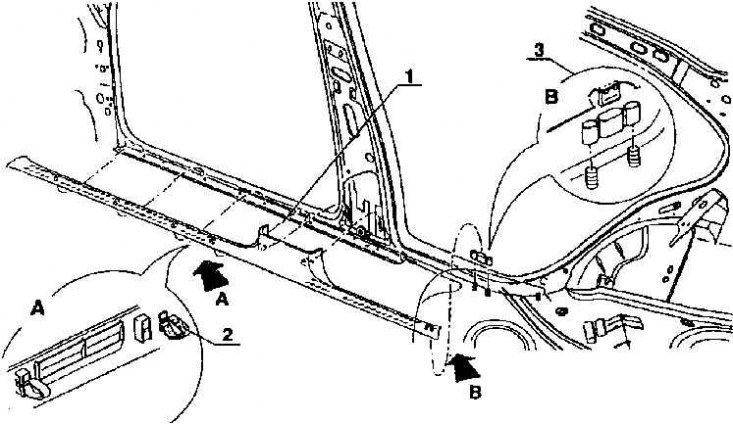
1 - threshold bar; 2 - clamp; 3 - clamp
Boot lid lock holder covers
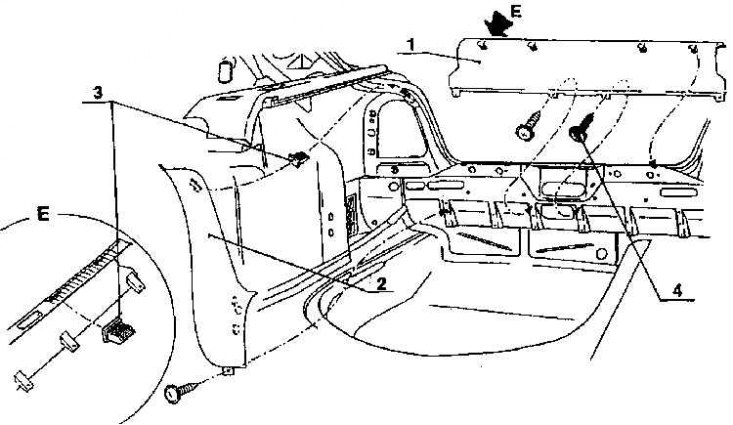
1 - casing of the cover lock holder - medium; 2 - casing of the cover lock holder - external; 3 - piston; 4 - screw
Finishing headlining at the rear
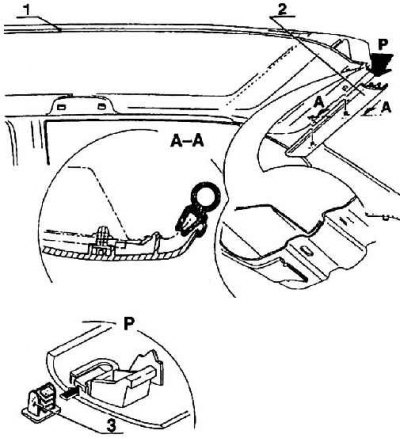
1 - profile roofing overlay; 2 – pad final back; 3 - piston (5x)
Side panel luggage compartment
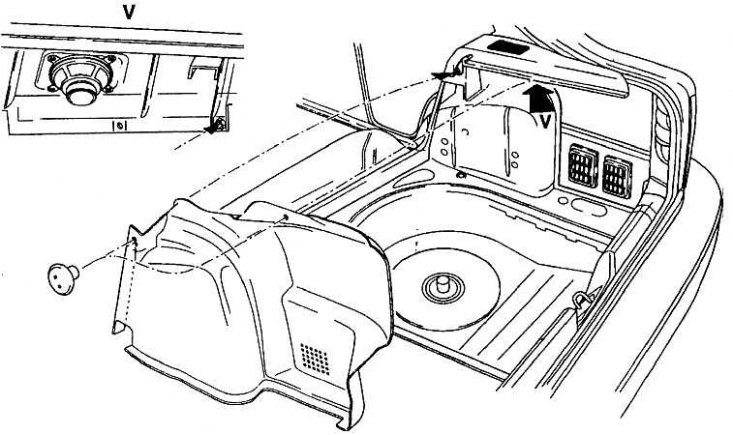
The interior panels serve as lining of the pillars, sills, rear fender liner, ceiling and locking part of the luggage compartment lid. The panels are made of polypropylene modified with talc. The color of the panels is the same grey. The panel is fastened either by bolting to the sheet and then closing them with plastic caps, or with various caps, if necessary, by directly sticking the fastening elements on the panels into the holes in the body. Some panels overlap with other panels. Pic. Cabin Side Wall Panels is a view of the side of the cabin with the designation of individual panels. Other drawings depict individual panels, including how they are attached.