



Supply supply system for 1.6 and 2.0 liter engines Skoda Octavia 3

Work when refueling with unsuitable fuel
Note: The fuel lines are connected with quick-release couplings. Fuel hoses may only be secured with spring clamps. It is recommended to use clamp pliers to install spring clamps. Observe safety regulations. Observe...
Note: The fuel lines are connected with quick-release couplings. Fuel hoses may only be secured with spring clamps. It is recommended to use clamp pliers to install spring clamps. Observe safety regulations. Observe...

Fuel tank with attachments for front-wheel drive vehicles — general installation diagram
For vehicles with multi-link rear suspension 1. Filler cap: Tighten until it clicks into place with a distinct sound; attached with a cable to the filler cap to prevent loss during refueling 2. Wire connection to...
For vehicles with multi-link rear suspension 1. Filler cap: Tighten until it clicks into place with a distinct sound; attached with a cable to the filler cap to prevent loss during refueling 2. Wire connection to...

Fuel filler neck ground connection
Route the ground cable as shown in the figure. Check the reliability of the connector fastening. Connector "2" of the ground cable on the threaded ring "3" of the filler neck. Insert the tongue of contact "1" of the...
Route the ground cable as shown in the figure. Check the reliability of the connector fastening. Connector "2" of the ground cable on the threaded ring "3" of the filler neck. Insert the tongue of contact "1" of the...

Mounting position of the fuel delivery module
The arrow "3" on the fuel tank must point to the mark "2" on the ring nut "1". Fuel lines on the fuel delivery module 1. Fuel supply line 2. Return fuel line 3. Fuel line to metering pump -V54-
The arrow "3" on the fuel tank must point to the mark "2" on the ring nut "1". Fuel lines on the fuel delivery module 1. Fuel supply line 2. Return fuel line 3. Fuel line to metering pump -V54-

Mounting position of the tank exhaust ventilation line tip
When installing fuel tank "2", ensure the correct mounting position of the exhaust ventilation line tip of tank "1". The angle -α- must be 60°.
When installing fuel tank "2", ensure the correct mounting position of the exhaust ventilation line tip of tank "1". The angle -α- must be 60°.

Fuel Delivery Module for Front Wheel Drive Vehicles — General Installation Diagram
1. Fuel supply module: with fuel pump "G6"; checking the fuel pump electrical system in Guided Troubleshooting; after installation, fill the car with at least 5 liters of fuel; after installing the fuel supply module,...
1. Fuel supply module: with fuel pump "G6"; checking the fuel pump electrical system in Guided Troubleshooting; after installation, fill the car with at least 5 liters of fuel; after installing the fuel supply module,...

Fuel filter parts and components
1. Bottom of fuel filter with built-in bracket; observe the instructions for fuel hoses in the engine compartment 2. Filter element; observe replacement intervals 3. Upper part of the fuel filter: with fittings; observe...
1. Bottom of fuel filter with built-in bracket; observe the instructions for fuel hoses in the engine compartment 2. Filter element; observe replacement intervals 3. Upper part of the fuel filter: with fittings; observe...

Removal water from the fuel filter
Note: Do not spill diesel fuel on the cooling system hoses. If it does, clean the hoses immediately! The water drain valve is not available on all versions. Connect a transparent hose with a container for removing water...
Note: Do not spill diesel fuel on the cooling system hoses. If it does, clean the hoses immediately! The water drain valve is not available on all versions. Connect a transparent hose with a container for removing water...

Removal and installation the fuel filter
Turn off the ignition. If the fuel filter needs to be removed only due to tightness Disconnect the fuel supply lines "1" and "2". Unlock and disconnect the quick-release coupling. Remove the fuel lines "1" and "2" from...
Turn off the ignition. If the fuel filter needs to be removed only due to tightness Disconnect the fuel supply lines "1" and "2". Unlock and disconnect the quick-release coupling. Remove the fuel lines "1" and "2" from...

Fuel hoses in the engine compartment
Note: The connections for the fuel hoses on the fuel filter "1", on the fuel temperature sensor "2" and the quick-release couplings are equipped with a two-wave "arrow" profile and a crushable edge. This improves the...
Note: The connections for the fuel hoses on the fuel filter "1", on the fuel temperature sensor "2" and the quick-release couplings are equipped with a two-wave "arrow" profile and a crushable edge. This improves the...

Removal and installation of the fuel supply module, front-wheel drive vehicles
The fuel tank should be filled no more than ⅓ of its volume. Note: If necessary, empty the fuel tank. Move the front seats all the way forward. Switch off the ignition. Remove the rear seat. Unlock the latches of the...
The fuel tank should be filled no more than ⅓ of its volume. Note: If necessary, empty the fuel tank. Move the front seats all the way forward. Switch off the ignition. Remove the rear seat. Unlock the latches of the...
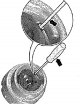
Removal and installation protection against refueling with inappropriate fuel
Clean the area around the filler neck. Unscrew the filler neck plug. Using a Torx "arrow" screwdriver, unlock the protrusions of the locking ring. Insert the snap ring pliers into both "arrow" holes of the locking ring....
Clean the area around the filler neck. Unscrew the filler neck plug. Using a Torx "arrow" screwdriver, unlock the protrusions of the locking ring. Insert the snap ring pliers into both "arrow" holes of the locking ring....
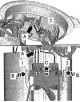
Removal and installation fuel level sensor «G»
Remove the fuel supply unit. Disconnect connector "2" from the connecting flange, unlocking the connector locks. Unhook the electrical cable holder from the bracket "arrow A" and set aside. Unlock the locks "1", "3"...
Remove the fuel supply unit. Disconnect connector "2" from the connecting flange, unlocking the connector locks. Unhook the electrical cable holder from the bracket "arrow A" and set aside. Unlock the locks "1", "3"...

Removal and installation the fuel tank, front-wheel drive vehicles
Note: Empty the fuel tank. Move the front seats all the way forward. Switch off the ignition and remove the ignition key from the lock. Remove the rear seat. Unlock the cover locks "1" using the wedge "3409" "arrows"....
Note: Empty the fuel tank. Move the front seats all the way forward. Switch off the ignition and remove the ignition key from the lock. Remove the rear seat. Unlock the cover locks "1" using the wedge "3409" "arrows"....

Removal and installation the fuel pump control unit «J538»
Move the front seats all the way forward. Switch off the ignition. Remove the rear seat. Unlock the cover "1" fasteners of the connecting flange from the fastening using the wedge "3409" "arrows". Remove the sealing...
Move the front seats all the way forward. Switch off the ignition. Remove the rear seat. Unlock the cover "1" fasteners of the connecting flange from the fastening using the wedge "3409" "arrows". Remove the sealing...

Checking the fuel level sensor «G»
Move the front seats all the way forward. Switch off the ignition. Remove the rear seat. Unlock the cover clamps "1" from the fastening using the wedge "3409" "arrows". Disconnect connector "2" from the connecting...
Move the front seats all the way forward. Switch off the ignition. Remove the rear seat. Unlock the cover clamps "1" from the fastening using the wedge "3409" "arrows". Disconnect connector "2" from the connecting...

Turbocharger parts and assemblies with add-on elements
1. Hollow screw, 30 Nm 2. Oil supply line: check for patency; before installation, fill the turbocharger with engine oil through the oil pressure line nipple; take into account the catalog number 3. 12 Nm 4. Union nut,...
1. Hollow screw, 30 Nm 2. Oil supply line: check for patency; before installation, fill the turbocharger with engine oil through the oil pressure line nipple; take into account the catalog number 3. 12 Nm 4. Union nut,...

Removal and installation a turbocharger
For vehicles with engine letter designation CRVC Caution! If the turbocharger is mechanically damaged, e.g. if the compressor wheel is destroyed, it is not enough to simply replace the turbocharger. To avoid further...
For vehicles with engine letter designation CRVC Caution! If the turbocharger is mechanically damaged, e.g. if the compressor wheel is destroyed, it is not enough to simply replace the turbocharger. To avoid further...
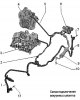
Vacuum hose connection diagram
1. Vacuum pipeline 2. Check valve: install in the correct position; the light side faces the cylinder head cover 3. Cylinder head cover: with vacuum drive 4. Vacuum drive: on turbocharger; with turbocharger guide vane...
1. Vacuum pipeline 2. Check valve: install in the correct position; the light side faces the cylinder head cover 3. Cylinder head cover: with vacuum drive 4. Vacuum drive: on turbocharger; with turbocharger guide vane...

Intercooler parts and components
1. O-ring: Replace after disassembly 2. Landing pin 3. 8 Nm 4. Sealing gasket: replace after disassembly 5. Bolt 6. Bracket: intake manifold 7. Bolt 8. Bolt: replace after disassembly 9. Landing pin 10. 8 Nm 11. Intake...
1. O-ring: Replace after disassembly 2. Landing pin 3. 8 Nm 4. Sealing gasket: replace after disassembly 5. Bolt 6. Bracket: intake manifold 7. Bolt 8. Bolt: replace after disassembly 9. Landing pin 10. 8 Nm 11. Intake...


Injection system — overview of installation locations in the engine compartment
1. Cylinder head coolant circuit valve "N489" 2. Injectors: Injector of cylinder 1-N30-. Injector of cylinder 2 "N31". Injector of cylinder 3 "N32", Injector of cylinder 4 "N33" 3. Differential pressure sensor "G505" 4....
1. Cylinder head coolant circuit valve "N489" 2. Injectors: Injector of cylinder 1-N30-. Injector of cylinder 2 "N31". Injector of cylinder 3 "N32", Injector of cylinder 4 "N33" 3. Differential pressure sensor "G505" 4....
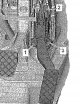
Accelerator Pedal Position Sensor «G79» and Accelerator Pedal Position Sensor 2 «G185»
In the gas pedal module. 2. Electrical connector of the gas pedal module Note: The accelerator pedal position sender "G79" and the accelerator pedal position sender 2 "G185" are integrated into the accelerator pedal...
In the gas pedal module. 2. Electrical connector of the gas pedal module Note: The accelerator pedal position sender "G79" and the accelerator pedal position sender 2 "G185" are integrated into the accelerator pedal...

Electrical connectors of the injection system
1. Boost pressure limitation solenoid valve "N75" 2. Sensor 4 exhaust gas temperature "G648" 3. Sensor 3 exhaust gas temperature "G495" 4. Exhaust gas temperature sensor 2 "G448" for vehicles with engine letter...
1. Boost pressure limitation solenoid valve "N75" 2. Sensor 4 exhaust gas temperature "G648" 3. Sensor 3 exhaust gas temperature "G495" 4. Exhaust gas temperature sensor 2 "G448" for vehicles with engine letter...

Overview of the installation locations of the injection system — left and right of the engine
Overview of the installation location - to the left of the engine 1. Charge air cooling pump "V188" 2. Oil pressure regulating valve "N428" 3. EGR actuator motor "V338" with EGR potentiometer "G212": only for vehicles...
Overview of the installation location - to the left of the engine 1. Charge air cooling pump "V188" 2. Oil pressure regulating valve "N428" 3. EGR actuator motor "V338" with EGR potentiometer "G212": only for vehicles...

Parts and components of the fuel system (general diagram)
Note: Red = fuel supply line. Blue = fuel return line. Arrows point in the direction of fuel flow. 1. Fuel filter 2. High pressure fuel pump 3. Fuel metering valve "N₂90" 4. Fuel temperature sensor "G81" 5. Fuel...
Note: Red = fuel supply line. Blue = fuel return line. Arrows point in the direction of fuel flow. 1. Fuel filter 2. High pressure fuel pump 3. Fuel metering valve "N₂90" 4. Fuel temperature sensor "G81" 5. Fuel...

Filling the fuel system with fuel/bleeding air from the system
Caution! To prevent the fuel injection pump from working (precision, precisely fitted parts) in dry friction mode and quickly start the engine after replacing parts, be sure to do the following. If any parts/components...
Caution! To prevent the fuel injection pump from working (precision, precisely fitted parts) in dry friction mode and quickly start the engine after replacing parts, be sure to do the following. If any parts/components...

Parts and assemblies of nozzles (injectors)
1. Sealing ring: in the cylinder head cover; after removal replace 2. Copper washer: replace after disassembly 3. O-ring: Replace after disassembly 4. Injector: Re-installed injectors and high-pressure fuel lines may...
1. Sealing ring: in the cylinder head cover; after removal replace 2. Copper washer: replace after disassembly 3. O-ring: Replace after disassembly 4. Injector: Re-installed injectors and high-pressure fuel lines may...

Fuel rail parts and components
1. Fuel pressure sensor "G247", 100 Nm: reusable 2. Pressure line, 28 Nm: between the fuel rail (pressure accumulator) and nozzles; take into account all instructions for installing high pressure pipelines 3. Fuel rail...
1. Fuel pressure sensor "G247", 100 Nm: reusable 2. Pressure line, 28 Nm: between the fuel rail (pressure accumulator) and nozzles; take into account all instructions for installing high pressure pipelines 3. Fuel rail...

Adaptation of injector correction values
The "Injection Quantity Correction (IMA)" function is designed to individually adjust the amount of fuel injected by the Common Rail system into each cylinder within the control range. 7-digit adaptation codes are...
The "Injection Quantity Correction (IMA)" function is designed to individually adjust the amount of fuel injected by the Common Rail system into each cylinder within the control range. 7-digit adaptation codes are...

Checking fuel consumption in the return lines of the injectors with the engine running
A - Checking fuel consumption in the return lines for all injectors Remove the upper engine casing. Disconnect hose "2" from the fuel return line. Close the open end of the fuel return line with plug "1". Immerse the...
A - Checking fuel consumption in the return lines for all injectors Remove the upper engine casing. Disconnect hose "2" from the fuel return line. Close the open end of the fuel return line with plug "1". Immerse the...

Installation of return fuel lines
Carefully insert the return line fittings into the injectors. The fitting should lock into place with a clearly audible click. After this, carefully press the retainers down. Check the fuel system for leaks. Checking...
Carefully insert the return line fittings into the injectors. The fitting should lock into place with a clearly audible click. After this, carefully press the retainers down. Check the fuel system for leaks. Checking...

Removal and installation injectors
Remove the upper engine cover. Remove the sound insulation. Pull the return fuel line fitting out of the nozzle by pulling the "arrow" latches up. Disconnect the electrical connectors of the arrow from the injectors....
Remove the upper engine cover. Remove the sound insulation. Pull the return fuel line fitting out of the nozzle by pulling the "arrow" latches up. Disconnect the electrical connectors of the arrow from the injectors....

Removal high pressure pipes between the fuel rail and the injection pump
Remove the upper engine cover. Clean with cleaner "Kaltreiniger" fuel line with the tip and dry them with compressed air. Unscrew screw "1". Unscrew the union nuts "arrows", remove the high-pressure fuel line.
Remove the upper engine cover. Clean with cleaner "Kaltreiniger" fuel line with the tip and dry them with compressed air. Unscrew screw "1". Unscrew the union nuts "arrows", remove the high-pressure fuel line.

Installation of high pressure pipeline
Note: Clean with cleaner before removing "Kalireiniger" fuel line with the tip and dry them with compressed air. When reinstalling the high-pressure lines, observe the marks indicating which cylinders belong to which....
Note: Clean with cleaner before removing "Kalireiniger" fuel line with the tip and dry them with compressed air. When reinstalling the high-pressure lines, observe the marks indicating which cylinders belong to which....

Removal and installation the fuel rail
Removing the high-pressure pipes between the fuel rail and the high-pressure fuel pump. Release the return fuel line hose "1". Open the fastening brackets "arrows", disconnect and remove the guide well "2". Disconnect...
Removing the high-pressure pipes between the fuel rail and the high-pressure fuel pump. Release the return fuel line hose "1". Open the fastening brackets "arrows", disconnect and remove the guide well "2". Disconnect...

Parts and components of the high pressure fuel pump
1. Mounted unit bracket 2. Bolt, 3 pcs.: different lengths; replace after disassembly; tightening torque: short screw, 20 Nm and further tighten by 45° (⅛ of a turn), long screw, 20 Nm and further tighten by 180° (½ of...
1. Mounted unit bracket 2. Bolt, 3 pcs.: different lengths; replace after disassembly; tightening torque: short screw, 20 Nm and further tighten by 45° (⅛ of a turn), long screw, 20 Nm and further tighten by 180° (½ of...

Removal and installation the high pressure fuel pump
Remove the toothed belt from the camshaft. Remove the high-pressure pipes between the fuel rail and the high-pressure fuel pump. Install the stop "T10051" on the high-pressure fuel pump toothed pulley. Tighten the nut...
Remove the toothed belt from the camshaft. Remove the high-pressure pipes between the fuel rail and the high-pressure fuel pump. Install the stop "T10051" on the high-pressure fuel pump toothed pulley. Tighten the nut...

Removal and installation the intake air temperature sensor «C42» / the boost air temperature sensor after the intercooler «G811»
Remove the engine cover. Disconnect the corresponding connector -1 or 2-. 1. Boost air temperature sensor after intercooler "G811" 2. Intake air temperature sensor "G42" Remove the appropriate charge air temperature...
Remove the engine cover. Disconnect the corresponding connector -1 or 2-. 1. Boost air temperature sensor after intercooler "G811" 2. Intake air temperature sensor "G42" Remove the appropriate charge air temperature...

Removal and installation the fuel temperature sensor «G81»
Remove the engine casing. Disconnect connector "1". Unscrew the fuel temperature sensor "C81" "arrow". Installation Installation in reverse order. Check the fuel system for leaks.
Remove the engine casing. Disconnect connector "1". Unscrew the fuel temperature sensor "C81" "arrow". Installation Installation in reverse order. Check the fuel system for leaks.

Removal and installation the air flow meter «G70»
Remove the engine casing. Release the vacuum hoses "arrows" on the air duct. Loosen clamps -1 and 2- and remove the inlet hose. Unscrew screw "1". Turn air flow meter "G70" "pos. 2" in the "direction of arrow B" and...
Remove the engine casing. Release the vacuum hoses "arrows" on the air duct. Loosen clamps -1 and 2- and remove the inlet hose. Unscrew screw "1". Turn air flow meter "G70" "pos. 2" in the "direction of arrow B" and...

Checking and replacing the fuel pressure regulator «N276»
Remove the upper engine casing. Loosen the clamp "arrow" and remove the return fuel line hose from the fuel rail. Close the hole in the return fuel line with a plug. Connect auxiliary hose "3" to the return fuel line of...
Remove the upper engine casing. Loosen the clamp "arrow" and remove the return fuel line hose from the fuel rail. Close the hole in the return fuel line with a plug. Connect auxiliary hose "3" to the return fuel line of...

Removal and installation the fuel pressure sensor «G247»
Remove the upper engine cover. Caution! Before removing, clean the thread area around the fuel pressure sensor "G247" with lubricant solvent (dirt must not be allowed to enter the fuel rail opening). Work carefully - do...
Remove the upper engine cover. Caution! Before removing, clean the thread area around the fuel pressure sensor "G247" with lubricant solvent (dirt must not be allowed to enter the fuel rail opening). Work carefully - do...

Intake manifold parts and components
1. O-ring: Replace after disassembly 2. Landing pin 3. 8 Nm 4. Sealing gasket: replace after disassembly 5. Bolt 6. Bracket: intake manifold 7. Bolt 8. Bolt: replace after disassembly 9. Landing pin 10. 8 Nm 11. Intake...
1. O-ring: Replace after disassembly 2. Landing pin 3. 8 Nm 4. Sealing gasket: replace after disassembly 5. Bolt 6. Bracket: intake manifold 7. Bolt 8. Bolt: replace after disassembly 9. Landing pin 10. 8 Nm 11. Intake...

Removal and installation the throttle control unit «J338»
Remove the upper engine casing. Remove the air filter housing. Unscrew the screw "arrow" on the left and right. Unhook and remove the lower part "1" of the air duct. Unscrew the screws "arrows". Loosen the clamp "2" and...
Remove the upper engine casing. Remove the air filter housing. Unscrew the screw "arrow" on the left and right. Unhook and remove the lower part "1" of the air duct. Unscrew the screws "arrows". Loosen the clamp "2" and...

Removal and installation the intake manifold
Note: The intake manifold and intercooler form a single component. Remove the front upper cooling system hose. Remove the high-pressure line. Remove the air filter. Unscrew the screws "arrows". Loosen the clamp "2" and...
Note: The intake manifold and intercooler form a single component. Remove the front upper cooling system hose. Remove the high-pressure line. Remove the air filter. Unscrew the screws "arrows". Loosen the clamp "2" and...

Air filter parts and components
1. Air flow guide: at the bottom of the air filter 2. 2 Nm 3. Lower part of the air intake: on the front support panel 4. Upper part of the air intake: on the front support panel 5. Cover: air duct 6.2 Nm 7. 1.5 Nm 8....
1. Air flow guide: at the bottom of the air filter 2. 2 Nm 3. Lower part of the air intake: on the front support panel 4. Upper part of the air intake: on the front support panel 5. Cover: air duct 6.2 Nm 7. 1.5 Nm 8....

Removal and installation the air filter
Unscrew bolts -1, 3-. Unlock the "arrow" lock and remove cover "2". Release coolant hose "2". Unlock the clamps "arrows", remove the upper part of the air duct "1". Disconnect electrical connector "2" from mass air flow...
Unscrew bolts -1, 3-. Unlock the "arrow" lock and remove cover "2". Release coolant hose "2". Unlock the clamps "arrows", remove the upper part of the air duct "1". Disconnect electrical connector "2" from mass air flow...

Front, middle and rear parts of the exhaust system, Euro 4 vehicles
For vehicles with engine letter designation CRVC 1. Gasket: replace after disassembly; set in proper position 2. Clamp, 7 Nm: replacement 3. Downpipe: adjusting the position of the exhaust system components (stress-free...
For vehicles with engine letter designation CRVC 1. Gasket: replace after disassembly; set in proper position 2. Clamp, 7 Nm: replacement 3. Downpipe: adjusting the position of the exhaust system components (stress-free...

Removal and installation the intake pipe
Remove the lower tunnel trim. For vehicles with engine letter designation CLHA, CLHB, CRKB, CKFB, CKFC, CUPA Disconnect connector "1". All Loosen and move back coupling "2". Unscrew bolts "1" Loosen screw "2", remove...
Remove the lower tunnel trim. For vehicles with engine letter designation CLHA, CLHB, CRKB, CKFB, CKFC, CUPA Disconnect connector "1". All Loosen and move back coupling "2". Unscrew bolts "1" Loosen screw "2", remove...

Removal and installation the rear muffler, front-wheel drive vehicles
For vehicles with engine letter designation CLHA, CLHB, CRKB, CKFB, CKFC, CRVC Cars without a disconnection point: replace the middle or rear muffler. Cars with a disconnection point: unlock and move the "arrow"...
For vehicles with engine letter designation CLHA, CLHB, CRKB, CKFB, CKFC, CRVC Cars without a disconnection point: replace the middle or rear muffler. Cars with a disconnection point: unlock and move the "arrow"...

Replacing the middle or rear muffler
Note: On vehicles with a torsion beam rear suspension, a disconnect point for the exhaust pipe is provided to facilitate removal of the exhaust system. The disconnect point is marked on the exhaust pipe with a stamping....
Note: On vehicles with a torsion beam rear suspension, a disconnect point for the exhaust pipe is provided to facilitate removal of the exhaust system. The disconnect point is marked on the exhaust pipe with a stamping....

Adjusting exhaust system components to relieve stress
When adjusting the position, the exhaust system components must not be heated. Loosen the threaded connections of the coupling "2". Press the exhaust system components forward so that the offset of the exhaust pipe...
When adjusting the position, the exhaust system components must not be heated. Loosen the threaded connections of the coupling "2". Press the exhaust system components forward so that the offset of the exhaust pipe...

Parts and components of the exhaust gas neutralization system (vehicles with engine letter designation CRVC)
1. Bolt 2. Bracket: not necessarily available; is attached to the cylinder head 3. Catalyst/diesel particulate filter: design depending on the country of application 4. Bolt 5. Gasket: replace after disassembly 6....
1. Bolt 2. Bracket: not necessarily available; is attached to the cylinder head 3. Catalyst/diesel particulate filter: design depending on the country of application 4. Bolt 5. Gasket: replace after disassembly 6....

Removal and installation of the neutralizer (cars with engine letter designation CRVC)
Remove the noise-insulating casing and tunnel lining. Loosen the screws of the coupling "2", leave the coupling in the installation position. Open the clamp "1" and remove. Unscrew the screws "3", move the coupling "2"...
Remove the noise-insulating casing and tunnel lining. Loosen the screws of the coupling "2", leave the coupling in the installation position. Open the clamp "1" and remove. Unscrew the screws "3", move the coupling "2"...

Parts and components of the exhaust gas temperature control system
Caution! Loose exhaust gas temperature sensors cause functional interference. The threads of the exhaust gas temperature sensor OG-O495- and "G648" are coated. It is prohibited to coat them additionally with refractory...
Caution! Loose exhaust gas temperature sensors cause functional interference. The threads of the exhaust gas temperature sensor OG-O495- and "G648" are coated. It is prohibited to coat them additionally with refractory...

Removal and installation of exhaust gas temperature sensors
Removal and installation of exhaust gas temperature sensor 1 "G235" Note: Install cable ties in the appropriate places. When removing, do not cut the electrical wires, as this will no longer allow diagnostics of faults....
Removal and installation of exhaust gas temperature sensor 1 "G235" Note: Install cable ties in the appropriate places. When removing, do not cut the electrical wires, as this will no longer allow diagnostics of faults....

EGR with EGR cooler — general installation diagram
For vehicles with engine letter designation CRVC 1. Gasket: replace after disassembly 2. Connecting pipe: to the exhaust manifold 3. 20 Nm: replace after disassembly 4. 8 Nm: replace after disassembly 5. 20 Nm: replace...
For vehicles with engine letter designation CRVC 1. Gasket: replace after disassembly 2. Connecting pipe: to the exhaust manifold 3. 20 Nm: replace after disassembly 4. 8 Nm: replace after disassembly 5. 20 Nm: replace...

Exhaust gas recirculation system actuator motor «V338» — parts and components
For vehicles with engine letter designation CRKB, CRVC 1. Cooling system hose 2. Spring clamp 3. Exhaust gas recirculation system actuator motor "V338"; with EGR potentiometer "G212" 4. Gasket: Replace after removal 5....
For vehicles with engine letter designation CRKB, CRVC 1. Cooling system hose 2. Spring clamp 3. Exhaust gas recirculation system actuator motor "V338"; with EGR potentiometer "G212" 4. Gasket: Replace after removal 5....

Removal and installation of the actuator motor of the exhaust gas recirculation system «V338»
For vehicles with engine letter designation CRVC, CRKB Remove the throttle control unit "J338". Disconnect the "3" connector. Clamp the coolant supply hose with the clip "MP7-602" (3094). Loosen the clamp "2" and remove...
For vehicles with engine letter designation CRVC, CRKB Remove the throttle control unit "J338". Disconnect the "3" connector. Clamp the coolant supply hose with the clip "MP7-602" (3094). Loosen the clamp "2" and remove...

Removal and installation the EGR radiator
For vehicles with engine letter designation CRVC Remove the neutralizer. Drain the coolant. Loosen clamp "1" and disconnect the hose. Unscrew the nuts "see arrows". Secure the coolant pipe at the top, for example, with...
For vehicles with engine letter designation CRVC Remove the neutralizer. Drain the coolant. Loosen clamp "1" and disconnect the hose. Unscrew the nuts "see arrows". Secure the coolant pipe at the top, for example, with...

Pre-heating system — design description
1. Hall sensor "G40" 2. 9 Nm 3. Sealing ring: not a spare part, if damaged, it is replaced together with the Hall sensor "G40" 4. Glow plug: Glow plug 1 "Q10". Glow plug 2 "Q11", Glow plug 3 "Q12". Glow plug 4 "Q13";...
1. Hall sensor "G40" 2. 9 Nm 3. Sealing ring: not a spare part, if damaged, it is replaced together with the Hall sensor "G40" 4. Glow plug: Glow plug 1 "Q10". Glow plug 2 "Q11", Glow plug 3 "Q12". Glow plug 4 "Q13";...

Removal and installation glow plugs
Note: This engine uses metal glow plugs. Glow plug versions 1. Glow plug with combustion chamber pressure sensor - only for cylinder 3 of engines with the letter designation CRKB 2. Glow plug without combustion chamber...
Note: This engine uses metal glow plugs. Glow plug versions 1. Glow plug with combustion chamber pressure sensor - only for cylinder 3 of engines with the letter designation CRKB 2. Glow plug without combustion chamber...

Removal and installation of the automatic glow system control unit «J179»
Unlock the "arrow" latches and remove the cover. Remove the automatic glow plug control unit "J179" "arrow" from the socket in the engine compartment junction box. Installation in reverse order.
Unlock the "arrow" latches and remove the cover. Remove the automatic glow plug control unit "J179" "arrow" from the socket in the engine compartment junction box. Installation in reverse order.

Removal and installation the Hall sensor «G40»
Remove the upper engine casing. Unscrew the screws "arrows", push the fuel lines forward a little. Disconnect connector "2". Unscrew screw "1" and remove the Hall sensor "G40". Installation in reverse order.
Remove the upper engine casing. Unscrew the screws "arrows", push the fuel lines forward a little. Disconnect connector "2". Unscrew screw "1" and remove the Hall sensor "G40". Installation in reverse order.

Removal and installation the engine speed sensor «G28»
Remove the sound insulation. Disconnect connector "1" using the installation tool "T10118". Note: To remove the connector without the "T10118" tool, press the engine speed sensor connector with a screwdriver and...
Remove the sound insulation. Disconnect connector "1" using the installation tool "T10118". Note: To remove the connector without the "T10118" tool, press the engine speed sensor connector with a screwdriver and...
This section is available on russian, bulgarian, belarusian, ukrainian, serbian, croatian, romanian, polish, slovak, hungarian
Read similar sections on other Skoda models
➧ Diesel engines 1.9 l: Power and control system Skoda Fabia 2 (2007-2014)
➧ Power unit: Power and control system Skoda Rapid 1 (2012-2022)
➧ Power unit: Power and exhaust system Skoda Superb 2 (2008-2015)
➧ Power unit: Power and control system Skoda Yeti (2009-2017)
➧ Power unit: Diesel power system Skoda Felicia (1994-2001)
Link to this section in various formats
TEXTHTMLBB Code
- General information
- User manual
- Car driving
- Maintenance
- Petrol engines 1.2 l
- Engine repair
- Cooling system
- Supply system
- Petrol engines 1.4 l
- Engine repair
- Supply system
- Petrol engines 1.8/2.0 l
- Engine repair
- Cooling system
- Supply system
- Diesel engines 1.6/2.0 l
- Engine repair
- Cooling system
- Supply system
- Transmission
- Mechanical gearbox 02S
- Automatic gearbox 0CW
- Automatic gearbox 0D9
- Chassis (running gear)
- Front suspension
- Rear suspension
- Brake system
- Steering
- Body and interior
- Doors, locks and windows
- Exterior (external elements)
- Interior (internal elements)
- Ventilation and air conditioning
- Electrical equipment
- Equipment and devices
- Headlights and lighting
- Wiring diagrams (basic)
- Wiring diagrams (comfort)
- General information
- Vehicle details
- Maintenance
- Power unit
- Petrol engines 1.6 l AEE
- Petrol engines 1.8 l AGN
- Diesel engines 1.9 l AGR
- Fuel system
- Exhaust system
- Cooling system
- Transmission
- Clutch
- Car gearbox
- Gearbox repair 02J
- Gearbox repair 02K
- Chassis (running gear)
- Wheels and tires
- Suspension and axles
- Brake system
- Body and interior
- Exterior (external elements)
- Interior (internal elements)
- Doors, locks and windows
- Electrical equipment
- Equipment and devices
- Electrical circuits