Brake fluid should be replaced every two years.
To make it clear the importance of following the principles of handling brake fluid (durability, miscibility, etc.), below are some comments on this matter. Brake fluids have their own international classification, for example: DOT-4, ISO 4925, SAE J 1703 f and, specifically, fluids of this classification consist of a mixture of ether, glycol with polyglycol and additives of special inhibitors. For work in brake systems, cuffs made of styrene-butadiene rubber are used, operating at temperatures from - 50°C to + 260°C.
In general, it can be said that the requirements for the properties of brake fluids are very high. For guaranteed operation of the brake system during operation in any temperature conditions encountered, the main requirement is the consistency of the composition and density of the fluid in the range from - 50°C to + 260°C, no less.
During braking, so much heat is transferred from the friction elements of the brakes to the fluid that its temperature reaches 130°C. Under strong or prolonged braking, the temperature naturally increases. The consistency of the composition means that all components included in the fluid must mix well and under no circumstances separate.
In addition, the liquid should not foam during rapid changes in temperature and pressure, and should not be aggressive towards metal and rubber parts used in the system. The liquid should also have appropriate lubricating properties, and from a safety point of view, a high ignition temperature.
The required features include preservative ability and ability to mix with similar fluids, even from different manufacturers. These and many other requirements for brake fluid contain international standards that are followed by almost all fluid manufacturers.
Unfortunately, brake fluids mix well with water or, even worse, absorb it themselves. Water absorbed by brake fluid reduces its boiling point, which means the fluid becomes unusable. Mechanical contamination due to abrasion of parts and dust from the atmosphere also make it unusable. For these reasons, brake fluid should be changed within the timeframes set by the vehicle manufacturer.
From a practical point of view, it should be known that high temperatures accelerate the aging of the fluid and rubber brake parts. If the boiling point of the fluid is exceeded (which falls when water gets into it), steam bubbles are formed. And since steam, unlike liquid, is compressible, and the volume of the working cylinders of the brake system is relatively small, a situation may occur in which pressing the brake pedal will not lead to the formation of the necessary pressure in the liquid and the brakes will fail. Water absorption in brake fluid can in some cases reach 1-1.5% after a run of 10,000 km or six months.
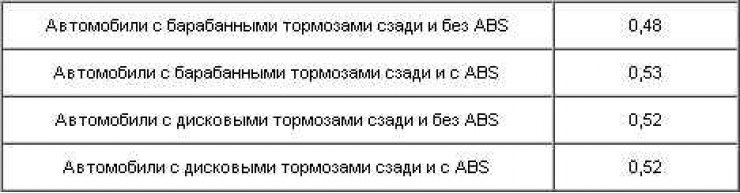
Volume of fluid poured into the brake system in liters