



Contents: Replacing the pads ⬇ Removal and installation, repair of…⬇ FNR-G brake mechanisms ⬇ Replacing the pads ⬇ Removal and installation, repair of…⬇
Note: Brake pads should be replaced in pairs and on both wheels of the same axle at the same time.
Note: If the pads are not being removed for replacement, i.e. will be reinstalled, mark them before removal so that they can be reinstalled in their original locations.
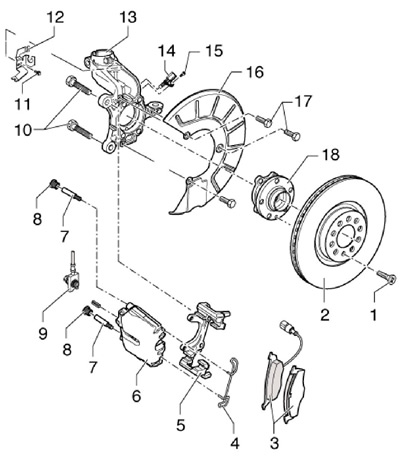
2.1 Front brake mechanism parts FN3
1 Bolt, 4 Nm
2 Brake disc, ventilated, replaceable on both sides at the same time
3 Brake pads with wear indicator, replaceable in pairs, on both sides at the same time
4 Retaining spring
5 Anchor bracket
6 Support
7 Guide pin, 30 Nm
8 Cap
9 Brake hose with connection and hollow bolt, 35 Nm
10 Bolt, 200 Nm, clean before reuse
11 Bolt, 15 Nm
12 Bracket
13 Steering knuckle
14 ABS sensor, before installation, clean the walls of the mounting hole and apply grease G052 112A3 to them
15 Bolt, 8 Nm
16 Brake mechanism shield
17 Torx bolt, 12 Nm
18 Hub assembly, with integrated sensor rotor 14
Replacing the pads
2. Jack up the car and place it on reliable supports. Remove the front wheel.
3. Using a screwdriver, press the retaining spring away from the caliper (see accompanying illustration) and take it off.
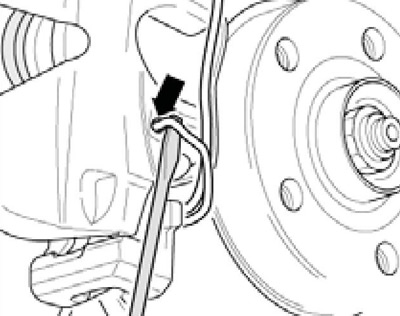
2.3 Releasing the spring
4. Disconnect the brake pad wear sensor wiring connector (see accompanying illustration).
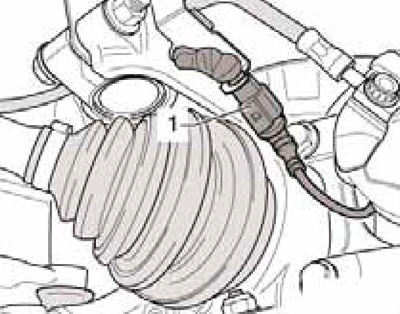
2.4 Brake pad wear sensor connector
5. Remove the caps (see accompanying illustration) and unscrew the guide pins located behind them. Remove the guide pins from the caliper. Remove the caliper without disconnecting the brake hose from it, and secure the caliper to the wire, preventing tension on the hose.
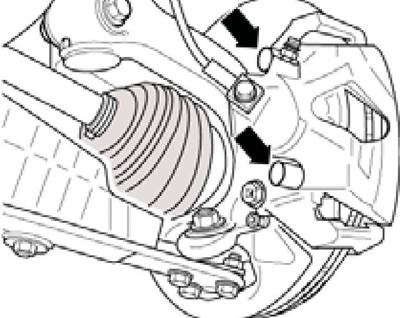
2.5 Guide Pin Caps
6. Remove the pads from the caliper.
7. Thoroughly clean the caliper and mating surfaces of the pads. If there is a protective coating on the new pads, remove it. Use only methylated spirit for cleaning, do not blow dust off the brake pads with compressed air.
8. Before installing the pads, press the piston into the brake wheel cylinder using a suitable tool (see accompanying illustration). At the same time, make sure that the brake fluid does not spill out of the reservoir; pump it out if necessary.
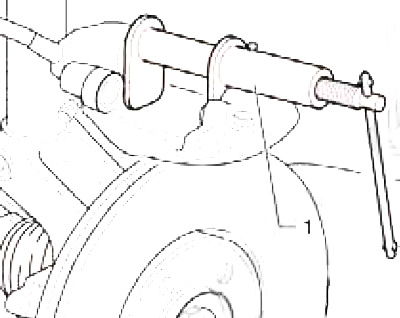
2.8 Pressing the piston into the wheel cylinder
9. Install the outer shoe into the anchor bracket and the inner shoe with the retaining spring into the piston. Install the caliper and secure it to the anchor bracket by tightening the guide pins to 30 Nm. When installing the caliper, make sure that the shoes do not stick to it before it is in the correct installation position; do not damage the surface to be glued. Install the guide pin caps.
10. Insert the retaining spring into the caliper, connect the brake pad wear sensor wiring connector and install the wheels.
11. With the vehicle stationary, press the brake pedal hard several times until the pads reach their working position.
12. Correct the brake fluid level.
Removal and installation, repair of the caliper
13. Follow the steps described in paragraphs 2-4.
14. Connect a hose to the bleed nipple on the caliper, lower the other end of this hose into a container to collect the brake fluid. Open the bleed nipple, press the brake pedal with the VAG1869/2 tool (or ask an assistant), close the bleed nipple and disconnect the hose from it.
15. Disconnect the brake hose from the caliper and remove the caps (see illustration 2.5) and turn out the guide pins located behind them.
16. Remove the caliper from the anchor bracket. If the caliper needs repair, (piston replacement) please refer to the accompanying illustration.
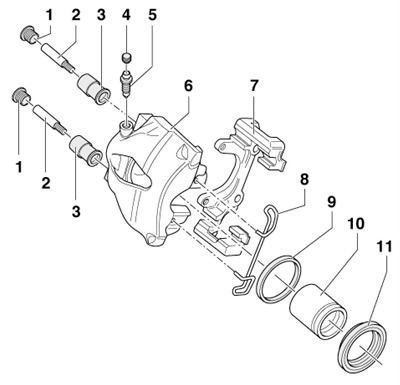
2.16 FN3 Caliper Parts
1 Cap
2 Guide pin, 30 Nm
3 Bearing bushing, inserted into the caliper
4 Cap
5 Bleed nipple, before screwing in, apply a thin layer of G052 150A2 grease to the threads
6 Support
7 Anchor bracket
8 Retaining spring, both ends are inserted into the holes in the caliper
9 Cuff
10 Piston, before installation, apply lithium grease G052 150A2 to it
11 Dust cover
17. Follow the steps described in paragraphs 6-9.
18. Screw the brake hose into the caliper.
19. Remove tool VAG1869/2 or have an assistant release the brake pedal.
20. Insert the retaining spring into the caliper, connect the brake pad wear sensor wiring connector.
21. Bleed the brake hydraulic system (see Chapter 1) and install the wheels.
22. With the vehicle stationary, press the brake pedal hard several times until the pads reach their working position.
23. Correct the brake fluid level.
FNR-G brake mechanisms
24. The details of the front brake mechanism FNR-G are shown in the accompanying illustration.
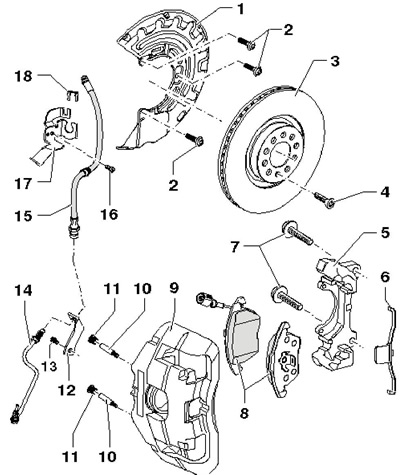
2.24 Front brake mechanism parts FNR-G
1 Brake mechanism shield
2 Shield bolts 1, 12 Nm
3 Brake disc, ventilated, replaceable on both sides at the same time
4 Disc mounting bolt 3.4 Nm
5 Anchor bracket, mounted on the steering knuckle
6 Retaining spring
7 Bracket bolts 5, clean before reuse
8 Brake pads with wear indicator; are replaced in pairs, on both sides at the same time
9 Support
10 Guide pin, 30 Nm
11 Cap
12, 17 Bracket
13 Bolt, 15 Nm
14 Brake pipe; union nuts are tightened with a force of 14 Nm
15 Brake hose
16 Bolt, 8 Nm
18 Retainer
Replacing the pads
25. Jack up the car and place it on reliable supports. Remove the front wheel.
26. Pry and remove the caliper retaining spring from the shoe spring. Use a screwdriver inserted between the springs to do this (see accompanying illustration). When removing the spring, hold it with a piece of cloth to prevent it from jumping out.
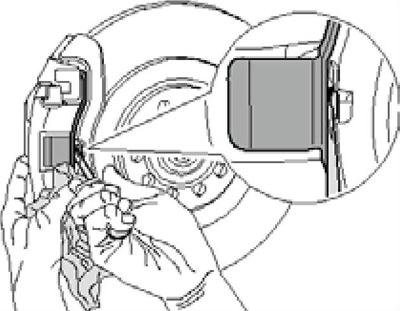
2.26 Removing the retaining spring
27. Disconnect the brake pad wear sensor wiring connector (see accompanying illustration).
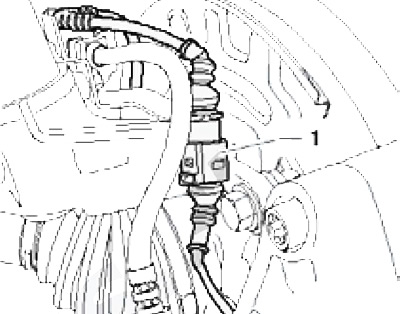
2.27 Brake pad wear sensor wiring connector
28. Remove the caps (see accompanying illustration) and unscrew the guide pins located behind them. Remove the guide pins from the caliper. Remove the caliper without disconnecting the brake hose from it, and secure the caliper to the wire, preventing tension on the hose.
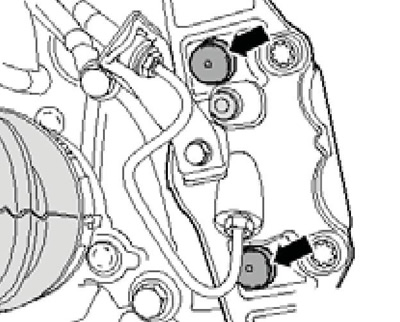
2.28 Guide pin caps
29. Perform the actions described in paragraphs 6-8.
30. Install the inner shoe (with wear sensor) into the piston, and the outer shoe (2 on the accompanying illustration) — in support.
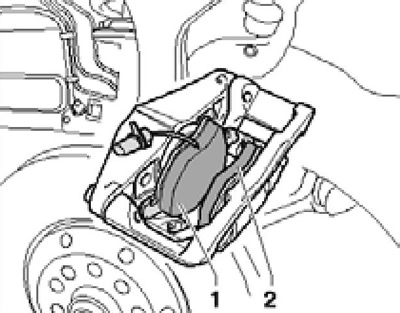
2.30 Installing the pads
31. Install the caliper with pads on the anchor bracket, tighten the guide pins and install the caps on them.
32. Insert the caliper retaining spring into the pad spring and press it under the caliper.
33. Connect the brake pad wear sensor wiring connector and install the wheels.
34. With the vehicle stationary, press the brake pedal hard several times until the pads reach their working position.
35. Correct the brake fluid level.
Removal and installation, repair of the caliper
36. Perform the actions described in paragraphs 25-27.
37. Connect a hose to the bleed nipple on the caliper, lower the other end of this hose into a container to collect the brake fluid. Open the bleed nipple, press the brake pedal with the VAG1869/2 tool (or ask an assistant), close the bleed nipple and disconnect the brake pipe from the brake hose.
38. Remove the brake hose retainer and remove it from the bracket on the caliper.
39. Remove the caps (see illustration 2.28) and unscrew the guide pins located behind them. Remove the guide pins from the caliper and remove the caliper from the anchor bracket. If the caliper needs repair, (piston replacement) follow the illustration 2.16. The only difference is the tightening force of the bleed nipple (5) for the FNR-G mechanism it is 12 Nm.
40. Perform the actions described in paragraphs 6-8 and 30-31.
41. Secure the brake hose to the bracket and connect the brake fluid line to the hose.
42. Remove tool VAG1869/2 or have an assistant release the brake pedal.
43. Connect the brake pad wear sensor wiring connector.
44. Bleed the brake hydraulic system and install the wheels.
45. With the vehicle stationary, press the brake pedal hard several times until the pads reach their working position.
46. Correct the brake fluid level.