



Engine cooling system diagram 1.8-92 kW
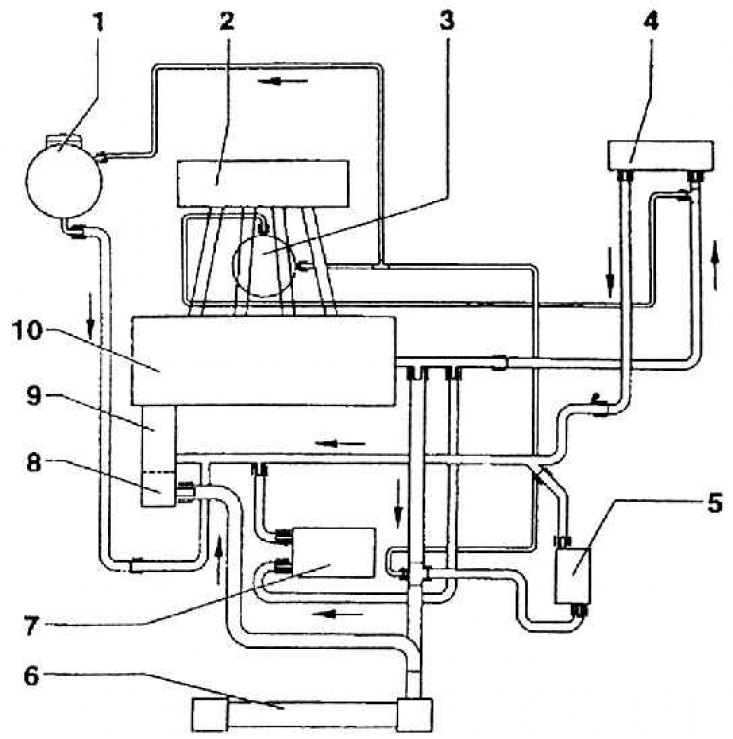
1 – coolant expansion tank; 2 – suction pipe; 3 – throttle control unit; 4 – heat exchanger; 5 – radiator (only when installing an automatic transmission); 6 – radiator; 7 – oil radiator; 8 – coolant regulator; 9 – coolant pump; 10 – engine block-crankcase
Cooling system diagram of the 1.9 TDI engine – 66 kW
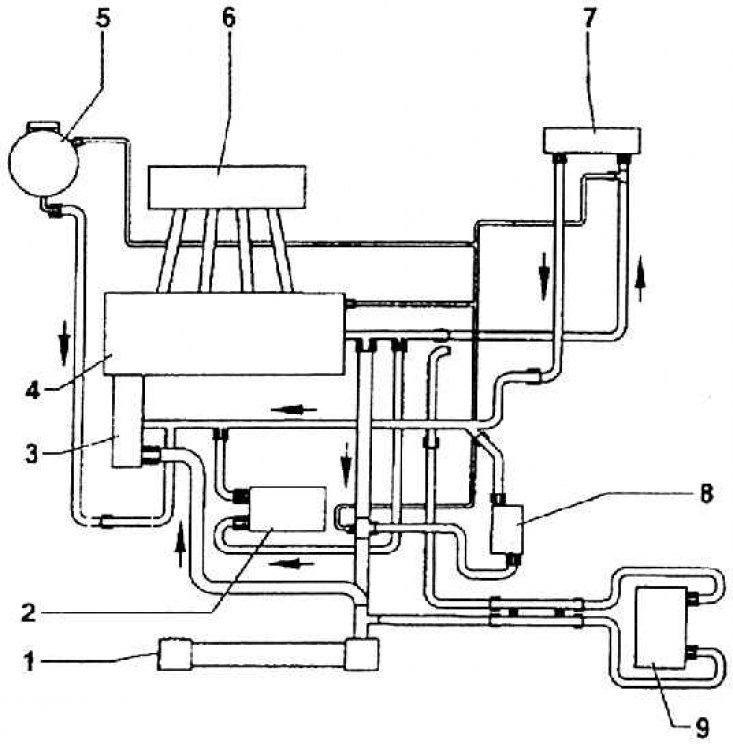
1 – radiator; 2 – oil radiator; 3 – coolant pump with thermostat; 4 – engine block-crankcase; 5 – coolant expansion tank with filler neck; 6 – suction pipe; 7 – heater heat exchanger; 8 – oil cooler for automatic transmission (if it is installed); 9 – additional heater
There are many options for the cooling system of Skoda cars of the Octavia series. The choice depends on both the type of engine used and the type and range of equipment of the car (for example, air conditioning, the presence of a trailer, automatic transmission) and, thirdly, from the climatic conditions, i.e. from the highest temperatures in the area in which the vehicle will be operated (areas with a maximum temperature of up to 40°C and areas with a maximum temperature of up to 50°C).
In principle, the cooling system in all types is designed as forced cooling with an additional one or two fans, which can be single- or dual-speed.
Fans are driven by electric motors. Radiators also come in several types.
Coolant circulation is provided in all types of engines and cooling systems by a pump driven by a belt from the crankshaft. The coolant pump is part of the engine. When using different engines and different vehicle equipment, there are different elements in the cooling systems.
The cooling liquid is further devoted to a separate chapter. Here it is only necessary to say that the cooling liquid is simultaneously used for heating the car, as well as for cooling the oil radiators.
All types of cooling systems have drain plugs.
The plug is placed at the bottom of the radiator in place of the drain nipple. Plug (plastic bolt) sealed with a rubber ring.
Finally, it should be mentioned that the cooling system also includes chambers that house the engine oil cooler and the automatic transmission oil cooler, if installed. Cooling the oil coolers with coolant ensures that the oil temperature does not fluctuate too much.