



Contents: Petrol models 3.6 l ⬇ Petrol models 1.4 l ⬇ Petrol models 1.8 and 2.0 l ⬇ Diesel models 2.0 l (cFFB, CFGB,…⬇
Petrol models 3.6 l
1. Details of the installation of the radiator and its fan are shown in the accompanying illustration.
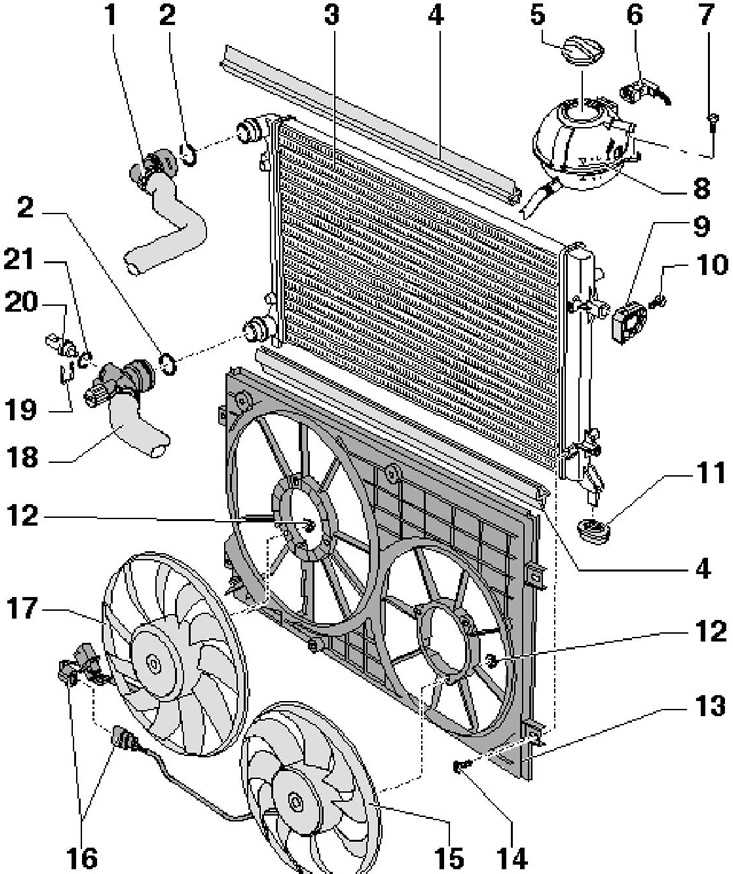
3.1 Details of installation of the radiator and its fans on 3.6L models
1 Upper coolant hose, to connection on cylinder head
2 Sealing ring
3 Radiator, after replacement, replace the coolant
4 Gasket, not installed
5 Threaded cap
6 Connector
7 Bolt, 3 Nm
8 Expansion tank, with D/V "G32" low coolant level
9 Radiator supports, installed with the cutout facing up
10 Bolt, 7 Nm
11 Support
12 Nut, 5 Nm
13 Fan casing
14 Bolt, 5 Nm
15 Right radiator fan "V35"
16 Connectors
17 Radiator fan "V7", with fan control unit "J293"
18 Lower coolant hose, to thermostat connection
19 Retainer
20 Sensor "G83" coolant temperature at the radiator outlet
21 Sealing ring, must be replaced
2. Remove the two upper fan shroud mounting bolts (arrows in illustration 15.16 Chapter 2).
3. Remove the sound insulation under the engine compartment (see Chapter 11) and unscrew the bolts (2 and 3 in Illustration 5.11 Chapter 2) swinging support.
4. Disconnect the connector (1 in illustration 15.16 Chapter 2) and unscrew the two lower bolts securing the fan shroud.
5. Have an assistant push the engine back as far as possible and remove the fan shroud towards the rear.
6. Disconnect the connectors (1 and 2 in the accompanying illustration) and release the wiring. Then loosen the nuts (arrows) and remove the fan.
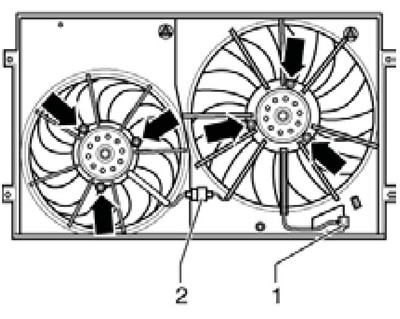
3.6 Fan fasteners and connectors
7. If necessary, after removing the fan shroud, the radiator can be removed as described below.
8. Drain the coolant (see section 2).
9. Disconnect the connector of the coolant temperature sensor "G83" at the radiator outlet and tie the coolant hose at the bottom of the radiator.
10. Remove the front bumper (see Chapter 11).
11. Remove the bolts (1 on the accompanying illustration) radiator mounts. Note: Do not open the refrigerant circuit or allow excessive tension, bending or kinking of refrigerant lines.
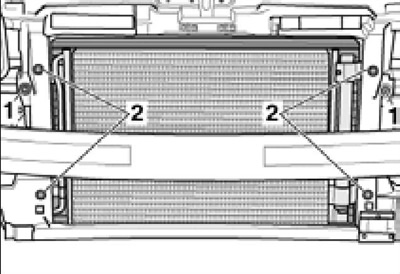
3.11 Fastening the condenser (2) and radiator (1)
12. Have an assistant pull the radiator back, remove its supports on the sides and pull it out of the lower supports.
13. Loosen the lower condenser bolts (see accompanying illustration) and remove the radiator downwards.
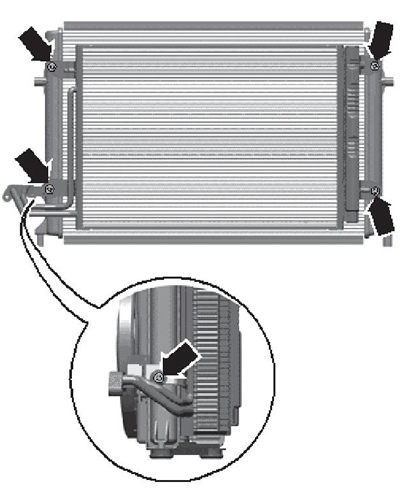
3.13 Capacitor fastening
14. Installation is carried out in reverse order.
Petrol models 1.4 l
15. Details of the installation of the radiator and its fans are shown in the accompanying illustration.
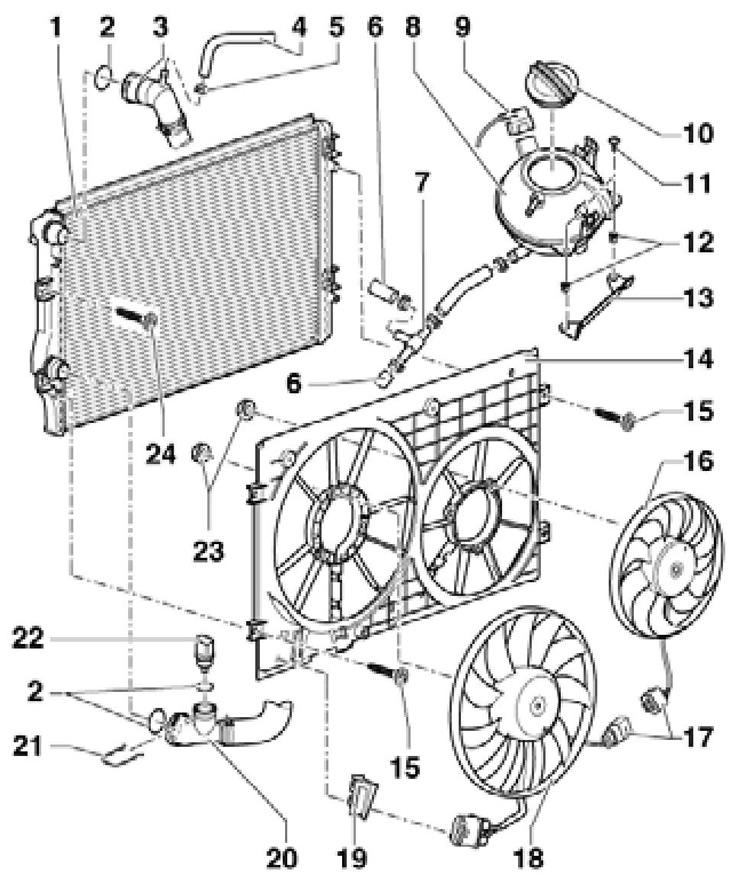
3.15 Details of installation of the radiator and its fans on 1.4 l models
1 Radiator
2 O-ring, subject to replacement
3 Upper coolant hose, to cylinder head
4 Coolant hose, to expansion tank
5 Spring clamp
6 Coolant hose, to coolant pipe for intercooler radiator
7 Connecting tube
8 Expansion tank, with sensor "G32" low coolant level
9, 17 Electrical wiring connector
10 Tank lid 8
11 Bolt, 3 Nm
12 Plastic inserts for bolts
13 Support
14 Fan casing
15 Bolt, 5 Nm
16 Right radiator fan "V35"
18 Radiator fan "V7", with control unit "J293"
19 Connector holder
20 Lower coolant hose, to thermostat housing
21 Fixer
22 Sensor "G83" coolant temperature at the radiator outlet
23 Nut, 5 Nm
24 Intercooler radiator bolt, 5 Nm
16. To remove the fan casing, it is necessary to remove the air cleaner (see Chapter 4). The casing and fans are removed in the same way as on the 3.6L engine (see paragraphs 2-6), however, there is no need to unscrew the bolts of the rocker support, and the casing should be removed downwards (no need to push the engine back).
17 The radiator is removed only after removing the fan casing and draining the cooling system. To remove the radiator, simply disconnect the hoses from it and unscrew the 4 bolts that secure it. The radiator is removed downwards.
Petrol models 1.8 and 2.0 l
18. The details of installing the radiator and its fans are shown in the accompanying illustration. To remove the fan shroud, follow the steps described in paragraphs 19-21. To remove the radiator, proceed to paragraph 22.
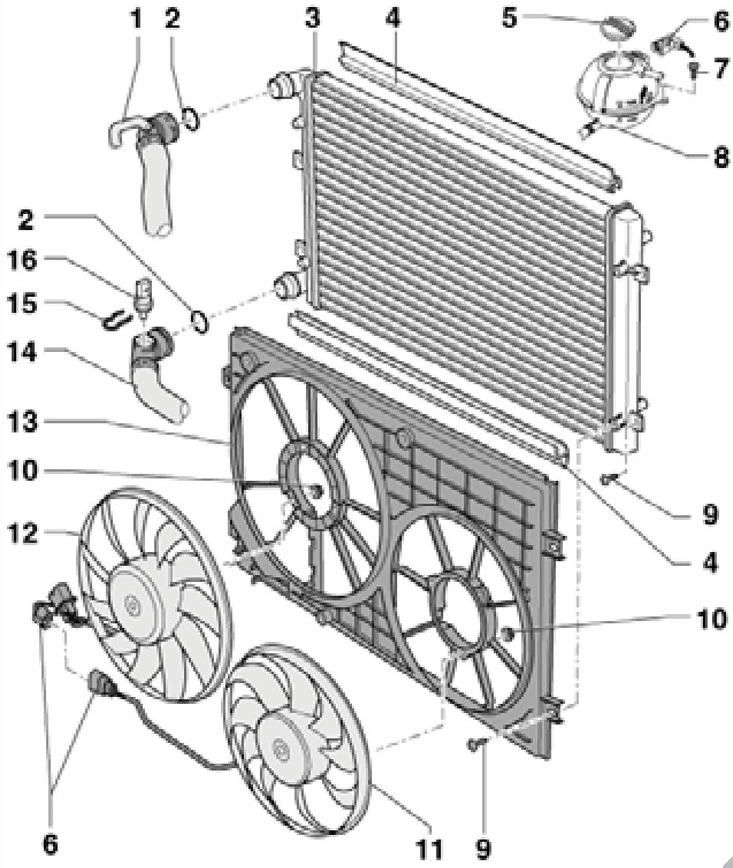
3.18 Details of installation of the radiator and its fans on petrol models 1.8 and 2.0 l
1 Upper coolant hose, to coolant pump
2 Sealing ring
3 Radiator, after replacement, replace the coolant
4 Gasket, subject to replacement
5 Tank lid 8
6 Electrical wiring connector
7 Bolt, 3 Nm
8 Expansion tank, with sensor "G32" low coolant level
9 Bolt, 5 Nm
10 Nut, 10 Nm
11 Right radiator fan "V35"
12 Radiator fan "V7", with control unit "J293"
13 Fan casing
14 Lower coolant hose, to thermostat housing
15 Retainer
16 Sensor "G83" coolant temperature at the radiator outlet
19. Press the clamps (see accompanying illustration) and remove the connection cover.
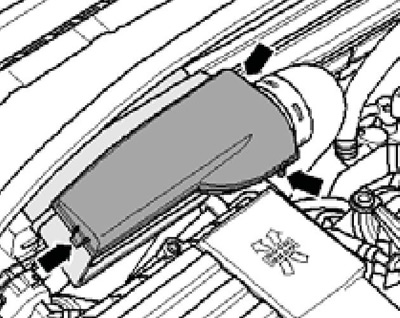
3.19 Connection cover clamps
20. Remove the bolts (arrows in the accompanying illustration) connections (1) and remove the connecting hose (2) from the guide.
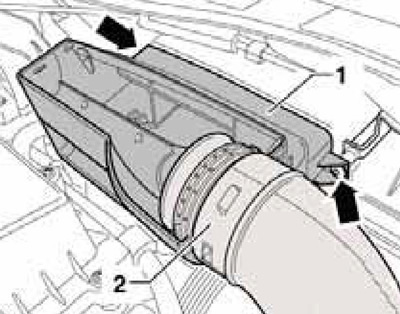
3.20 Fastening the connection
21. Remove the upper fan shroud bolts (arrows in the accompanying illustration), remove the sound insulation under the engine compartment (see Chapter 11), disconnect the connector (1), unscrew the lower casing bolts and remove it downwards.
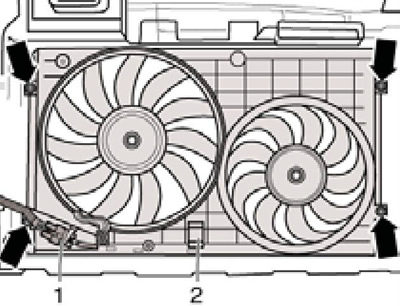
3.21 Fan shroud fastening
22. Drain the coolant (see Section 2).
23. Disconnect the connector (2 in illustration 23.19 Chapter 2) and remove the fan shroud (see paragraphs 19-21).
24. Disconnect the coolant hoses from the radiator at the top and bottom.
25. Remove the bolts (1 and 2 in the accompanying illustration) and remove the radiator downwards.
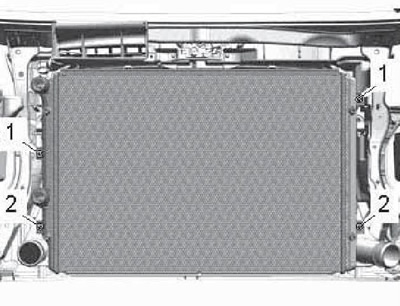
3.25 Radiator fastening
Diesel models 2.0 l (cFFB, CFGB, CLJA engines)
26. Details of the installation of the radiator and its fans are shown in the accompanying illustration.
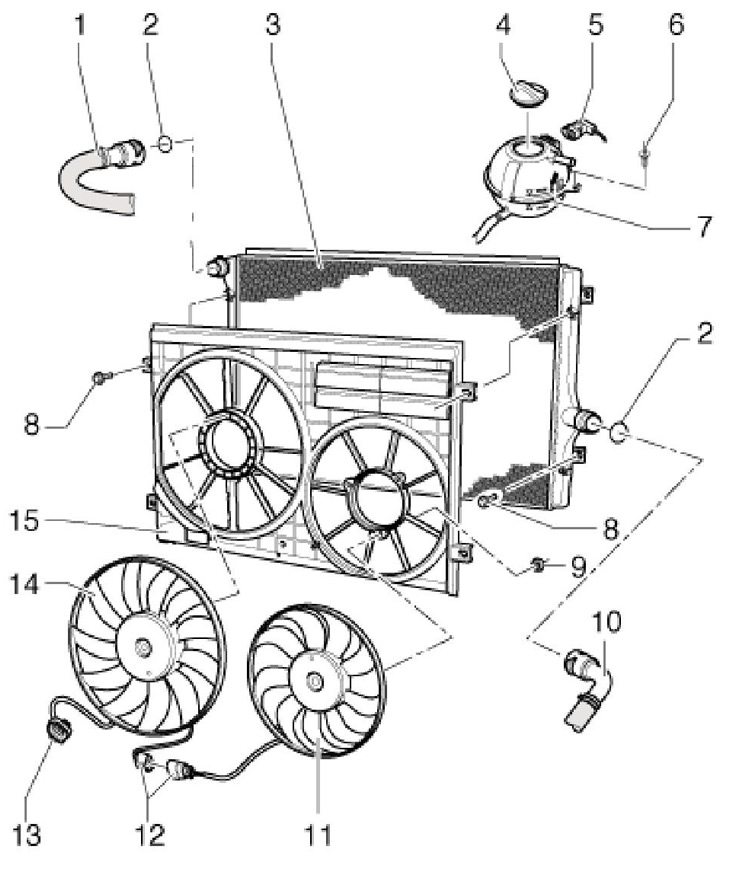
3.26 Details of installation of the radiator and its fans
1 Upper coolant hose, to cylinder head
2 O-ring, subject to replacement
3 Radiator
4 Tank lid 7
5, 12, 13 Connector
6 Wiring Bolt, 3 Nm
7 Expansion tank, with sensor "G32" low coolant level
8 Bolt, 5 Nm
9 Nut, 5 Nm
10 Lower coolant hose, to 4/2-way valve and thermostat housing
11 Right radiator fan "V35"
12 Radiator fan "V7", with control unit "J293"
15 Fan casing
27. To remove the fan casing, it is necessary to remove the left air pressure hose (see Chapter 4). The casing is removed in a downward direction.
28. The radiator is removed only after removing the fan casing and draining the cooling system, similar to 1.8 and 2.0 l petrol engines (see above). The high-pressure refrigerant sensor connector must first be disconnected.