



Vehicle maintenance (petrol) Skoda Felicia

Maintenance Specifications (All Models)
Petrol models Volumes of working fluids Engine oil (including oil filter), l Engine 1.3 l 4.5 Engine 1.6 l 3.5 The amount of oil required to raise its level from the MIN mark to the MAX mark on the dipstick, l 1.0...
Petrol models Volumes of working fluids Engine oil (including oil filter), l Engine 1.3 l 4.5 Engine 1.6 l 3.5 The amount of oil required to raise its level from the MIN mark to the MAX mark on the dipstick, l 1.0...

Weekly checks (all models)
Introduction The mandatory regular maintenance procedures for a vehicle include a set of simple checks that take a minimum of time but allow you to avoid unexpected expenses for sometimes expensive repairs. These checks...
Introduction The mandatory regular maintenance procedures for a vehicle include a set of simple checks that take a minimum of time but allow you to avoid unexpected expenses for sometimes expensive repairs. These checks...

View of the engine compartment
View of the engine compartment of 1.3L models 1 - Suspension strut spacer bar; 2 - Windscreen wiper drive electric motor; 3 - Heater unit; 4 - Battery; 5 - Carbon adsorber purge solenoid valve; 6 - Carbon adsorber; 7 -...
View of the engine compartment of 1.3L models 1 - Suspension strut spacer bar; 2 - Windscreen wiper drive electric motor; 3 - Heater unit; 4 - Battery; 5 - Carbon adsorber purge solenoid valve; 6 - Carbon adsorber; 7 -...
Schedule of current maintenance
The intervals for routine vehicle maintenance proposed in this Section are designed for independent performance of all procedures by the vehicle owner. The duration of the intervals was determined based on the...
The intervals for routine vehicle maintenance proposed in this Section are designed for independent performance of all procedures by the vehicle owner. The duration of the intervals was determined based on the...
Regular car maintenance
every 7500 km or once every 6 months. If from the moment of purchasing a new car the owner carefully adheres to the schedule of current maintenance, checks the fluid levels and the condition of components subject to...
every 7500 km or once every 6 months. If from the moment of purchasing a new car the owner carefully adheres to the schedule of current maintenance, checks the fluid levels and the condition of components subject to...

Changing engine oil and oil filter
Every 15,000 km. 1. Regular engine oil changes are one of the most important routine maintenance procedures that a car owner can perform on their own. Over time, engine oil becomes thinner and more contaminated, which...
Every 15,000 km. 1. Regular engine oil changes are one of the most important routine maintenance procedures that a car owner can perform on their own. Over time, engine oil becomes thinner and more contaminated, which...

Checking the condition of the front brake pads and discs
1. Firmly set the parking brake, then jack up the front of the vehicle and support it. Remove the front wheels. 2. A visual assessment of the residual thickness of the friction linings can be made through the viewing...
1. Firmly set the parking brake, then jack up the front of the vehicle and support it. Remove the front wheels. 2. A visual assessment of the residual thickness of the friction linings can be made through the viewing...
Checking the engine management system for proper operation
Once a year, regardless of the mileage. 1. This check, although not strictly mandatory, is included in the routine maintenance procedures specified by the manufacturer. During the check, the condition and proper...
Once a year, regardless of the mileage. 1. This check, although not strictly mandatory, is included in the routine maintenance procedures specified by the manufacturer. During the check, the condition and proper...
Checking and adjusting valve clearances (1.3L models)
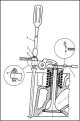
Valve clearance adjustment 1 - Measuring probe; 2 - Lock nut; 3 - Adjusting screw; 4 - Screwdriver; 5 - Key Note: The valve lifters of 1.6L engines are equipped with hydraulic compensators, so there is no need to adjust...
Valve clearance adjustment 1 - Measuring probe; 2 - Lock nut; 3 - Adjusting screw; 4 - Screwdriver; 5 - Key Note: The valve lifters of 1.6L engines are equipped with hydraulic compensators, so there is no need to adjust...

Checking the condition of the hoses and identifying sources of leaks
1. Jack up the front of the car and place it on supports. Inspect the mating surfaces of the power unit from the outside, paying attention to traces of oil and coolant leaks. Particular attention should be paid to the...
1. Jack up the front of the car and place it on supports. Inspect the mating surfaces of the power unit from the outside, paying attention to traces of oil and coolant leaks. Particular attention should be paid to the...

Checking the condition of the protective covers of the drive shafts
1. Jack up the car and place it on supports. Turn the steering wheel all the way and slowly rotate the front wheel, visually assessing the condition of the rubber protective boot of the outer CV joint of the drive...
1. Jack up the car and place it on supports. Turn the steering wheel all the way and slowly rotate the front wheel, visually assessing the condition of the rubber protective boot of the outer CV joint of the drive...

Suspension and steering drive
Front suspension and steering drive 1. Jack up the front of the car and place it on supports. 2. Visually inspect the condition of the ball joint dust boots and steering rack housing protective covers. Replace worn or...
Front suspension and steering drive 1. Jack up the front of the car and place it on supports. 2. Visually inspect the condition of the ball joint dust boots and steering rack housing protective covers. Replace worn or...

Checking the exhaust system components
1. When the engine is cold (at least an hour after it was turned off) carefully inspect the system sections from the engine exhaust manifold to the end of the exhaust pipe. For convenience, the car should be raised...
1. When the engine is cold (at least an hour after it was turned off) carefully inspect the system sections from the engine exhaust manifold to the end of the exhaust pipe. For convenience, the car should be raised...
Checking the condition of the coolant
Warning! Wait until the engine has cooled down completely before proceeding with the procedure. Avoid contact of antifreeze with eyes, exposed skin, and painted surfaces of the car body panels. Wash off accidental...
Warning! Wait until the engine has cooled down completely before proceeding with the procedure. Avoid contact of antifreeze with eyes, exposed skin, and painted surfaces of the car body panels. Wash off accidental...
Lubrication of locks and hinges
1. Moving along the sides of the car, lubricate the hinges of all doors and the hood with liquid machine oil (don't forget about the tailgate hinges). Also lubricate the latches, mechanisms and strikers of the door...
1. Moving along the sides of the car, lubricate the hinges of all doors and the hood with liquid machine oil (don't forget about the tailgate hinges). Also lubricate the latches, mechanisms and strikers of the door...
Checking the composition of exhaust gases
This test, despite the need to use a special gas analyzer, is included by the manufacturer of Skoda cars in the number of routine vehicle maintenance procedures. However, the authors of this Manual believe that there is...
This test, despite the need to use a special gas analyzer, is included by the manufacturer of Skoda cars in the number of routine vehicle maintenance procedures. However, the authors of this Manual believe that there is...
Checking windshield wipers/washers/headlight lenses
1. Check the condition of the windscreen wiper blades (see section Weekly checks ). 2. Check the patency of the washer fluid supply nozzles. The jets of fluid from the nozzles should be supplied with good pressure...
1. Check the condition of the windscreen wiper blades (see section Weekly checks ). 2. Check the patency of the washer fluid supply nozzles. The jets of fluid from the nozzles should be supplied with good pressure...
Car road tests
Every 30,000 km. Instruments and electrical equipment 1. Check the proper functioning of control devices and electrical equipment. 2. Make sure that the readings of the meters are correct, turn on all electricity...
Every 30,000 km. Instruments and electrical equipment 1. Check the proper functioning of control devices and electrical equipment. 2. Make sure that the readings of the meters are correct, turn on all electricity...

Replacing the air cleaner filter element
1.3L models with SPFI 1. Release the wire fasteners located around the perimeter of the upper air cleaner housing cover. 2. Remove the three mounting bolts and... ... carefully lift the cover, ensuring free access to...
1.3L models with SPFI 1. Release the wire fasteners located around the perimeter of the upper air cleaner housing cover. 2. Remove the three mounting bolts and... ... carefully lift the cover, ensuring free access to...

Replacing Spark Plugs — 1.3L Models
1. The efficiency of the power unit largely depends on the proper functioning of the spark plugs. It is important that the spark plugs correspond in size to the engine installed in the car ( see Specifications )....
1. The efficiency of the power unit largely depends on the proper functioning of the spark plugs. It is important that the spark plugs correspond in size to the engine installed in the car ( see Specifications )....
Checking the Timing Belt Condition — 1.6L Models
Note: This check does not apply to 1.3L models that use a timing chain. 1. Remove the upper timing belt cover (see Chapter Engine repair ). 2. Carefully inspect the belt for cracks (pay special attention to the...
Note: This check does not apply to 1.3L models that use a timing chain. 1. Remove the upper timing belt cover (see Chapter Engine repair ). 2. Carefully inspect the belt for cracks (pay special attention to the...

Lubricating the Distributor — 1.3L Models
1. Remove the locking screw from the distributor housing. 2. Add a couple of drops of engine oil into the opened hole. 3. In case of performing the procedure in situ (without removing the distributor), try to avoid...
1. Remove the locking screw from the distributor housing. 2. Add a couple of drops of engine oil into the opened hole. 3. In case of performing the procedure in situ (without removing the distributor), try to avoid...

Checking the condition of the auxiliary drive belt
1. The condition of the auxiliary drive belt can be checked visually. Pay attention to the presence of abrasions, cracks, delamination, etc. Defects. To inspect the ribbed side of the belt, twist it. 2. To provide...
1. The condition of the auxiliary drive belt can be checked visually. Pay attention to the presence of abrasions, cracks, delamination, etc. Defects. To inspect the ribbed side of the belt, twist it. 2. To provide...
Checking the airbag system
Perform a visual inspection of the external condition of the airbag unit (see Chapter On-board electrical equipment ). If signs of malfunction are detected, the defective unit must be replaced.
Perform a visual inspection of the external condition of the airbag unit (see Chapter On-board electrical equipment ). If signs of malfunction are detected, the defective unit must be replaced.
Checking emission control systems
1. A detailed description of the check of the condition of the components of the toxicity reduction systems is given in Chapter Power supply system . 2. During the inspection, the external condition of the system...
1. A detailed description of the check of the condition of the components of the toxicity reduction systems is given in Chapter Power supply system . 2. During the inspection, the external condition of the system...

Checking the condition of the shoes and drums of the rear brake mechanisms
1. Support the front wheels, then jack up the rear of the car and place it on stands. 2. A quick check of the residual thickness of the friction linings of the shoes can be made through the hole in the brake mechanism...
1. Support the front wheels, then jack up the rear of the car and place it on stands. 2. A quick check of the residual thickness of the friction linings of the shoes can be made through the hole in the brake mechanism...
Checking body panels for signs of corrosion development
To avoid breach of factory warranty obligations, this inspection should be entrusted to specialists of the Skoda branded car service. The work includes a thorough inspection of the condition of the paintwork of the body...
To avoid breach of factory warranty obligations, this inspection should be entrusted to specialists of the Skoda branded car service. The work includes a thorough inspection of the condition of the paintwork of the body...

Checking the transmission oil level
Every 60,000 km. 1. Drive the car onto a ramp/inspection pit, or jack it up and place it on supports. Make sure that the car raised above the ground is positioned strictly horizontally. Check the transmission oil level...
Every 60,000 km. 1. Drive the car onto a ramp/inspection pit, or jack it up and place it on supports. Make sure that the car raised above the ground is positioned strictly horizontally. Check the transmission oil level...

Replacing Spark Plugs — 1.6L Models
1. The efficiency of the power unit largely depends on the proper functioning of the spark plugs. It is important that the spark plugs correspond in size to the engine installed in the car. Provided that the above...
1. The efficiency of the power unit largely depends on the proper functioning of the spark plugs. It is important that the spark plugs correspond in size to the engine installed in the car. Provided that the above...

Replacing the fuel filter
Warning: Remember that gasoline is a volatile and highly flammable liquid - take appropriate safety precautions. 1. Release residual pressure in the fuel system. 2. The fuel filter is located at the rear under the car...
Warning: Remember that gasoline is a volatile and highly flammable liquid - take appropriate safety precautions. 1. Release residual pressure in the fuel system. 2. The fuel filter is located at the rear under the car...

Transmission oil change
1. Changing the transmission oil is much faster and easier if you first take the car for a short drive, warming up the power unit to normal operating temperature. 2. Park the vehicle on a level, horizontal surface, if...
1. Changing the transmission oil is much faster and easier if you first take the car for a short drive, warming up the power unit to normal operating temperature. 2. Park the vehicle on a level, horizontal surface, if...
Replacing brake fluid
Once every three years, regardless of the mileage. Warning! The fluid used in the hydraulic circuit of the brake system is highly toxic and chemically aggressive. Try to avoid getting brake fluid in your eyes and on...
Once every three years, regardless of the mileage. Warning! The fluid used in the hydraulic circuit of the brake system is highly toxic and chemically aggressive. Try to avoid getting brake fluid in your eyes and on...

Replacing the coolant
Draining the cooling system Note. Wait until the engine has completely cooled down before proceeding with the procedure. Avoid contact with eyes, exposed areas of the body, or painted surfaces of body panels. Wash away...
Draining the cooling system Note. Wait until the engine has completely cooled down before proceeding with the procedure. Avoid contact with eyes, exposed areas of the body, or painted surfaces of body panels. Wash away...
This section is available on russian, bulgarian, belarusian, ukrainian, serbian, croatian, romanian, polish, slovak, hungarian
Read similar sections on other Skoda models
➧ General information: Maintenance Skoda Fabia 2 (2007-2014)
➧ General information: Maintenance and care Skoda Rapid 1 (2012-2022)
➧ General information: Maintenance Skoda Octavia 1 (1996-2004)
➧ General information: Maintenance Skoda Superb 2 (2008-2015)
➧ General information: Maintenance Skoda Kodiaq 1 (2016-2024)
➧ General information: Maintenance Skoda Yeti (2009-2017)
Link to this section in various formats
TEXTHTMLBB Code
- General information
- Maintenance
- Troubleshooting
- Power unit
- Engine in car
- Engine overhaul
- Cooling and heating
- Fuel and exhaust system
- Fuel injection system
- Ignition system
- Transmission
- Clutch
- Manual gearbox
- Drive shafts
- Chassis (running gear)
- Brake system
- Car suspension
- Steering
- Body and interior
- Exterior (external elements)
- Interior (salon)
- Electrical equipment
- Equipment and devices
- Power devices
- Electrical circuits
- General information
- Introduction to guide
- User manual
- Maintenance (petrol)
- Maintenance (diesel)
- Power unit
- Petrol engine 1.3 l
- Petrol engine 1.6 l
- Diesel engine
- Engine overhaul
- Cooling system
- Fuel system (carburetor)
- Central injection (SPFI)
- Multipoint injection (MPFI)
- Diesel power system
- Decreased toxicity
- Engine electrics
- Transmission
- Clutch
- Car gearbox
- Drive shafts
- Chassis (running gear)
- Brake system
- Car suspension
- Steering
- Body and interior
- Exterior (external elements)
- Interior (salon)
- Doors, locks and windows
- Electrical equipment
- Equipment and devices
- Headlights and lighting
- Electrical circuits