



Brake system of the car Skoda Favorit

Brake system specifications
System type — With vacuum booster. Front brakes are disc, rear — drum. The brake hydraulic line is divided into two diagonal circuits. The pressure in the rear brake units is regulated by special valves. The hand brake,...
System type — With vacuum booster. Front brakes are disc, rear — drum. The brake hydraulic line is divided into two diagonal circuits. The pressure in the rear brake units is regulated by special valves. The hand brake,...

General description of the braking system
Fig. 9.1. Location of brake system components (hatchback, Station Wagon and Van models) 1. Assembling the vacuum booster of the master cylinder; 2. Brake pipe; 3. Hose; 4. Brake pipe; 5. Brake pipe; 6. Brake pipe; 7....
Fig. 9.1. Location of brake system components (hatchback, Station Wagon and Van models) 1. Assembling the vacuum booster of the master cylinder; 2. Brake pipe; 3. Hose; 4. Brake pipe; 5. Brake pipe; 6. Brake pipe; 7....

Brake pedal — removal, inspection and installation
Removal 1. Remove the clutch pedal ( see Section 6 ). 2. Unhook the return spring from the brake pedal, then remove the black plastic clutch pedal pivot bushing (see photo). 3. Remove the locking bracket securing the...
Removal 1. Remove the clutch pedal ( see Section 6 ). 2. Unhook the return spring from the brake pedal, then remove the black plastic clutch pedal pivot bushing (see photo). 3. Remove the locking bracket securing the...

Brake pedal installation height — adjustment
Note: Although the pedal height check is done inside the vehicle, the adjustment is done in the engine compartment. This procedure is much easier if you have an assistant to help you. 1. While working in the passenger...
Note: Although the pedal height check is done inside the vehicle, the adjustment is done in the engine compartment. This procedure is much easier if you have an assistant to help you. 1. While working in the passenger...

Brake pedal cross rod — removal and installation
Fig. 9.4. Assembling the brake pedal rod and vacuum booster/master cylinder 1. Booster push rod and threaded adjuster; 2. Assembly of the vacuum booster unit; 3. Rubber cover; 4. Compaction; 5. Washer; 6. O-ring seal;...
Fig. 9.4. Assembling the brake pedal rod and vacuum booster/master cylinder 1. Booster push rod and threaded adjuster; 2. Assembly of the vacuum booster unit; 3. Rubber cover; 4. Compaction; 5. Washer; 6. O-ring seal;...

Vacuum booster unit — removal and installation
Removal 1. Open the hood and disconnect the hose from the vacuum booster unit (see photo). 2. Remove the two nuts securing the master cylinder to the vacuum booster unit. 3. Very carefully move the master cylinder...
Removal 1. Open the hood and disconnect the hose from the vacuum booster unit (see photo). 2. Remove the two nuts securing the master cylinder to the vacuum booster unit. 3. Very carefully move the master cylinder...
Vacuum Booster Block Non-Return Valve — Checking Serviceability
1. When checking the valve for proper operation, remember that its function is to allow air to flow in only one direction, namely from the vacuum booster unit. If the valve allows air to flow in both directions or...
1. When checking the valve for proper operation, remember that its function is to allow air to flow in only one direction, namely from the vacuum booster unit. If the valve allows air to flow in both directions or...

Vacuum booster non-return valve — removal and installation
Removal 1. Cut or release the clamps securing the hose to the valve, then disconnect the hose and remove the valve, making sure to note its correct location (see photo). Installation 2. Install in the reverse order of...
Removal 1. Cut or release the clamps securing the hose to the valve, then disconnect the hose and remove the valve, making sure to note its correct location (see photo). Installation 2. Install in the reverse order of...
Vacuum Booster Hose — Replacement
1. Cut or loosen the clamps securing the hose, then separate the hose from the couplings and from the non-return valve. 2. Install in the reverse order of removal, using new clamps if necessary. Cut the new hose to the...
1. Cut or loosen the clamps securing the hose, then separate the hose from the couplings and from the non-return valve. 2. Install in the reverse order of removal, using new clamps if necessary. Cut the new hose to the...

Brake hydraulic system — bleeding
Note: Brake fluid is poisonous. Rinse any parts of your body that come into contact with the fluid with plenty of cold running water and seek immediate medical attention if the fluid gets into your mouth or eyes. Some...
Note: Brake fluid is poisonous. Rinse any parts of your body that come into contact with the fluid with plenty of cold running water and seek immediate medical attention if the fluid gets into your mouth or eyes. Some...

Brake pipes and hoses — replacement
Note: Before you begin, please refer to the Note given at the beginning Chapters 9 . 1. If any tube or hose needs to be replaced, remove the master cylinder feed tank cap and re-tighten it, placing a piece of...
Note: Before you begin, please refer to the Note given at the beginning Chapters 9 . 1. If any tube or hose needs to be replaced, remove the master cylinder feed tank cap and re-tighten it, placing a piece of...
Master cylinder — removal, overhaul and installation
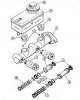
Fig. 9.5. Master cylinder components (early modification) 1. Brake pressure control valves (hatchback, Station Wagon and Van models only); 2. Master cylinder; 3. Piston seal; 4. Washer; 5. Piston cuff; 6. Spring...
Fig. 9.5. Master cylinder components (early modification) 1. Brake pressure control valves (hatchback, Station Wagon and Van models only); 2. Master cylinder; 3. Piston seal; 4. Washer; 5. Piston cuff; 6. Spring...

Brake pressure control valves (except Pickup models)
Fig. 9.8. Components of the brake pressure regulating valve (except Pickup models) 1. End cap; 2. Piston; 3. Small O-ring; 4. Large O-ring; 5. Piston spring; 6. Valve spring; 7. Plastic valve; 8. Valve body; 9. O-ring...
Fig. 9.8. Components of the brake pressure regulating valve (except Pickup models) 1. End cap; 2. Piston; 3. Small O-ring; 4. Large O-ring; 5. Piston spring; 6. Valve spring; 7. Plastic valve; 8. Valve body; 9. O-ring...

Front Brake Pads — Replacement
Fig. 9.10. Front brake caliper components 1. Mounting bracket; 2. Guide pin; 3. Rubber dust seal; 4. Support; 5. Piston seal; 6. Piston; 7. Piston dust seal; 8. Bleed nipple; 9. Dust cap; 10. Brake shoe; 11. Guide pin...
Fig. 9.10. Front brake caliper components 1. Mounting bracket; 2. Guide pin; 3. Rubber dust seal; 4. Support; 5. Piston seal; 6. Piston; 7. Piston dust seal; 8. Bleed nipple; 9. Dust cap; 10. Brake shoe; 11. Guide pin...

Front Brake Caliper — Removal and Installation
Note: Before you begin, please refer to the Note given at the beginning Chapters 9 and the Warning given at the beginning Chapters 13 (regarding asbestos dust). Removal 1. Jack up the front of the vehicle, securely...
Note: Before you begin, please refer to the Note given at the beginning Chapters 9 and the Warning given at the beginning Chapters 13 (regarding asbestos dust). Removal 1. Jack up the front of the vehicle, securely...

Front Brake Caliper — Overhaul
Fig. 9.11. Front brake caliper in section 1. Support; 2. Piston; 3. Piston seal; 4. Piston dust seal; 5. Brake pads. Note: Before you begin, please refer to the Note given at the beginning Chapters 9 and the Warning...
Fig. 9.11. Front brake caliper in section 1. Support; 2. Piston; 3. Piston seal; 4. Piston dust seal; 5. Brake pads. Note: Before you begin, please refer to the Note given at the beginning Chapters 9 and the Warning...

Front Brake Disc — Inspection, Removal and Installation
Note: Before you begin, please refer to the Note given at the beginning Chapters 9 and the Warning given at the beginning Chapters 13 (regarding asbestos dust). Inspection Note: To ensure equal and effective braking,...
Note: Before you begin, please refer to the Note given at the beginning Chapters 9 and the Warning given at the beginning Chapters 13 (regarding asbestos dust). Inspection Note: To ensure equal and effective braking,...

Front Brake Disc Guard — Removal and Installation
Note: Before you begin, please see the Warning at the beginning Chapters 13 . Removal 1. See the relevant Chapters Section 10 and this Section and remove the steering knuckle, then separate the brake disc and push out...
Note: Before you begin, please see the Warning at the beginning Chapters 13 . Removal 1. See the relevant Chapters Section 10 and this Section and remove the steering knuckle, then separate the brake disc and push out...

Brake Pressure Regulating Valve (Pickup Models) — Checking Serviceability
1. If one or both rear wheels lock up several times during heavy braking, first check that this is not caused by adverse road conditions or incorrect tire pressure/excessive tread wear. Then check the condition of all...
1. If one or both rear wheels lock up several times during heavy braking, first check that this is not caused by adverse road conditions or incorrect tire pressure/excessive tread wear. Then check the condition of all...

Brake Pressure Regulating Valve (Pickup Models) — Removal, Overhaul and Installation
Fig. 9.12. Brake pipes of the pressure regulation valve in the brake system (pickup models) - top view 1. To the right rear brake; 2. To the left rear brake; 3. From the master cylinder (primary circuit); 4. From the...
Fig. 9.12. Brake pipes of the pressure regulation valve in the brake system (pickup models) - top view 1. To the right rear brake; 2. To the left rear brake; 3. From the master cylinder (primary circuit); 4. From the...

Rear Brake Drum — Removal, Inspection and Installation
Note: Before you begin, please refer to the Warning given at the beginning Chapters 21 . Removal 1. Jack up the rear of the vehicle, support it securely on axle stands, then remove the wheel. 2. Using chalk or paint,...
Note: Before you begin, please refer to the Warning given at the beginning Chapters 21 . Removal 1. Jack up the rear of the vehicle, support it securely on axle stands, then remove the wheel. 2. Using chalk or paint,...

Rear Brake Pads — Inspection and Replacement
Warning: Brake pad sets on coaxial wheels should be replaced at the same time - never replace pads on just one wheel. This will result in uneven braking. Please note that dust generated by pad wear may contain asbestos,...
Warning: Brake pad sets on coaxial wheels should be replaced at the same time - never replace pads on just one wheel. This will result in uneven braking. Please note that dust generated by pad wear may contain asbestos,...

Rear Brake Cylinder — Removal, Overhaul and Installation
Fig. 9.15. Rear brake cylinder components 1. Cylinder; 2. Piston; 3. Piston seal; 4. Spring; 5. Plunger; 6. Rubber protective cover; 7. Bleed nipple; 8. Dust cap. Fig. 9.16. Sectional view of rear brake cylinder 1....
Fig. 9.15. Rear brake cylinder components 1. Cylinder; 2. Piston; 3. Piston seal; 4. Spring; 5. Plunger; 6. Rubber protective cover; 7. Bleed nipple; 8. Dust cap. Fig. 9.16. Sectional view of rear brake cylinder 1....

Drum Brake Support Shield — Removal and Installation
Note: Before you begin, please refer to the Note given at the beginning Chapters 9 , and the Warning given at the beginning Chapters 21 (regarding asbestos dust). Removal 1. Remove the rear wheel hub ( see Section 10 )....
Note: Before you begin, please refer to the Note given at the beginning Chapters 9 , and the Warning given at the beginning Chapters 21 (regarding asbestos dust). Removal 1. Remove the rear wheel hub ( see Section 10 )....

Handbrake lever — removal and installation
Fig. 9.17. Handbrake components 1. Handbrake lever; 2. Cotter pin; 3. Release button; 4. Spring; 5. Handle; 6. Traction; 7. Hinge bushing; 8. Cable compensator; 9. Hinge pin (rivet); 10. Lever latch; 11. Dentate...
Fig. 9.17. Handbrake components 1. Handbrake lever; 2. Cotter pin; 3. Release button; 4. Spring; 5. Handle; 6. Traction; 7. Hinge bushing; 8. Cable compensator; 9. Hinge pin (rivet); 10. Lever latch; 11. Dentate...

Handbrake cables — removal, inspection and installation
Fig. 9.18. Location of the handbrake cable in the hinge part of the lever 1. Lock nut; 2. Adjusting nut; 3. Cable compensator; 4. Cable; 5. Hinge part of the lever; 6. Retaining ring (where is available). Removal 1....
Fig. 9.18. Location of the handbrake cable in the hinge part of the lever 1. Lock nut; 2. Adjusting nut; 3. Cable compensator; 4. Cable; 5. Hinge part of the lever; 6. Retaining ring (where is available). Removal 1....
Brake light switch — adjustment
1. The brake light switch must be set so that the lights come on when the brake pedal is depressed 10-15 mm from its original position. 2. To access the switch, remove the lower steering column cover if necessary (...
1. The brake light switch must be set so that the lights come on when the brake pedal is depressed 10-15 mm from its original position. 2. To access the switch, remove the lower steering column cover if necessary (...

Brake system warning lights, sensors and switches
Brake lights 1. The brake light circuit is closed by a plunger-type switch mounted on the brake pedal bracket (see photo). 2. Check and adjust the switch setting as described in Chapter 26 this Section. 3. If you...
Brake lights 1. The brake light circuit is closed by a plunger-type switch mounted on the brake pedal bracket (see photo). 2. Check and adjust the switch setting as described in Chapter 26 this Section. 3. If you...
This section is available on russian, bulgarian, belarusian, ukrainian, serbian, croatian, romanian, polish, slovak, hungarian
Read similar sections on other Skoda models
➧ Chassis (running gear): Brake system Skoda Fabia 2 (2007-2014)
➧ Chassis (running gear): Brake system Skoda Rapid 1 (2012-2022)
➧ Chassis (running gear): Brake system Skoda Octavia 3 (2013-2019)
➧ Chassis (running gear): Brake system Skoda Superb 2 (2008-2015)
➧ Chassis (running gear): Brake system Skoda Kodiaq 1 (2016-2024)
➧ Chassis (running gear): Brake system Skoda Yeti (2009-2017)
Link to this section in various formats
TEXTHTMLBB Code
- General information
- Maintenance
- Troubleshooting
- Power unit
- Engine in car
- Engine overhaul
- Cooling and heating
- Fuel and exhaust system
- Fuel injection system
- Ignition system
- Transmission
- Clutch
- Manual gearbox
- Drive shafts
- Chassis (running gear)
- Brake system
- Car suspension
- Steering
- Body and interior
- Exterior (external elements)
- Interior (salon)
- Electrical equipment
- Equipment and devices
- Power devices
- Electrical circuits
- General information
- Introduction to guide
- User manual
- Maintenance (petrol)
- Maintenance (diesel)
- Power unit
- Petrol engine 1.3 l
- Petrol engine 1.6 l
- Diesel engine
- Engine overhaul
- Cooling system
- Fuel system (carburetor)
- Central injection (SPFI)
- Multipoint injection (MPFI)
- Diesel power system
- Decreased toxicity
- Engine electrics
- Transmission
- Clutch
- Car gearbox
- Drive shafts
- Chassis (running gear)
- Brake system
- Car suspension
- Steering
- Body and interior
- Exterior (external elements)
- Interior (salon)
- Doors, locks and windows
- Electrical equipment
- Equipment and devices
- Headlights and lighting
- Electrical circuits