



Gasoline engine 1.3 liter car Skoda Felicia

Petrol and Diesel Engine Specifications
Repair without removing from the car - petrol engine 1.3 l General parameters Engine type In-line 4-cylinder, 4-stroke, liquid-cooled Engine code Central injection (SPFI), low compression ratio 135V Multiport injection...
Repair without removing from the car - petrol engine 1.3 l General parameters Engine type In-line 4-cylinder, 4-stroke, liquid-cooled Engine code Central injection (SPFI), low compression ratio 135V Multiport injection...
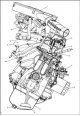
Sectional view of 1.3L petrol engine and general description
Cross section of the engine 1 - Air filter housing; 2 - Cylinder head cover; 3 - Cylinder head; 4 - Spark plug; 5 - Fuel pump; 6 - Oil filter; 7 - Oil pan; 8 - Oil intake with mesh filter; 9 - Drain plug; 10 - Exhaust...
Cross section of the engine 1 - Air filter housing; 2 - Cylinder head cover; 3 - Cylinder head; 4 - Spark plug; 5 - Fuel pump; 6 - Oil filter; 7 - Oil pan; 8 - Oil intake with mesh filter; 9 - Drain plug; 10 - Exhaust...

Description of the main units and mechanisms
Cylinder head (front view) 1 - Spark plug hole; 2 - Spark plug wire connection mark; 3 - Valve guide bushings Cylinder head (rear view) 1 - Exhaust valve openings; 2 - inlet valve openings; 3 - Coolant outlet hole; 4 -...
Cylinder head (front view) 1 - Spark plug hole; 2 - Spark plug wire connection mark; 3 - Valve guide bushings Cylinder head (rear view) 1 - Exhaust valve openings; 2 - inlet valve openings; 3 - Coolant outlet hole; 4 -...
Checking the condition of the connecting rod and piston group by ear
1. If the connecting rod and piston group is in good condition, the engine runs quietly, and at idle speed the oil pressure in the lubrication system does not fall below the permissible limit. 2. Piston knocking occurs...
1. If the connecting rod and piston group is in good condition, the engine runs quietly, and at idle speed the oil pressure in the lubrication system does not fall below the permissible limit. 2. Piston knocking occurs...
Checking the compression pressure in the cylinders
1. If the engine output efficiency decreases, as well as if misfires occur that cannot be linked to malfunctions of the ignition and fuel systems, the compression pressure in the cylinders should be measured, the...
1. If the engine output efficiency decreases, as well as if misfires occur that cannot be linked to malfunctions of the ignition and fuel systems, the compression pressure in the cylinders should be measured, the...

Bringing the piston of the first cylinder to the top dead center (TDC) position
1. The top dead center (TDC) is the highest point of the piston stroke in its cylinder. Generally speaking, in 4-stroke engines, during the rotation of the crankshaft, this position is reached by the piston twice: once...
1. The top dead center (TDC) is the highest point of the piston stroke in its cylinder. Generally speaking, in 4-stroke engines, during the rotation of the crankshaft, this position is reached by the piston twice: once...

Removal and installation the camshaft housing cover
Removal 1. Disconnect the negative cable from the battery. 2. Disconnect the ventilation hoses from the engine oil filler neck on the cylinder head cover. 3. Loosen the two cylinder head cover mounting nuts and remove...
Removal 1. Disconnect the negative cable from the battery. 2. Disconnect the ventilation hoses from the engine oil filler neck on the cylinder head cover. 3. Loosen the two cylinder head cover mounting nuts and remove...

Removal, condition check and installation of the rocker arm shaft assembly
Removal 1. Remove the cylinder head cover (see section Removal and installation the camshaft housing cover ). 2. Using a socket wrench, remove the two cylinder head bolts used to secure the left and right rocker arm...
Removal 1. Remove the cylinder head cover (see section Removal and installation the camshaft housing cover ). 2. Using a socket wrench, remove the two cylinder head bolts used to secure the left and right rocker arm...

Removal and installation the cylinder head assembly with the intake and exhaust manifold
Removal 1. Disconnect the negative cable from the battery. 2. Bring the piston of the first cylinder to the TDC position of the compression stroke, then return the crankshaft back a few degrees. To ensure complete...
Removal 1. Disconnect the negative cable from the battery. 2. Bring the piston of the first cylinder to the TDC position of the compression stroke, then return the crankshaft back a few degrees. To ensure complete...

Removal, checking and installation the front cover, timing chain and sprockets
Removal 1. Bring the piston of the first cylinder to the TDC position of the end of the compression stroke. Remove the distributor with the tail (see Chapter Engine electrical equipment ). 2. Remove the generator (see...
Removal 1. Bring the piston of the first cylinder to the TDC position of the end of the compression stroke. Remove the distributor with the tail (see Chapter Engine electrical equipment ). 2. Remove the generator (see...

Removal, checking and installation oil pump components
Engine lubrication system diagram 1 - Oil pan; 2 - Oil drain plug; 3 - Oil intake; 4 - Oil pump; 5 - Pump pressure reducing valve; 6 - Holes for lubrication of the camshaft drive chain; 7 - Filler neck; 8 - Oil pressure...
Engine lubrication system diagram 1 - Oil pan; 2 - Oil drain plug; 3 - Oil intake; 4 - Oil pump; 5 - Pump pressure reducing valve; 6 - Holes for lubrication of the camshaft drive chain; 7 - Filler neck; 8 - Oil pressure...

Removal and installation the engine oil pan
Removal 1. Disconnect the negative cable from the battery. 2. Support the rear wheels of the car with wedges, then jack up the front of the car and place it on supports. 3. Drain the engine oil, then replace the drain...
Removal 1. Disconnect the negative cable from the battery. 2. Support the rear wheels of the car with wedges, then jack up the front of the car and place it on supports. 3. Drain the engine oil, then replace the drain...

Replacing crankshaft seals
Right oil seal (from the pulley side) 1. Remove the crankshaft pulley (see section Removal, condition check and installation of the front cover, timing chain and sprockets ). 2. Carefully pry the seal out of the timing...
Right oil seal (from the pulley side) 1. Remove the crankshaft pulley (see section Removal, condition check and installation of the front cover, timing chain and sprockets ). 2. Carefully pry the seal out of the timing...

Removal, condition check and installation of the flywheel
General information The flywheel is cast from cast iron and ensures uniform operation of the engine. In addition, the flywheel serves as a clutch support. A toothed crown is installed along the perimeter of the...
General information The flywheel is cast from cast iron and ensures uniform operation of the engine. In addition, the flywheel serves as a clutch support. A toothed crown is installed along the perimeter of the...

Checking and replacing rubber cushions of engine mounts
Note: Detailed information on the placement and design of the power unit supports is given in Section Removal the power unit from the vehicle - preparation and precautions, general information about the power unit...
Note: Detailed information on the placement and design of the power unit supports is given in Section Removal the power unit from the vehicle - preparation and precautions, general information about the power unit...

Removal, installation and adjusting the accessory drive belt
General information Depending on the model configuration, the auxiliary belt is used to drive accessories such as the generator, water pump and air conditioning compressor from the crankshaft pulley. On models equipped...
General information Depending on the model configuration, the auxiliary belt is used to drive accessories such as the generator, water pump and air conditioning compressor from the crankshaft pulley. On models equipped...
This section is available on russian, bulgarian, belarusian, ukrainian, serbian, croatian, romanian, polish, slovak, hungarian
Read similar sections on other Skoda models
➧ Power unit: Petrol engines Skoda Rapid 1 (2012-2022)
➧ Power unit: Petrol engines 3.6 l Skoda Superb 2 (2008-2015)
➧ Power unit: Petrol engine 1.4 l Skoda Kodiaq 1 (2016-2024)
➧ Power unit: Petrol engine 1.4 l Skoda Yeti (2009-2017)
Link to this section in various formats
TEXTHTMLBB Code
- General information
- Maintenance
- Troubleshooting
- Power unit
- Engine in car
- Engine overhaul
- Cooling and heating
- Fuel and exhaust system
- Fuel injection system
- Ignition system
- Transmission
- Clutch
- Manual gearbox
- Drive shafts
- Chassis (running gear)
- Brake system
- Car suspension
- Steering
- Body and interior
- Exterior (external elements)
- Interior (salon)
- Electrical equipment
- Equipment and devices
- Power devices
- Electrical circuits
- General information
- Introduction to guide
- User manual
- Maintenance (petrol)
- Maintenance (diesel)
- Power unit
- Petrol engine 1.3 l
- Petrol engine 1.6 l
- Diesel engine
- Engine overhaul
- Cooling system
- Fuel system (carburetor)
- Central injection (SPFI)
- Multipoint injection (MPFI)
- Diesel power system
- Decreased toxicity
- Engine electrics
- Transmission
- Clutch
- Car gearbox
- Drive shafts
- Chassis (running gear)
- Brake system
- Car suspension
- Steering
- Body and interior
- Exterior (external elements)
- Interior (salon)
- Doors, locks and windows
- Electrical equipment
- Equipment and devices
- Headlights and lighting
- Electrical circuits