
Company vehicles Hyundai Company vehicles Kia Company vehicles Lada Company vehicles Mazda Company vehicles Mercedes-Benz Company vehicles Opel Company vehicles Mitsubishi
English Русский
Български
Беларускі
Український
Српски
Hrvatski
Română
Polski
Slovenský
Magyar
Articles   
Bookmark Contacts Sitemap
SkodaBook.ru


Fabia Rapid Octavia Superb Kodiaq Yeti Others
Octavia 1 (1996-2004) Octavia 3 (2013-2019)

Connecting rods with pistons in assembly (Skoda Octavia 1U)

  • Main
  • Octavia
  • 1U (1996-2004)
  • Power unit
  • Diesel engines 1.9 l AGR
  • Connecting rods with pistons in assembly
0

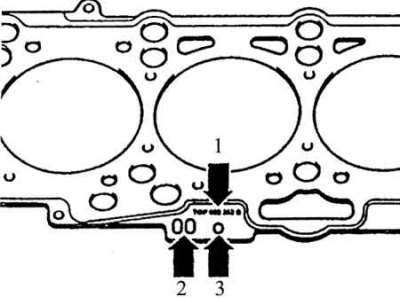
Marking of the seal between the cylinder head and the engine crankcase


1 – part number; 2 – code; 3 – the number of…

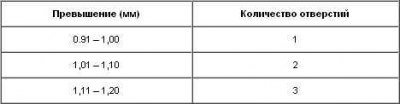
1 – part number; 2 – code; 3 – the number of holes indicates the permissible excess of the piston over the block surface

1 – part number; 2 – code; 3 – the number of…

The arrangement is similar to that of the 1.6-55 kW engine.

The connecting rods are made of steel forgings. The upper eye is equipped with a bronze bushing. The lower eye is separate and inserts made of three layers of metal are inserted into it. The correct relative position of the connecting rod and its lower part of the eye is indicated by punching on the sides (see designation B in Fig. Mounting reamer of connecting rod and piston), the belonging of the connecting rod assembly to the cylinder is indicated by the number of punch marks on the surface of the connecting rod and the lower eye (A). The connecting rods are divided into groups by weight of 75 g and are checked for parallelism of both eyes.


The article is located on the website: www.SkodaBook.ru

The pistons are made from light alloy castings (Al, Si, Cu, Ni, Mg). In three grooves on each piston there are two sealing rings and one oil scraper ring. All rings are assembled with the inscription TOP upwards. The assembly position and belonging to the cylinder is indicated on the inner side of the piston.

Pistons are divided into groups by weight and diameter tolerance. Just as cylinders can be reground up to 2 times, pistons can be ground up to 2 times.

Piston pins are steel, hollow, with an outer diameter of 17 mm and a relief hole of 10 mm. The pins move freely in the eyes of the connecting rods and pistons. They are prevented from falling out by elastic rings snapped into grooves in the pistons. When assembling pistons and connecting rods, it is necessary to control the position of the pistons at the top dead center. Depending on the excess of the piston over the upper edge of the cylinder, the thickness of the seal for the cylinder head is selected. The seal between the cylinder head and the crankcase is metal, shaped, covered with a thin layer of plastic on both sides. It is available in three thicknesses and is designated by a hole or a notch along the edge.
This article is available at russian, bulgarian, belarusian, ukrainian, serbian, croatian, romanian, polish, slovak, hungarian
Article verified: Eleonora Afanasyeva
Share with friends:
◀ Previous
Skoda Octavia 1: Diesel engines 1.9 l AGR
Next ►

Crank mechanism — general information
Engine block-crankcase (cylinder block) assembly
Main technical data of the 1.9 TDI–66 kW engine
General information about the 1.9 TDI diesel engine (AGR)
Lubrication system (also included in the engine assembly)
Cylinder head and timing mechanism drive
Injection system — engine control by electronic elements
Starter — General Information
Charging units — generators
Read similar articles on other Skoda models

➧ Crankshaft, piston and connecting rod — removal and installation Skoda Fabia 2 (2007-2014)
➧ Position for assembling bearing shells in connecting rods Skoda Rapid 1 (2012-2022)
➧ Connecting rod and piston group Skoda Kodiaq 1 (2016-2024)
➧ Piston and connecting rod assemblies — removal Skoda Favorit (1987-1994)
Link to this article in various formats
Reviews and comments of visitors
No comments yet


Add two numbers: 12 + 38


Octavia 3 (2013-2019) 
  • General information
  • User manual
  • Car driving
  • Maintenance
  • Petrol engines 1.2 l
  • Engine repair
  • Cooling system
  • Supply system
  • Petrol engines 1.4 l
  • Engine repair
  • Supply system
  • Petrol engines 1.8/2.0 l
  • Engine repair
  • Cooling system
  • Supply system
  • Diesel engines 1.6/2.0 l
  • Engine repair
  • Cooling system
  • Supply system
  • Transmission
  • Mechanical gearbox 02S
  • Automatic gearbox 0CW
  • Automatic gearbox 0D9
  • Chassis (running gear)
  • Front suspension
  • Rear suspension
  • Brake system
  • Steering
  • Body and interior
  • Doors, locks and windows
  • Exterior (external elements)
  • Interior (internal elements)
  • Ventilation and air conditioning
  • Electrical equipment
  • Equipment and devices
  • Headlights and lighting
  • Wiring diagrams (basic)
  • Wiring diagrams (comfort)
Octavia 1 (1996-2004) 
  • General information
  • Vehicle details
  • Maintenance
  • Power unit
  • Petrol engines 1.6 l AEE
  • Petrol engines 1.8 l AGN
  • Diesel engines 1.9 l AGR
  • Fuel system
  • Exhaust system
  • Cooling system
  • Transmission
  • Clutch
  • Car gearbox
  • Gearbox repair 02J
  • Gearbox repair 02K
  • Chassis (running gear)
  • Wheels and tires
  • Suspension and axles
  • Brake system
  • Body and interior
  • Exterior (external elements)
  • Interior (internal elements)
  • Doors, locks and windows
  • Electrical equipment
  • Equipment and devices
  • Electrical circuits
SkodaBook.ru © 2018–2026 | Mobile version | Articles on Skoda | Sitemap EN BG BY UA RS HR RO PL SK HU | Feedback | Site search | Bookmark
Fabia 1 (1999-2007) | Fabia 2 (2007-2014) | Rapid 1 (2012-2022) | Octavia 1 (1996-2004) | Octavia 3 (2013-2019) | Superb 2 (2008-2015) | Kodiaq 1 (2016-2024) | Yeti (2009-2017) | Favorit (1987-1994) | Felicia (1994-2001) |
By continuing to use the site, you agree to the use of cookies.