



2. Before you begin the procedure, gather all the necessary tools and materials. Make sure you have plenty of clean rags and old newspapers to collect any spilled oil. Ideally, the engine should be pre-warmed, as hot oil is more fluid and washes away sludge better. When working under the vehicle, try not to touch the hot surfaces of the exhaust system components (especially to the catalytic converter) and the power unit.
3. To avoid scalding and to protect your hands from the carcinogenic effects of engine oil, try to work with rubber gloves.
4. To facilitate access to the components located under the bottom, the vehicle should be raised off the ground and placed on reliable supports, or driven onto an overpass or inspection pit. Regardless of the chosen method, make sure that the raised vehicle remains horizontal, and if tilted, then at an angle and in a direction that ensures unimpeded flow of oil through the drain hole of the oil pan.
5. After loosening the mounting bolts, remove the lower crankcase protection plate. In addition to the lower plate, there are also side shields that can be left in place, but you will have to be extra careful not to cut yourself on their sharp edges.
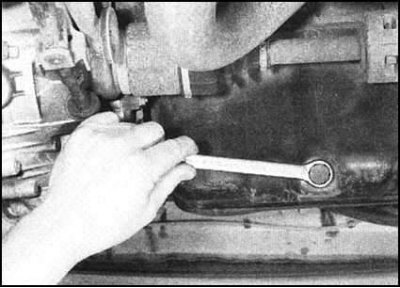
6. Using a socket or open-end wrench with a collar, unscrew the oil pan drain plug by half a turn. Place a container of suitable volume under the drain hole, then completely unscrew the plug.
Note: When unscrewing the drain plug manually, keep it pressed against the hole all the time. When the thread ends, remove the plug with a sharp movement, trying to get the stream of oil into the prepared container, and not into your sleeve.
7. Allow the oil to drain from the crankcase for some time, if necessary, move the drain pan accordingly so that the weakening stream does not begin to spill past.
8. After all the oil has been drained, wipe the drain plug, its sealing washer and the surface of the pan around the drain hole with a clean rag. Check the condition of the sealing washer and replace it if necessary. Screw the plug back in place and tighten it to the required torque.
9. Move the drain pan under the oil filter located on the front of the cylinder block.
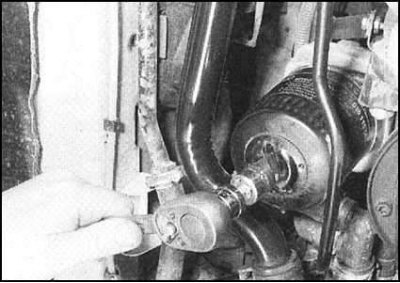
10. For the initial removal of the oil filter, it is best to use a special puller, or a chain or strap wrench.
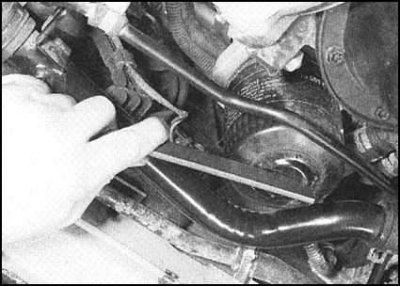
Note: A metal plate of suitable dimensions will work perfectly as a brand filter remover. The filter can then be unscrewed manually. Drain the oil from the filter into a drain container.
11. Wipe the filter mating surface of the cylinder block with a clean cloth, completely removing all traces of oil and sludge. After inspecting the removed filter, make sure that its sealing gasket is not stuck to the block surface. If necessary, carefully remove the gasket.
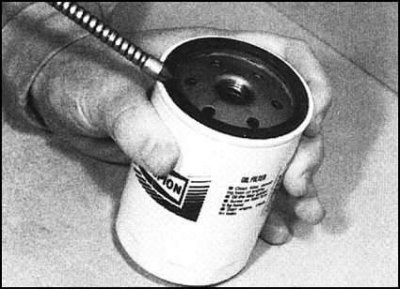
12. Lightly lubricate the new filter's O-ring with clean engine oil, then screw the filter into place. Hand tighten the filter securely - do not use any tools to avoid damaging the gasket.
13. Remove the drain pan and tool from under the vehicle. Install the crankcase guard (make sure the fasteners are tightened securely) and lower the car to the ground.
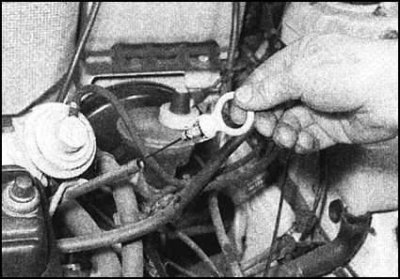
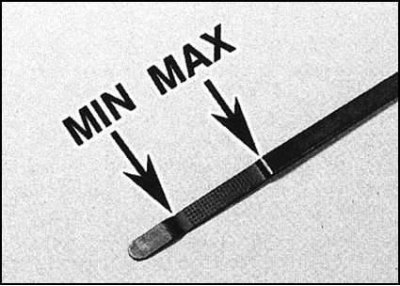
14. Fill the engine with fresh engine oil of the required grade through the filler neck. To avoid oil spillage, it is best to use a grease nipple equipped with a spout or a funnel. First, pour in half the nominal volume of oil and wait a few minutes, allowing the oil to drain into the engine oil pan. Continue pouring oil in small portions until its level reaches the lower mark on the dipstick blade. About 1.0 liter of oil will be required to raise the level from the lower mark on the dipstick to the upper mark.
15. Start the engine and let it run for a few minutes, then inspect the oil filter and oil pan drain plug for signs of leaks. Remember that when you first start the engine after an oil change, the oil pressure warning light will go out after a delay of a few seconds to allow the engine oil galleries and the new oil filter to fill.
16. Stop the engine, wait a few minutes to allow the oil to drain into the oil pan, then recheck the level. Make adjustments if necessary.
 |
 |
17. Drained engine oil must be disposed of in accordance with established procedures.
Note: It is indecent and illegal to pour used oil into the sewer - it should be taken to special collection points - consult with a service station.