



Contents: Draining the cooling system ⬇ Flushing the cooling system ⬇ Filling the cooling system ⬇ Coolant layout ⬇
Draining the cooling system
Note. Wait until the engine has completely cooled down before proceeding with the procedure. Avoid contact with eyes, exposed areas of the body, or painted surfaces of body panels. Wash away accidental splashes immediately with plenty of water. Never leave antifreeze unattended in an open container - its sweet smell can easily attract the attention of children and animals. Remember that ingesting antifreeze can be fatal.
1. After the engine has cooled down completely, firmly set the parking brake, then jack up the front of the car and place it on supports.
2. Remove the cap from the filler neck of the expansion tank (by turning the cap counterclockwise to the first stop, release the residual pressure in the system, then remove the cap completely).
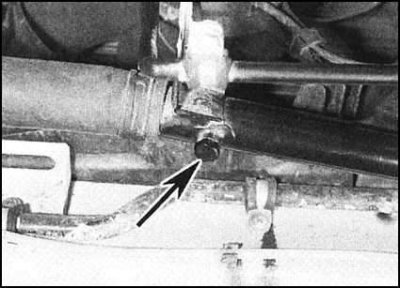
3. Place a collecting container under the drain plug screwed into the left side of the metal tube running along the front wall of the cylinder block. To provide access to the plug, unscrew the mounting screws and remove the crankcase guard. Unscrew the drain plug and drain the coolant into the prepared container.
4. If the system is being drained for purposes other than replacing the coolant, check the condition of the coolant. Make sure that the drained coolant has not been in use for more than three years. If all is well, the coolant can be reused, although this manual does not recommend this practice. Have a replacement drain plug sealing washer available.
5. Clean the plug threads and put a new sealing washer on it. Lightly lubricate the plug with fresh sealant, then screw it into its regular place and tighten it to the required force.
Flushing the cooling system
1. If the regular replacement of the coolant is carried out carelessly, as well as in the case of strong dilution of the antifreeze as a result of frequent addition of plain water to the system, a gradual decrease in the efficiency of engine cooling occurs due to the deposition of scale and corrosion products on the walls of the channels and galleries of the system. Restoration of the original performance of the cooling system can be done by flushing it.
2. The radiator is flushed separately from the engine cooling system to avoid the risk of contamination of the entire system.
Radiator
1. Disconnect the upper and lower large-section hoses from the radiator, as well as all other hoses related to the operation of the cooling system (see Chapter Cooling and heating systems).
2. Insert a garden hose into the inlet of the upper hose on the radiator and turn on the water supply. Continue flushing until the water flowing out of the lower hose becomes absolutely transparent.
Text copied from this resource SkodaBook.ru
3. If the output stream is not clear, one of the many proprietary cleaning agents currently available should be used to flush the radiator. In cases of particularly severe contamination, the radiator should be removed from the vehicle and back-flushed.
Engine block
1. Remove the thermostat (see Chapter Cooling and heating systems), then temporarily replace its cover.
2. Disconnect the upper and lower hoses from the radiator, thread a garden hose through the first end and apply water. Continue flushing until the stream flowing out of the lower hose becomes absolutely clean and transparent.
3. After completing the flushing, reinstall the thermostat and restore the original connection of the cooling system hoses (see Chapter Cooling and heating systems).
Filling the cooling system
1. Before you start filling the cooling system, make sure that all hoses related to its operation are in good condition and securely fastened to their fittings and pipes. Do not forget that the system must be filled with the required mixture of antifreeze and water at any time of the year. Otherwise, corrosion of the internal walls of the tract channels will begin to develop quickly.
2. Make sure the drain plug is securely tightened and lower the vehicle to the ground.
3. Remove the filler cap of the expansion tank and slowly begin pouring the mixture of the required composition into the tank. Continue pouring the mixture until its level in the expansion tank rises to the MAX mark on the translucent wall of the latter.
4. Replace the filler cap and tighten it securely.
5. Start the engine and warm it up to normal operating temperature (the cooling system fan should turn on and off again).
6. Turn off the engine, let it cool down, then check the coolant level in the expansion tank again. Adjust if necessary.
Coolant layout
1. The coolant must be replaced in accordance with the vehicle's routine maintenance schedule. Only regular antifreeze replacement can minimize corrosion of the cooling system and ensure the required frost resistance of the mixture in winter.
2. Use only ethylene glycol-based antifreeze for the mixture, which is best suited for filling automotive cooling systems whose tract consists of dissimilar metals. The requirements for the mixture composition, depending on the required level of protection, are given in Specifications at the beginning of this Part of the Chapter Routine maintenance.
3. Before starting to fill, the system must be completely emptied, preferably flushed, and the condition and reliability of all cooling system hoses must be carefully checked.
4. After filling the system, attach a label to the neck of the expansion tank with the date of filling and the composition of the mixture added. For all subsequent adjustments to the level, only the mixture of the same composition as indicated on the information label should be added to the system.
5. Never use antifreeze intended for use in the cooling system as a frost-resistant additive to the windshield washer fluid - this practice will inevitably lead to damage to the paintwork of the body panels.