



Warning: If the engine is still hot, DO NOT remove the pressure relief valve cap from the expansion tank.
1. All vehicles described in this Manual are equipped with a sealed cooling system. A transparent expansion tank is installed on the left side of the engine compartment, between the windshield washer reservoir and the upper support of the suspension strut, and is connected to the cooling system by hoses. As the engine temperature increases, the coolant expands and flows through the hose into the expansion tank. As the engine cools, the coolant returns to the system, thus maintaining the correct level.
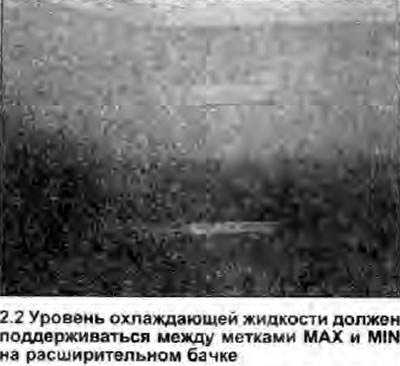
2. The coolant level in the expansion tank should be checked regularly, preferably on a cold engine. The level in the tank changes with engine temperature. When the engine is cold, the coolant level should be between the MAX and MIN marks on the side of the tank (photo).
3. If refilling is necessary, wait until the engine has cooled down, then turn the cap on the expansion tank counterclockwise until you hear a hissing sound; wait until the hissing stops, then slowly unscrew the cap. Always keep your distance from the filler hole.
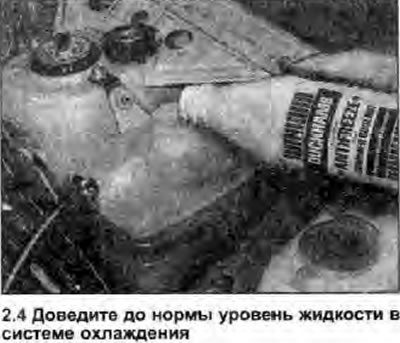
4. Add water and antifreeze mixture (see below) through the filler neck of the expansion tank until the fluid level is level with the mark (photo). Install the cap by turning it clockwise until it stops.
5. On sealed cooling systems, adding coolant should be necessary only occasionally. If frequent topping up is required, there is probably a leak in the system. Check the radiator, all hoses and connection surfaces, and eliminate sources of leaks. If no visible leaks are found, it is recommended to check the pressure relief cap and the system pressure, for which contact the dealer or a specialist.