



Contents: Removal ⬇ Installation ⬇
Note: You will need a ball joint puller to perform this procedure.
Removal
1. Set the parking brake, then jack up the front of the vehicle and support it. Remove the appropriate front wheel.
2. If the tip does not need to be replaced and will be used further, use a flatness gauge and a scriber to mark its position on the rod.
3. With the tie rod secured, loosen the end cap lock nut a quarter turn. Leave the nut in this position as a reference during assembly.
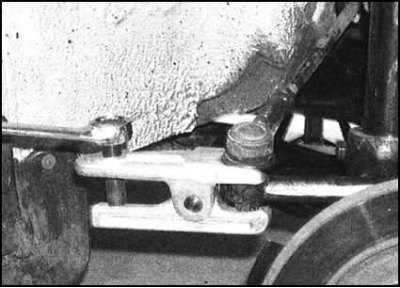
4. Remove the cotter pin and loosen the outer tie rod end mounting nut. Release the tie rod end joint from the hub assembly pivot arm - use a puller if necessary.
5. Unscrew the tip from the steering rod - count the number of turns and try not to move the lock nut.
6. If necessary, count the number of thread turns from the end of the rod to the lock nut. Write down the result. Now the nut can also be removed.
7. Thoroughly clean the tip and the threaded part of the rod. If the joint is loose or, on the contrary, has become rusty, the tip should be replaced. Carefully check the condition of the conical shank and the threaded part of the ball pin. If necessary, individually replace the damaged boot of the ball joint. Make sure that the joint is filled with grease. If necessary, add the required amount of grease such as Milykote Longterm 2/78, then install a new boot and secure it with bandages.
Installation
1. If necessary, screw a lock nut onto the tie rod (to the previous position - check the number of thread turns).
2. Screw the tip onto the traction rod to the same number of turns (in this case, the lock nut should be separated from the end of the tip by exactly a quarter of a turn - achieve alignment of the marks applied during dismantling).
3. Insert the tie rod end joint into the hub assembly pivot arm and screw on the mounting nut. Tighten the nut securely and secure it with a new cotter pin.
4. Replace the wheel, then lower the vehicle to the ground and tighten the wheel bolts to the specified torque.
5. Check the front wheel alignment angles and make the appropriate adjustments if necessary (see section Car Wheel Alignment Angles - General Information). Now tighten the tie rod end lock nut to the required torque.