



Removal
1. Disconnect the negative cable from the battery.
2. In the passenger compartment, under the instrument panel, disconnect the auxiliary spring from the clutch drive cable. Remove the retainer and disconnect the cable end from the clutch pedal assembly.
3. Return to the engine compartment and locate the transmission end of the clutch drive cable.
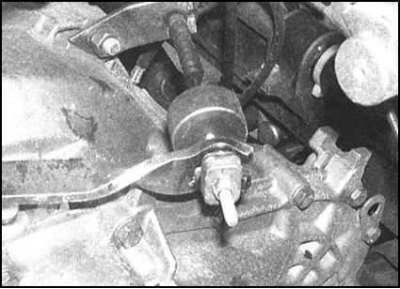
4. On right-hand drive models, remove the locking clip from the cable core, then loosen the adjusting nut and remove the end cap and rubber spacer from the cable. Release the cable housing from the support bracket and thread the cable through the rubber boot, guide collar, rubber spacer and washer.
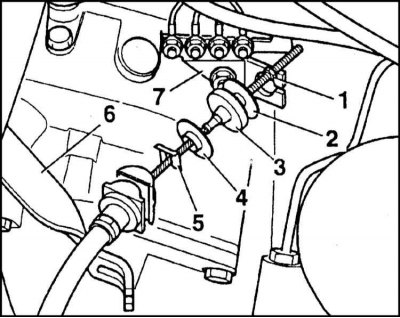
1 - Nut; 2 - Washer; 3 - Rubber spacer bushing; 4 - Washer; 5 - Retainer; 6 - Clutch release lever; 7 - Holder
5. On left-hand drive models, remove the cable core retaining clip, then loosen the adjusting nut and remove the washer, rubber spacer sleeve and guide sleeve from the end of the cable assembly. Release the cable housing from the release lever and remove the end cap, rubber spacer sleeve and guide sleeve from the release lever.
6. On all models, work backwards along the cable to release it from the intermediate retainers. Try to memorize the exact route of the cable in the engine compartment. Pull the cable through the engine compartment bulkhead and remove it from the vehicle. Remove the guide collar and bushing from the bulkhead end of the cable.
7. Carefully inspect the cable for signs of wear on the tips and mechanical damage to the sheath. Check if the core is worn out anywhere. Make sure the cable is functioning properly - the core should move freely inside the sheath. Do not forget that a cable removed from a car may seem to be in good working order, while being installed in a regular place it turns out to be inoperative. A cable in questionable condition is subject to replacement.
Installation
1. Lightly lubricate the cable ends with multi-purpose grease, then place the rubber grommet and guide collar onto the end of the cable facing the engine compartment bulkhead.
2. Pass the cable through the bulkhead, ensuring that the bushing and guide collar are seated correctly.
3. In the car, secure the cable end to the clutch pedal. Make sure the retainer is securely seated.
4. Return to the engine compartment and, making sure the cable is routed correctly, secure it in the intermediate guide clips.
5. On right-hand drive models, install the washer, rubber spacer sleeve, guide sleeve and rubber boot onto the transmission end of the cable. Make sure the guide sleeve is seated correctly in the support bracket, then install the inner end, rubber spacer sleeve and outer end onto the cable.
6. On left-hand drive models, install the guide sleeve, rubber spacer sleeve and end cap onto the cable, then secure the cable to the clutch release lever. Place the guide sleeve, rubber spacer sleeve and washer onto the cable, check that the components are positioned correctly, then tighten the adjusting nut.
7. Connect the negative cable to the battery, then hook the assist spring to the clutch pedal. Now you can begin adjusting the drive cable.
Adjustment
1. The clutch cable is adjusted by checking the height of the pedal in relation to its bracket. When adjusted correctly, the clutch pedal should be level with the brake pedal (±3 mm), and there should be no play in the cable assembly.
2. To make the adjustment, find the end of the cable located on the gearbox housing in the engine compartment.
3. Remove the retainer from the cable core and adjust the pedal position by turning the adjusting nut on the threaded portion of the end. Once the desired position is achieved, replace the retainer and ensure it is firmly seated on the release lever/support bracket.