



Contents: Oil pan ⬇ Oil filter ⬇ Transmission oil ⬇ Antifreeze ⬇ Brake fluid ⬇ Power Steering Fluid (PAS) ⬇
The formation of streaks on the garage floor or parking lot surface, as well as excessive moisture in the components located under the hood, indicate the development of leaks, the sources of which must be immediately identified and the causes eliminated. In some cases, identifying leaks is quite a difficult task, especially when the power unit is heavily contaminated. It should be borne in mind that traces of oil or other working fluid leaks are often carried away from the source by the oncoming air flow, which must certainly be taken into account during the inspection.
Warning! Remember that most automotive oils and fluids are highly toxic. Try to avoid contact with exposed areas of the body. If contact cannot be avoided, rinse contaminated areas of skin immediately with plenty of water.
Note: Often the source of the leak can be determined by the smell of the leaking fluid. Some fluids have a distinctive color. Remember that some leaks only appear when the engine is running.
Oil pan
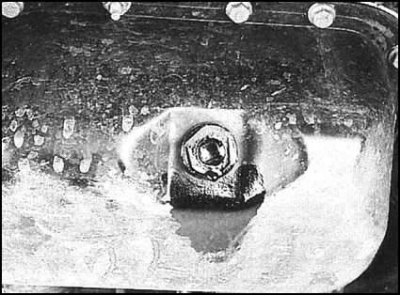
Engine oil may leak through the oil pan drain plug...
Oil filter
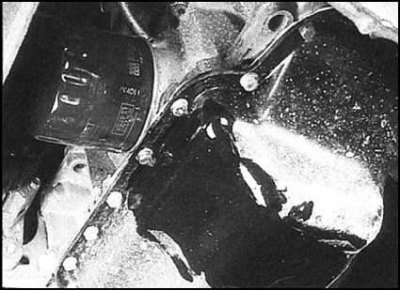
...or through the junction of the oil filter with the engine block
Transmission oil
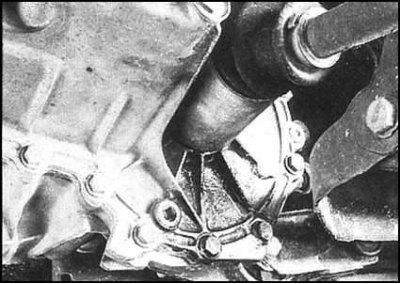
Transmission oil leaks can occur through the seals that serve to seal the inner ends of the drive shafts in the differential
Antifreeze
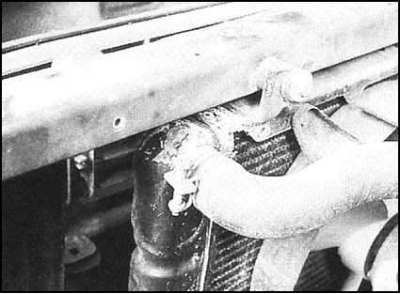
Coolant leaks usually appear as a white, crystalline deposit.
Brake fluid
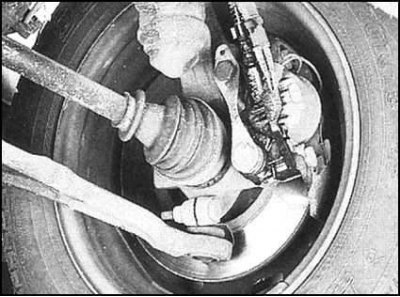
The formation of streaks on the inside of the wheels is almost certainly associated with brake fluid leaks.
Power Steering Fluid (PAS)
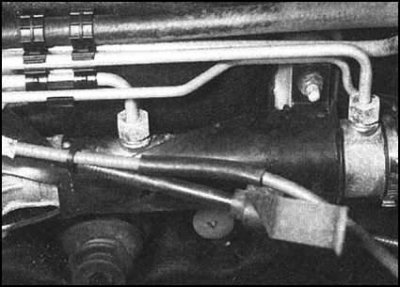
PAS fluid leaks can occur through the hydraulic line unions on the steering rack housing.