



Contents: Checks performed from the driver's…⬇ Checks performed on a vehicle placed…⬇ Checks performed on a vehicle raised…⬇ Checking the condition of exhaust…⬇
This section is designed to help the car owner properly prepare for the technical inspection of the vehicle. Naturally, it is not possible to carry out all checks according to professional standards, but consistent and complete implementation of the procedures described below will allow the car owner to identify defects and deviations that can lead to a refusal to pass the technical inspection at the State Traffic Safety Inspectorate.
When a unit or component is found to be on the verge of failure, the owner of the vehicle leaves it to his own discretion to decide whether to make the appropriate correction. The basis for such a decision is usually the general condition of the vehicle. If the vehicle is presented for inspection cleanly washed and well-maintained, the inspector may turn a blind eye to the presence of minor deviations and wear of certain components close to the limit. At the same time, the technical inspector with an experienced eye can always detect signs of the owner's negligent attitude to his vehicle and take this into account as an aggravating factor.
It should be noted that the list of checks and adjustments provided to the reader is complete only at the time of preparation of this Manual, and the standards and requirements adopted at a later time could not be taken into account by the authors.
Please also note that to perform many of the procedures listed below completely and efficiently, you will need the help of an assistant.
The full list of checks can be divided into several categories, which would be correctly titled as follows:
- a) Checks carried out from the driver's seat;
- b) Checks performed with the vehicle on the ground;
- c) Tests carried out on a vehicle with its wheels off the ground;
- d) Checking the condition of the exhaust gases.
Checks performed from the driver's seat
Parking brake
1. Check the proper functioning of the parking brake. Excessive travel of the control lever (too many clicks) indicates that the drive cable needs to be adjusted.
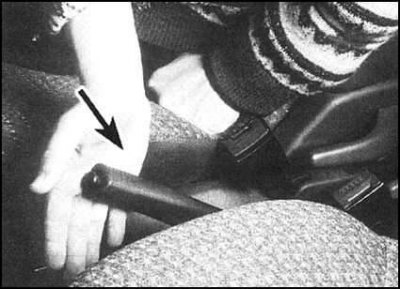
2. Make sure that lightly tapping the control lever does not cause the parking brake to release spontaneously.
Foot brake
1. Press the foot brake pedal all the way down and make sure that it does not continue to slowly fall to the floor. If it does, check the condition of the brake master cylinder. Release the pedal, wait a few seconds and press it again. If noticeable resistance to pressing occurs only when the pedal has almost reached the floor, the brakes should be adjusted or repaired. A soft brake pedal movement indicates that air has entered the hydraulic tract. In this case, the system should be bled (see Chapter Brake system).
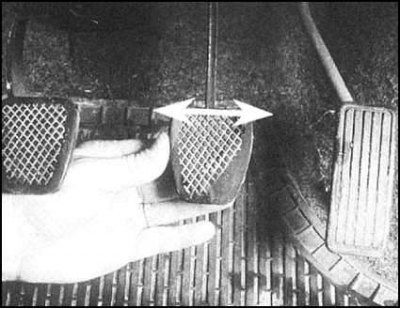
2. Check the condition and reliability of the brake pedal fastening. Also make sure there are no fluid leaks under the pedal on the mat or floor panel. The presence of moisture under the pedal indicates a malfunction of the brake master cylinder.
3. Check the proper functioning of the brake booster (with the appropriate vehicle configuration), to do this, press the brake pedal several times, then press it all the way down and start the engine. If the vacuum booster is OK, the pedal will noticeably drop down after starting the engine, otherwise check the condition of the vacuum hose and the vacuum booster unit itself.
Steering wheel and column
1. Check the condition and strength of the hub, spokes and steering wheel rim.
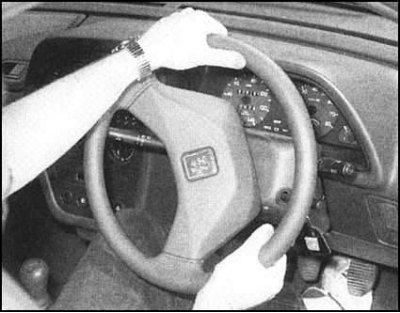
2. Tug the steering wheel from side to side and up and down. The presence of noticeable play indicates wear of the column components or loosening of the mounting nut. Continue to tug the steering wheel as before, while turning it slightly to the right and left.
3. Make sure that the steering wheel is securely fastened to the column shaft and that there is no excessive play indicating wear of the steering column thrust bearings or couplings.
Windshield and rear view mirrors
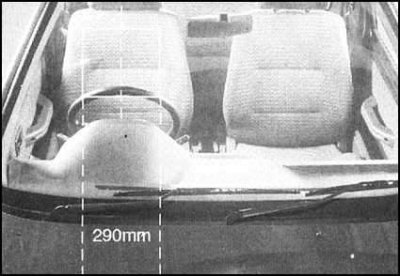
The windshield must be free of cracks and other defects that limit the driver's view. Only small cavities left by impacts of small stones flying out from under the wheels are permissible. The rear-view mirrors must be securely fastened, free of cracks and other defects, and their adjustment drive must work properly.
Seats and seat belts
Note: The following checks apply to both front and rear seat belts.
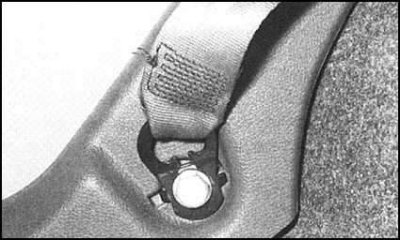
1. Check the fabric structure of the belt for cuts, severe abrasions and other damage. Inspect the belts along their entire length, do not forget about the rear ones, if they are provided. Check the proper operation of the belt buckles - the buckles should fasten freely and release no less freely, while ensuring reliable fixation in the latched state. In the case of inertia-type belts, check the proper functioning of the return mechanism. Check the condition of all seat belt anchor supports that can be accessed from the car interior.
2. The front seats must be securely fastened to the runners, and their backs must be fixed in a vertical position.
Doors
Both front doors must open and close freely from both the outside and inside of the vehicle. The door latches must securely lock the doors in the closed position.
Checks performed on a vehicle placed on the ground
Vehicle Identification Numbers
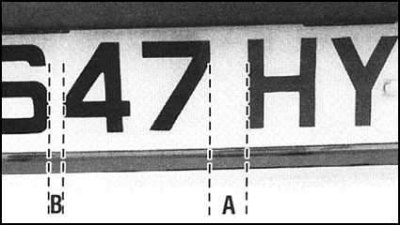
Number plates must be clean and legible. Distance A between the letters of the plate must be twice as large as distance B.
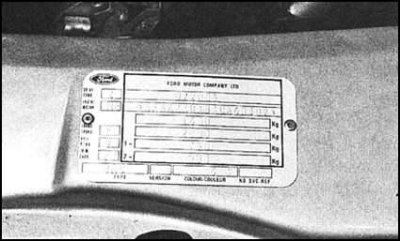
The information contained on the VIN plate and/or homology label must be legible and easy to read.
Electrical equipment
1. Turn on the ignition and check the horn for proper operation.
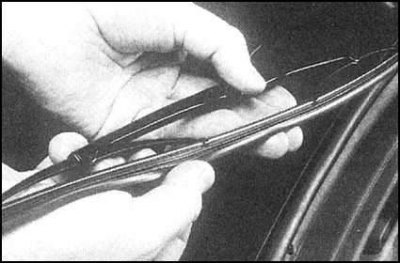
2. Check the condition of the windshield wipers, replace any defective ones.
3. Check the proper operation of the windshield washers.
4. Check the proper functioning of the brake lights, parking lights and license plate lights. The lenses and reflectors of the lights must be securely fastened and free of dirt and damage.
5. Check the operation of the headlights and the correct adjustment of the direction of their beams. Reflectors should not be dull, cracks in the lenses are also unacceptable.
6. Turn on the ignition and check the proper functioning of the direction indicators (including control lights on the instrument panel) and hazard warning lights. Switching on the side and rear marker lights should not affect the operation of the direction indicators, otherwise you should check the serviceability of the grounding in the rear combination light.
7. Check the operation of the rear fog light(s) and its indicator lamp on the instrument panel or inside the switch.
Foot brake
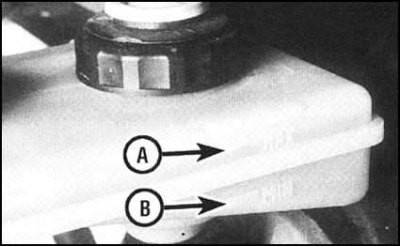
1. Inspect the brake master cylinder, brake pipes and vacuum booster unit for signs of leaks, loose fasteners, signs of corrosion and mechanical damage. The brake master cylinder reservoir should be securely fastened, and the fluid level in it should be between the upper (A) and lower (B) marks.
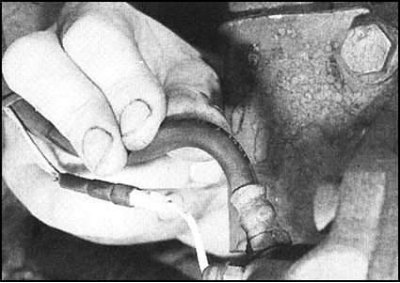
2. Check both front flexible brake hoses for cracks, signs of material aging, and other damage.
3. Turn the steering wheel from lock to lock and make sure that the hoses do not come into contact with the suspension and steering components. Firmly depress the brake pedal and make sure that the hoses do not bulge or show signs of leakage under pressure.
Suspension and steering
1. Ask an assistant to turn the steering wheel from side to side in a small range - until the steering wheels of the car begin to react. Assess the amount of free play of the steering wheel - excessive play indicates wear or looseness of the steering column joints, the coupling connecting the column to the steering gear, or the rack and pinion itself.
2. Ask an assistant to turn the steering wheel a little harder in both directions - so that the steered wheels begin to turn. At this time, try to visually assess the condition of the hinges, rods and supports of the steering drive. On cars equipped with a hydraulic power steering, check the reliability of the fastening and the condition of the steering pump, its drive belt and connecting hydraulic hoses.
3. Make sure that the vehicle is level and that the ground clearance is adequate.
Shock absorbers
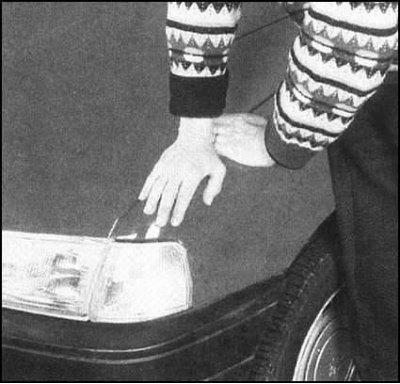
Press each corner of the car body in turn, then release them sharply. The body should return to its original state without rocking. Otherwise, you should carefully check the condition of the corresponding shock absorber. Jamming of the shock absorber can lead to more serious damage to the suspension components and the car body.
Exhaust system
1. Start the engine. Ask an assistant to press a wad of rags to the end of the exhaust pipe and check the system tract for signs of gas leaks. Repair or replace defective sections.
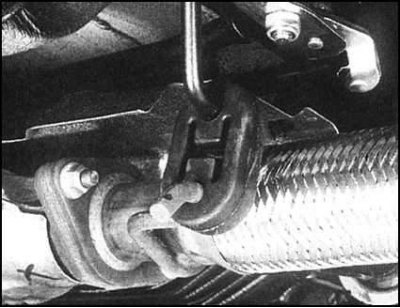
2. Check the condition of the rubber suspensions of the system section supports.
Checks performed on a vehicle raised off the ground
Jack up the vehicle and support it on stands that are not under the vehicle's suspension components. Make sure the wheels are completely off the ground and the steering wheel can turn through its full range of travel (from stop to stop).
Steering gear
1. Have an assistant turn the steering wheel from lock to lock. Make sure that the steering components move smoothly. No components, including the wheels, should come into contact with the brake hoses, pipes or body elements.
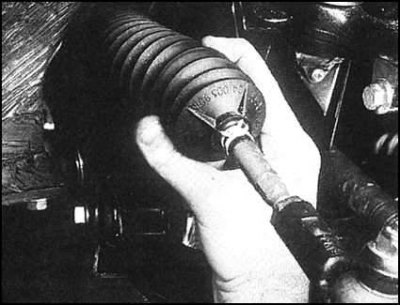
2. Check the condition of the steering rack boots. On models with power steering, inspect the hydraulic lines and their nipple connections for signs of leaks. Make sure that there is no jerking or jamming of components when the steering gear is operated. Check the presence and serviceability of cotter pins, locking flags and other fastener locking parts. Body panels should not be damaged or affected by corrosion within a 30 cm radius around the attachment points of steering gear components.
Front and rear suspension and wheel bearings
1. Start with the right front wheel. Grab it at the 3 and 9 o'clock positions and give it a sharp tug. The presence of play indicates wear or weakening of the wheel bearing preload, wear of the ball joints and hinges, brackets and rubber-metal bushings for fastening suspension components.
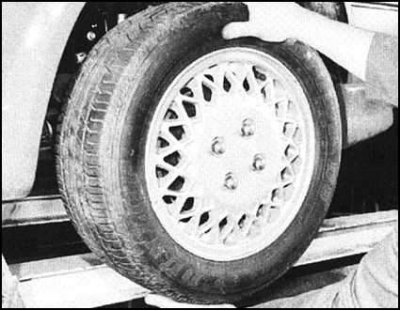
2. Now grasp the wheel at the 12 and 6 o'clock positions and repeat the previous check. Manually rotate the wheel, checking its bearing for any jerks or binding points.
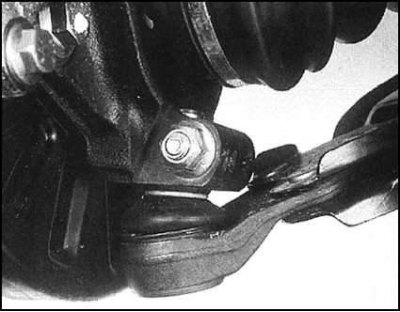
3. If you detect signs of wear on the support units of the suspension components, check them by levering them with a screwdriver or a flat pry bar. The presence of noticeable play will indicate wear on the rubber-metal bushing, mounting bolt or support bracket itself (often bolt holes become oval).
4. Repeat all the above checks for the remaining wheels of the vehicle.
Springs and shock absorbers
1. Inspect the suspension struts (with appropriate equipment) for signs of serious leaks, corrosion development and mechanical damage to the casings. Also check the reliability of the rack support fastening.
2. If the vehicle is equipped with coil springs, ensure that they are correctly seated in their seats and are not cracked, deformed or damaged by corrosion.
3. In case of suspension on leaf springs (springs), check the serviceability of the springs, the reliability of the bridge attachment to them, as well as the condition of the rubber-metal bushings of the anchor supports and spring shackles.
4. The same checks apply to vehicles equipped with other types of suspension, such as torsion bar suspension, hydraulic displacers, etc. Check the tightness of all supports and brackets. Make sure there are no signs of excessive wear, corrosion or mechanical damage. On hydraulic (active) suspensions, inspect the hydraulic tubes for signs of leaks and damage.
5. Check the shock absorbers for leaks. Assess the degree of wear of the support bushings, inspect the shock absorber housings for signs of mechanical damage.
Drive shafts (for front wheel drive vehicles only)
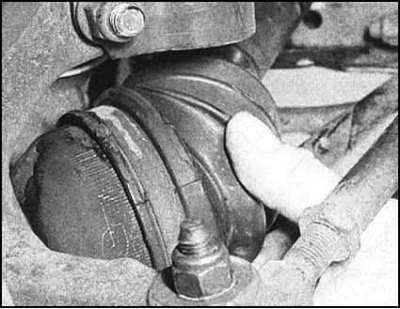
Turn both front wheels one by one, visually checking the condition of the protective covers of the CV joints of the stops. Also check both drive shafts for signs of deformation and other damage.
Brake system
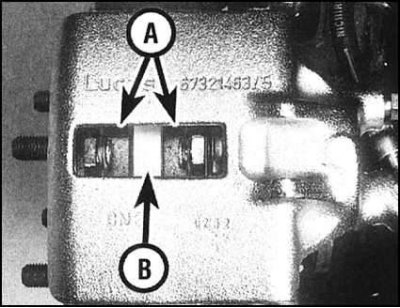
1. If possible, without disassembling the brake mechanisms, assess the degree of wear of the pads and check the condition of the brake discs. Make sure that the friction lining material (A) is not worn beyond the permissible limit, and the brake disc (B) is free of cavities, chips, grooves and other damage.
2. Check the condition of all rigid brake lines and flexible hoses at the rear of the vehicle. Look for signs of corrosion, loose fittings, abrasions, and swelling (under pressure), cracks, cuts and signs of aging of the material.
3. Check brake calipers and shields for signs of leaks. Repair or replace defective components.
4. While slowly rotating each wheel in turn, have an assistant press and release the foot brake pedal. Make sure that the brake mechanisms operate properly and that the wheel rotates freely when the pedal is released.
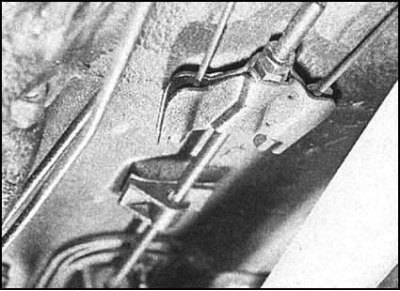
5. Check the parking brake drive mechanism for breaks and damage to the cables, corrosion, wear and looseness of the rod fastenings, etc. Make sure that the parking brake securely locks both rear wheels and completely releases them when the lever is released.
6. It is not possible to check the efficiency of the braking system without special equipment, but it is necessary to conduct short road tests of the vehicle, checking the serviceability of its braking without loss of directional stability.
Fuel and exhaust systems
1. Check the condition of the gas tank (including filler neck), fuel pipes, hoses and their fittings. All components must be securely attached and free from damage and signs of leaks.
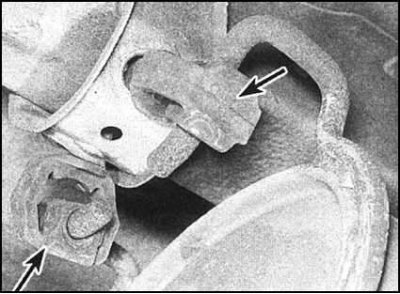
Inspect the exhaust system along its entire length. Check the pipes and system components for signs of exhaust leaks, mechanical damage, and signs of corrosion. Also check the reliability of the fastening of the sections to each other and to the support hangers.
Wheels and tires
1. Carefully inspect the sidewalls and treads of all wheels on the vehicle, including the spare. Check the tires for cuts, bulges, exposed cords, signs of tread separation, and uneven wear. Make sure the tires are seated correctly on the rims. Check the condition and correct seating of the inflation valves.
2. Make sure that the wheels installed on the vehicle correspond in size to the class and model of the vehicle. Both wheels of each axle of the vehicle must have tires of the same size.
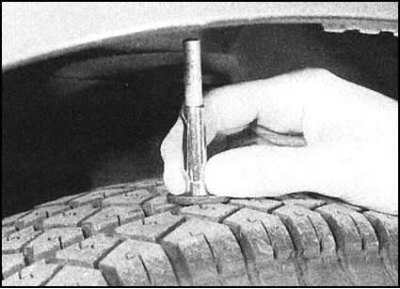
3. Measure the remaining tread depth. The minimum acceptable value is 1.6 mm over at least three-quarters of the tread area. Uneven tread wear indicates a faulty front suspension geometry.
Body corrosion
1. Check the supporting elements of the car body and frame (including chassis box sections, sills, cross members, pillars, as well as support points for suspension, steering and brake components) for signs of corrosion development. Thinning of load-bearing elements is fraught with the creation of an emergency situation on the road. In this case, repairs will need to be carried out with the involvement of specialists.
2. Try to remove all sharp edges and burrs that have appeared on body parts as a result of damage from corrosion.
Checking the condition of exhaust gases
Petrol models
1. Warm up the engine to normal operating temperature and make sure all its settings are correct (all associated components and systems must also be in order - the ignition system, air cleaner, etc.).
2. Before taking measurements, raise the engine speed to 2,500 rpm and hold it there for about 20 seconds. Then reduce the speed back to idle and check the condition of the exhaust. If the idle speed is clearly too high, or if there is clearly visible thick blue smoke coming out of the exhaust pipe for more than 5 seconds, the car cannot be considered ready for inspection. Blue smoke on the exhaust is a sign of oil burning due to internal engine wear. Black exhaust indicates incomplete combustion of fuel due to contamination of the air filter or other problems in the fuel system.
3. Using a special gas analyzer, the level of carbon monoxide (CO) and hydrocarbon compounds in exhaust gases can be determined. If you do not have a gas analyzer, you will have to rent one.
Checking the level of CO in exhaust gases
At the time of writing, the permissible CO level at idle speed was 3.5% for vehicles introduced after August 1986 and 4.5% for older vehicles. Since January 1996, stricter standards have been adopted in Europe for vehicles equipped with a catalytic converter and introduced since August 1992 (approximately 0.5%). If it is not possible to achieve CO levels within the specified limits (provided that the engine settings, fuel systems, ignition, etc. are correct.), then the cause lies in excessive wear of the carburetor, or another failure in the fuel system. It is also possible that the catalytic converter has simply failed (with appropriate equipment).
Checking the level of hydrocarbons in exhaust gases
1. With normal CO levels, the hydrocarbon content in the exhaust gases at idle speed should not exceed 1,200 parts per million. If this check fails, it should be repeated by raising the engine speed to 2,000 per minute. If the hydrocarbon content level now falls below the limit (1,200 ppm), the car can be considered ready to undergo technical inspection.
2. Excessive hydrocarbon content in the vehicle's exhaust gases indicates engine oil burnout or, more likely, incomplete combustion of the fuel.
Diesel models
1. The only test for the condition of the exhaust gases of a diesel engine is to measure the intensity of the exhaust. To check, the engine speed should be increased sharply several times to the maximum for an unloaded engine.
Warning! It is extremely important that the timing belt is in good condition to perform this check!
2. Excessive intensity of exhaust gases is most often caused by contamination of the air cleaner filter element, otherwise you should seek help from car service specialists.