



Contents: General instructions ⬇ Fuel type ⬇ Use of additives ⬇ Rules for operating diesel models in…⬇
General instructions
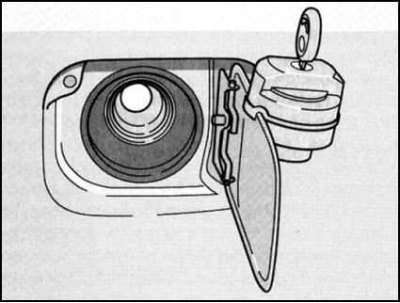
The fuel tank filler neck is located on the right rear side of the vehicle.
Turn the main key to the left in the lock of the lockable fuel filler cap, unscrew and remove the latter. The removed cap can be secured to the edge of the flap door of the filler hatch.
The fuel tank capacity varies depending on the model. On carburetor models the tank capacity is 47 l, on models equipped with a fuel injection system - 42 l.
The first shutdown of a properly functioning automatic fuel dispenser gun means that the tank is full. Further filling may lead to fuel leaks from under the cap as a result of its thermal expansion.
Once you have finished filling, replace the cap, turn the key to the right until it clicks and remove it from the lock.
Warning! Try not to allow the fuel reserve to run out completely on models equipped with a catalytic converter. Violation of the regularity of the air-fuel mixture supply to the engine can lead to incomplete combustion and raw fuel getting into the converter. Fuel ignition inside the converter is fraught with failure of its working element.
Try to avoid transporting fuel reserves in canisters. If this situation cannot be avoided, ensure that the canister is securely fastened.
Fuel type
When refueling your vehicle, use only the fuel grades recommended by its manufacturer. Try to avoid filling up at container pumps, for the quality of the fuel dispensed at which you cannot vouch.
If in an extreme situation you have to fill your car with fuel with a lower octane rating than required, try not to increase engine speed excessively, drive at medium speed and with minimal loads. Fill the tank with the required grade of fuel as soon as possible.
Refueling a car with fuel with a higher octane number than required is not prohibited, although this does not provide any advantages in terms of increasing the engine power and reducing fuel consumption.
Attention! Only unleaded, lead-free fuel may be used for refueling models equipped with a catalytic converter! Failure to comply with this requirement may result in irreversible failure of the converter.
Use of additives
The overall service life and efficiency of the engine are significantly affected by the quality of the fuel poured into the fuel tank. The use of branded additives to the fuel helps improve its performance - consult with car service specialists.
When using low-quality diesel fuel, the water should be drained from the fuel filter more often than specified in the Schedule of routine vehicle maintenance (see Chapter Routine maintenance). Water accumulation in the filter has a negative effect on the stability of engine speed. It is better to drain the water in a car service workshop.
Rules for operating diesel models in winter
Application of winter diesel fuel
When the air temperature drops below 0°C, paraffin is released in the so-called "summer" diesel fuel, which leads to clogging of the fuel filter and interruptions in engine operation.
In most countries with cold climates, a wide range of special "winter" types of diesel fuel are offered for refueling cars during the cold season, ensuring reliable engine operation at temperatures down to -15°C÷-22°C (depending on the type of fuel). Consult at the Skoda branded service center station.
Preheating the fuel filter
The car is equipped with a device for preliminary heating of the fuel filter. Thanks to this device, the operational stability of diesel fuel, intended for use at temperatures down to -15°C, is maintained down to an outside air temperature of -25°C. The need to mix gasoline into diesel fuel is eliminated.
Warning! Do not add any additives to diesel fuel (including gasoline), increasing its fluidity or other operational parameters.