



Engine lubrication system diagram
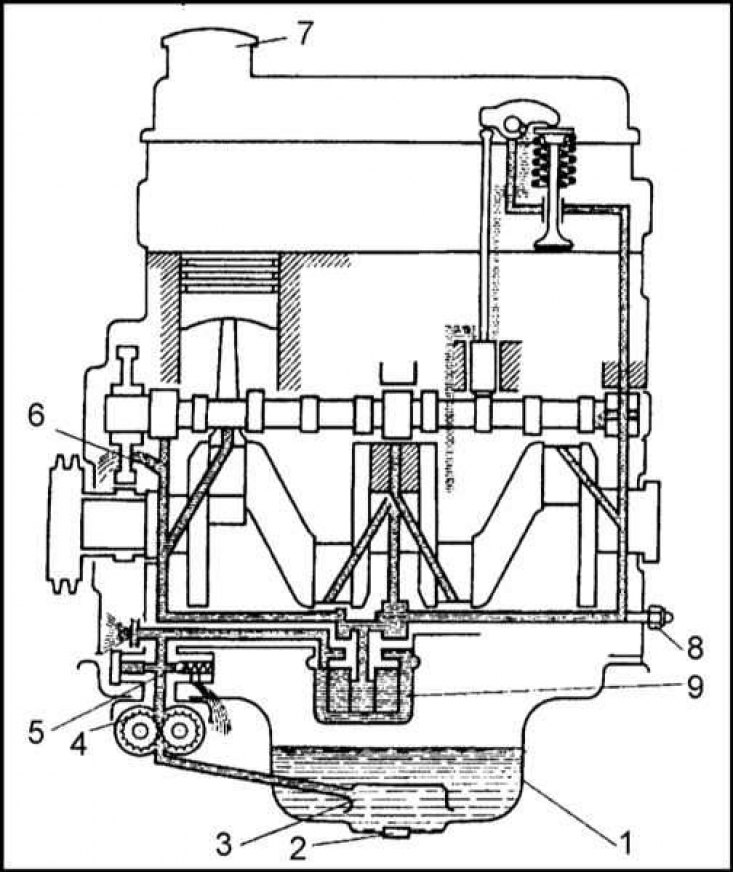
1 - Oil pan; 2 - Oil drain plug; 3 - Oil intake; 4 - Oil pump; 5 - Pump pressure reducing valve; 6 - Holes for lubrication of the camshaft drive chain; 7 - Filler neck; 8 - Oil pressure switch; 9 - Oil filter
Oil pump
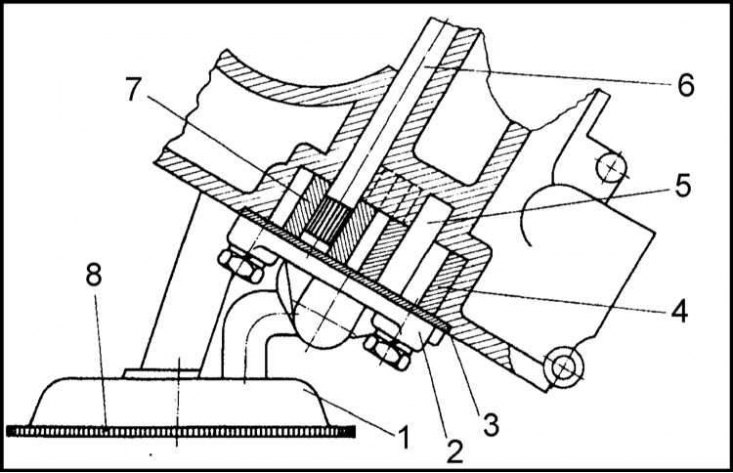
1 - Oil intake; 2 - Lid; 3 - Gasket; 4 - Driven gear; 5 - Driven gear axis; 6 - Pump shaft; 7 - Drive gear; 8 - Oil intake mesh filter
Pressure reducing valve (side cut)
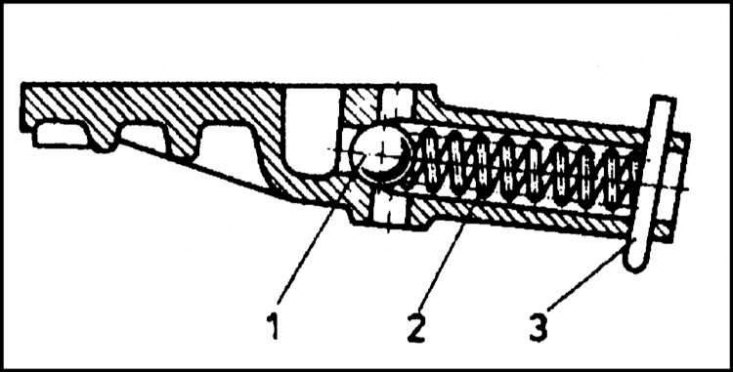
1 - Ball; 2 - Spring; 3 - Cotter pin
Full flow oil filter
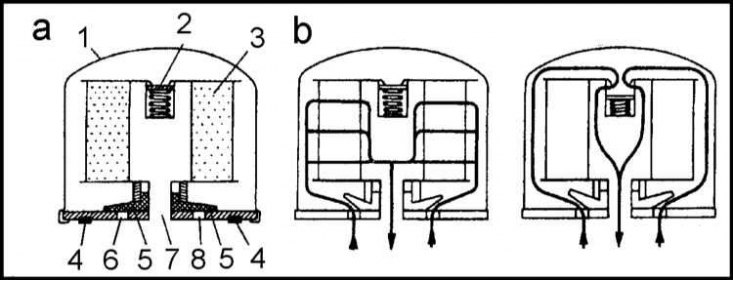
a - Section; b - Operating principle of the safety valve; 1 - Body; 2 - Safety valve; 3 - Filter element; 4 - Gasket; 5 - Anti-drain valve; 6 - Inlet ports; 7 - Outlet holes
Lubrication system - general information
The task of the lubrication system is to reduce the friction component between the internal components of the engine, protect them from corrosion, and remove excess heat from the parts. The lubrication system diagram is shown in the accompanying illustration.
The oil circulation in the engine is as follows. The oil pump sucks oil through the oil intake from the crater pan and supplies it through a special channel to the full-flow oil filter. After filtering, the oil is fed into the main oil line and goes to the crankshaft and the holes in the block in which the journals of the camshaft rotate. Through the channels provided inside the body of the crankshaft, the oil goes to the liners of the connecting rod bearings.
From the main oil line, oil is also supplied to the oil pressure switch. Through the holes in the rocker arms, oil is sprayed onto the valve stems.
Through the holes in the upper part of the lower head of the connecting rods, oil is sprayed onto the surface of the cylinders. Oil is supplied to the timing chain through the holes in the front part of the cylinder block.
The oil filler neck of the cylinder head cover is closed with a plastic plug equipped with a rubber sealing ring.
The crankcase ventilation hose is connected to the fitting on the side wall of the neck.
The oil pan is stamped from a steel sheet. A sealing gasket is installed between the pan and the cylinder block.
The pallet is fastened to the block using nineteen M6x20 bolts, which should be tightened with a force of 7÷9 Nm in a strictly defined order.
At the bottom of the tray there is a drain plug with a thread M16x1.5. The plug is equipped with an aluminum sealing washer measuring 16x22.
The oil pump is located at the bottom of the timing chain cover. The pump is driven by a gear attached to the distributor shaft. The pump sucks oil through an oil intake equipped with a mesh filter from the crater pan.
The illustration shows the components of the oil pump assembly. The driven gear is mounted on an axle pressed into the timing chain cover. The pump shaft is threaded through the hole in the cover, with the drive gear mounted underneath. The upper part of the shaft has a groove designed to engage the shaft with the distributor drive shaft.
The driven and driving gears are engaged with each other in such a way that during rotation they suck in oil and pump it into the engine line. The height of the oil pump gears is 20 mm.
From below, the pump assembly is closed with a cover secured with four M6x20 bolts, also threaded through the sealing gasket.
The gasket, in addition to sealing the joint, also acts as a limiter of the axial play of the gears. If during repair it is discovered that the factory gasket is missing, it can be made from a paper sheet with a maximum thickness of 0.1 mm.
If the gap between the cover and the ends of the shaft gears is within 0.045÷0.158 mm, the gasket does not need to be installed at all.
Excessive pressure growth in the engine is resisted by a pressure-reducing valve installed in the oil pump cover. The main working element of the valve is a ball with a diameter of 12 mm. The ball is pressed against its seat by a spring. The other end of the spring rests against a cotter pin. When the oil pressure exceeds 4 kgf/cm², the spring is compressed and the ball moves slightly away from the seat. Excess oil is then drained back into the oil pan.
From the pump, oil under pressure enters the full-flow oil filter. Oil enters the filter housing through the inlet openings, after pressing the drain valve. After passing through the paper filter element, the oil enters the engine galleries through the filter inlet opening.
The drain valve is made of rubber or plastic and additionally prevents oil from returning to the pump. Due to this filter design, the pressure in the system rises immediately after the engine is started. When installing a new filter, it takes some time to fill it with oil, which determines the delay in turning off the corresponding indicator lamp on the vehicle's instrument panel.
The safety valve ensures that oil passes around the filter element in the event of obstruction of the latter, thereby preventing excessive pressure increase. The valve also operates in case of excessive pressure increase when using oils with a high viscosity level, used in winter. As the engine warms up and the viscosity of the oil decreases, the valve gradually returns to the closed position. In general, the filter is designed and manufactured to withstand pressure up to 15 kgf/cm².
Inside the filter housing is a filter element made of specially treated paper. The paper is folded like an accordion and laid in the shape of a star, which allows a large filter surface to be placed in a relatively small housing.
The junction of the filter housing with the seating surface on the cylinder block is sealed using a rubber or plastic sealing gasket seated in a special groove in the base of the filter.
The oil pressure switch sensor informs the driver by turning on the control lamp that the oil pressure in the lubrication system has dropped below the permissible limit (0.3÷0.6 kgf/cm²).
Removal
Oil pump assembly components
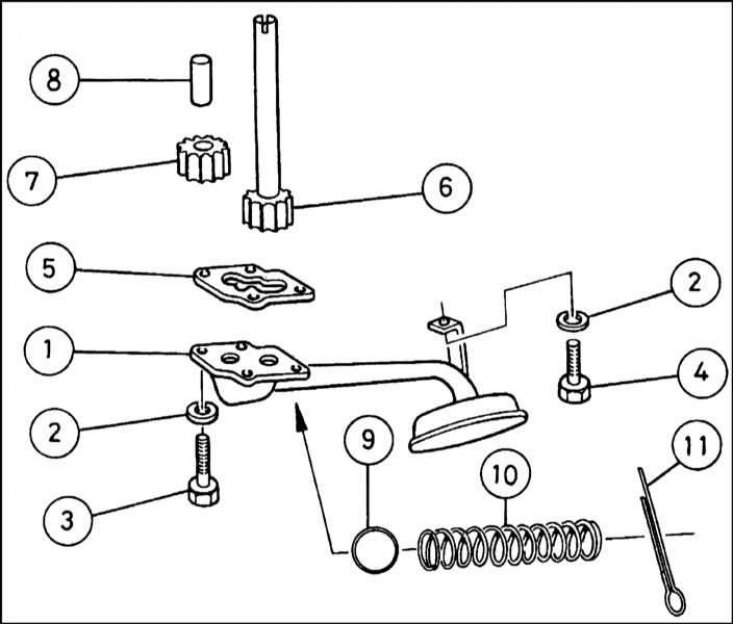
1 - Oil intake equipped with mesh filter; 2 - Spring washer; 3 - Bolt for fastening the oil intake to the timing chain cover; 4 - Bolt for fastening the oil intake to the main bearing cap; 5 - Sealing gasket (if provided); 6 - Pump drive gear; 7 - Pump driven gear; 8 - Driven gear axis; 9 - Pressure reducing valve ball; 10 - Pressure reducing valve spring; 11 - Cotter pin
1. Remove the engine oil pan (see section Removal and installation the engine oil pan).
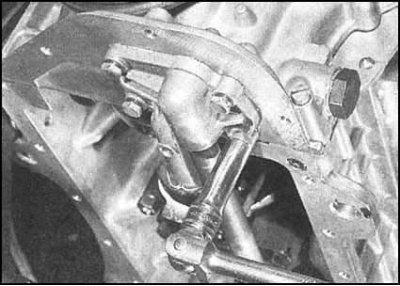
2. Loosen the four bolts securing the oil intake housing with the mesh filter to the underside of the timing chain cover...
View the original on the website [SKODABOOK]
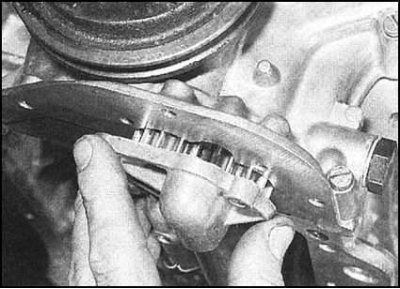
..and one bolt securing it to the central main bearing cap. Carefully remove the oil intake.
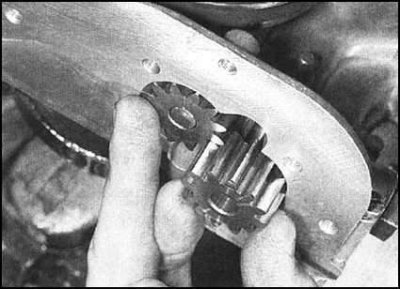
3. The gears can be removed immediately after removing the oil intake cover. If equipped, remove the sealing gasket (during assembly it must be replaced without fail).
Checking the status
1. Check the gears and pump body for signs of wear and mechanical damage (type of tooth chipping).
2. If you have the necessary equipment, estimate the amount of wear on the gear axles and pump body by measuring the gaps (see Specifications).
3. If damage is detected, and if the clearance value exceeds the permissible values specified in the Specifications, the pump gears must be replaced as an assembly with the front timing chain cover with the pump housing mounted in it. The procedures for removing and installing the chain cover are described in Section Removal and installation the cylinder head assembly with the intake manifold and exhaust manifold.
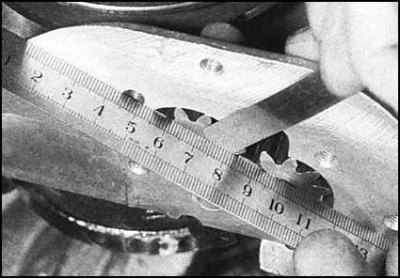
4. Temporarily install the gears into the pump body, then use a flatness gauge to check the (steel ruler ribs) and a blade-type feeler gauge, measure the clearance between the ends of the gears and the pump cover. Vehicle manufacturers (skoda company) insist that the gap should not exceed 0.1 mm. If the gap is close to the limit, the oil intake housing should be installed without a gasket. If the gap is too small, it can be adjusted by selecting a gasket of the appropriate thickness. Exceeding the permissible value is evidence of wear of the components (housings and/or gears); in this case, the pump assembly must be replaced.
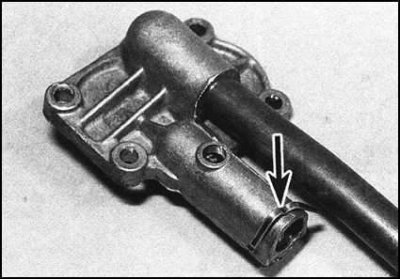
5. Remove the cotter pin from the oil intake housing,
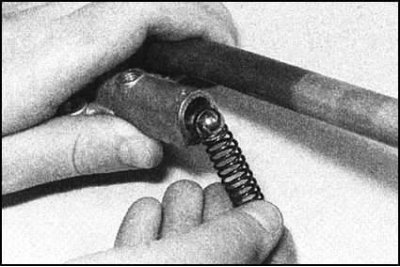
..then shake the spring and ball out of the relief valve seat. Check the removed valve components for signs of wear and mechanical damage. Fit a new ball into the valve seat using a hammer and a suitable soft metal punch - try to achieve a tight fit of the ball to the valve seat. Insert the spring into the seat and secure the assembly with a new cotter pin.
Installation
1. Reassemble in reverse order. Use grease to temporarily secure the new gasket to the mating surface of the oil intake housing.
2. After generously lubricating, insert the gears with their axles into the pump body. Holding the gears, press the oil intake body to the mating surface, screw in the five mounting bolts and tighten them to the required force.
3. Install the engine oil pan in place (see section Removal and installation the engine oil pan).