



Removal
1. Bring the piston of the first cylinder to the TDC position of the end of the compression stroke. Remove the distributor with the tail (see Chapter Engine electrical equipment).
2. Remove the generator (see Chapter Engine electrical equipment).
3. Remove the oil pickup with the mesh filter and take out the oil pump gears (see section Removal, inspection and installation of oil pump components).
4. To prevent the crankshaft from turning while loosening the crankshaft pulley bolt, engage high gear and have an assistant fully depress the foot brake pedal. If the engine is removed from the vehicle, lock the flywheel in accordance with the instructions in Section Replacing crankshaft seals.
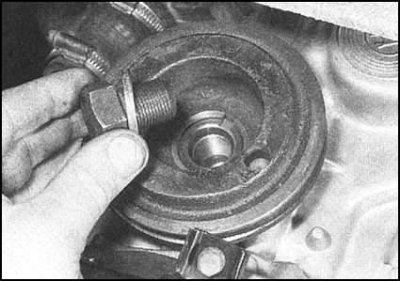
5. Loosen the crankshaft pulley bolt, remove the washer and pulley.
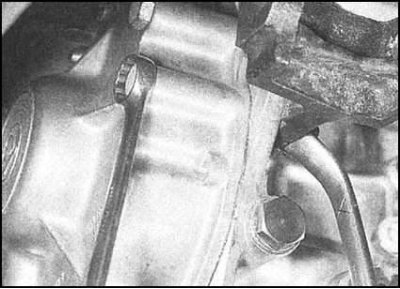
6. Unscrew all fasteners (bolts and screws) timing chain covers. Lower the cover down and remove it from the engine. Also remove the sealing gasket - it must be replaced during assembly.
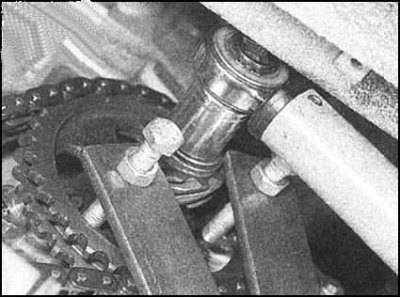
7. Using a flat-head screwdriver, bend back the lock washer flag on the camshaft sprocket bolt. To prevent the shaft from turning while you release the bolt, secure it by engaging a high gear and asking an assistant to depress the brake pedal all the way. Alternatively, you can use a simple fork-type lock made from two pieces of metal strip and three nuts and bolts. One of the bolts acts as the tool fork axle, the other two are attached to the sprocket.
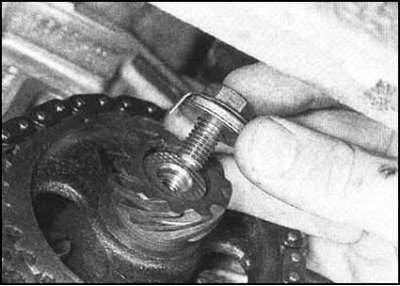
8. Remove the camshaft sprocket bolt,
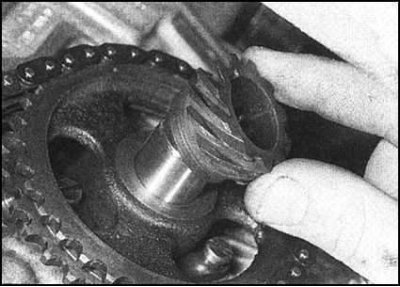
remove the lock and disc washers (the first one must be replaced during assembly). Remove the distributor/oil pump drive pinion from the camshaft journal. Try to remember the installation position of the pinion.
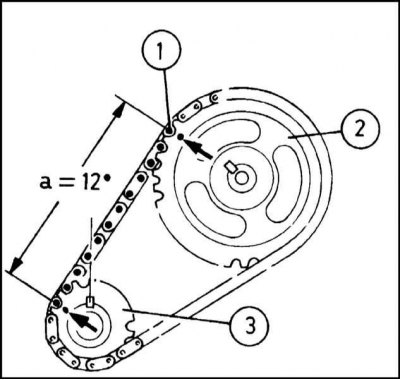
9. Before removing the chain and sprockets, try to remember the relative positions of the timing marks and keys of the crankshaft and camshaft.
10. Remove the chain assembly with sprockets from the crankshaft and camshaft journals.
11. Remove the woodruff key from the groove in the crankshaft journal (try to remember its installation position). If the camshaft key is loose in its groove, remove it as well. Set the removed keys aside, each one with its own sprocket.
12. Remove the adjusting washer, guide spacer sleeve and outer thrust washer from the crankshaft journal. Try to remember the installation position of the components.
Checking the status
1. Check the condition of the teeth of both chain sprockets. If signs of wear are detected, (chips, bent ends, missing teeth, etc.), all assembly included (chain and both sprockets) subject to replacement.
2. By the amount of play when bending the chain in the lateral direction, assess the degree of wear of the rollers. A new chain is almost completely rigid in the lateral plane.
3. A worn chain must be replaced. The authors of this Manual recommend replacing the chain every 50,000 km (30,000 miles) mileage, as well as when performing major engine repairs, regardless of its condition.
4. In principle, it is permissible to replace the chain separately from the sprockets, although the authors of this Guide consider this practice to be vicious, since the savings may turn out to be false.
5. Check all other components for signs of wear and mechanical damage. Replace as necessary.
Installation
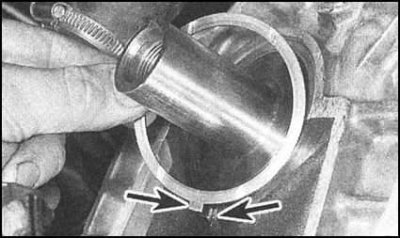
1. Place the outer thrust washer on the crankshaft journal. Make sure that the washer is facing away from the bearing cap with the oil flow grooves. Align the washer tongue with the groove in the base of the cap, then press the washer firmly into its normal operating position.
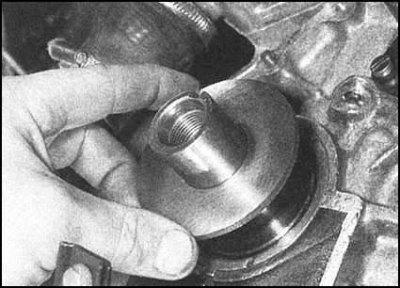
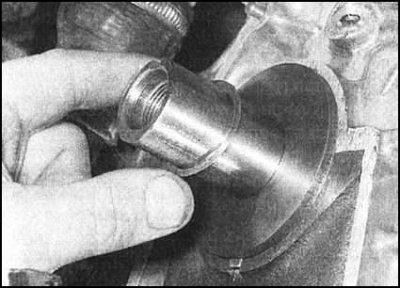
2. Following the thrust washer, place the guide spacer sleeve onto the journal (chamfered side inwards - see illustration).
3. The adjusting washer is put on last.
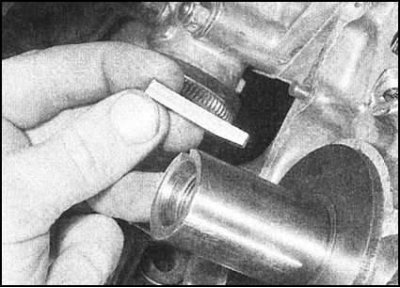
4. Install the key into the crankshaft journal with the beveled side facing inward. If removed, install the camshaft key in place.
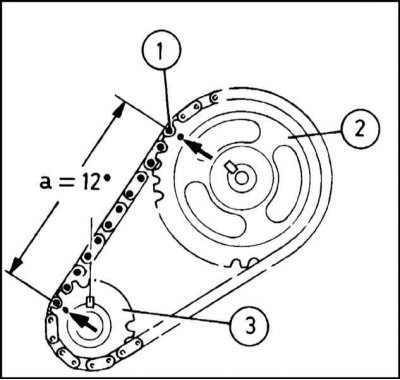
5. Place the chain over the teeth of both sprockets so that the dot mark on the camshaft sprocket aligns with the twelfth roller of the chain, counting the roller located opposite the dot mark on the crankshaft sprocket as the first.
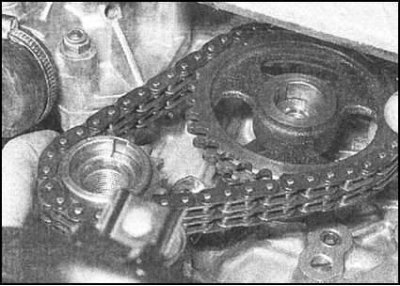
6. Install the chain and sprocket assembly onto the engine. Make sure the sprockets are facing outward with the timing marks.
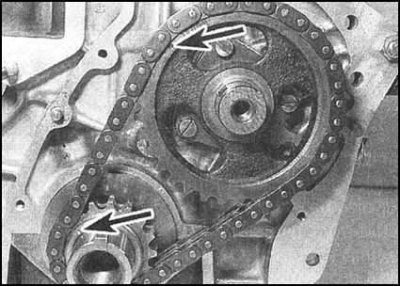
7. Make sure the marks are positioned correctly.
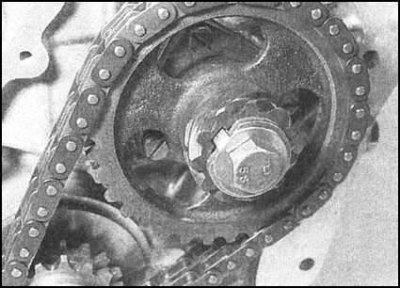
8. Fit the camshaft journal to the distributor/oil pump drive gear. Make sure the gear is facing inward with the flange, then install the disc washer with the concave side facing outward. Install a new lock washer, fitting its flag into the groove on the gear...
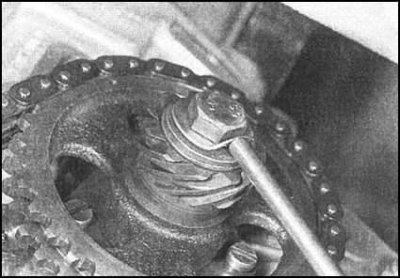
...screw in the sprocket mounting bolt. Tighten the bolt to the required torque, then bend the edge of the lock washer onto the slot in the bolt head.
9. Thoroughly clean the mating surfaces of the chain cover and cylinder block. Completely remove all traces of oil and old gasket material from the surfaces. Assess the condition of the crankshaft oil seal in the cover. Replace if necessary (see section Replacing crankshaft seals).
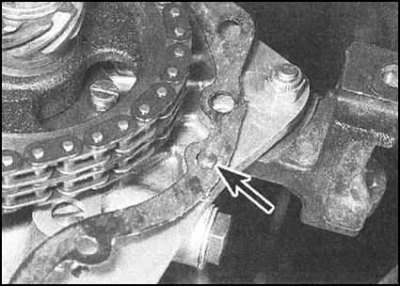
10. Place a new chain cover sealing gasket onto the block guide pins. To secure the gasket, first lubricate its inner side with consistent grease.
11. Carefully push the chain cover onto the guide pins and screw in the fastener (bolts and screws) and tighten it to the required torque.
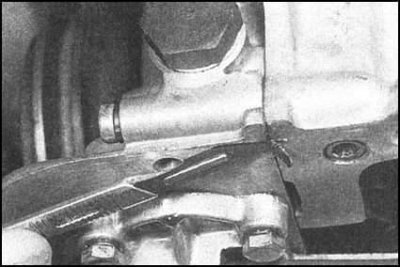
12. Using a sharp knife, carefully cut off the protruding portion of the gasket that extends beyond the mating surface of the engine oil pan.
13. Having correctly turned it relative to the key, put the pulley on the crankshaft journal. Try not to damage the seal lips. Screw in the fastening bolt (don't forget the puck) and tighten it only by hand for now.
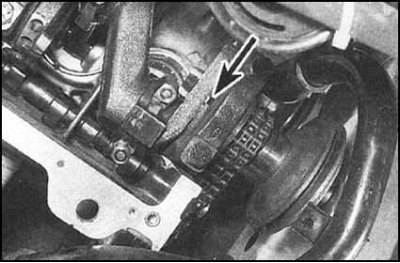
14. Make sure that the inner and outer tongues of the thrust washer are aligned with the corresponding grooves in the right main bearing cap. The washer itself should be tightly seated in its seat.
15. Lock the crankshaft from turning and tighten the bolt of its pulley with the required force.
16. It should be noted that if the thrust washers are not seated correctly, tightening the bolt may damage them. Before continuing with the procedure, make sure that the crankshaft rotates freely.
17. Reinstall the oil pump gears and the oil pickup with mesh filter (see section Removal, inspection and installation of oil pump components), then install the oil pan (see section Removal and installation the engine oil pan).
18. Install the generator (Chapter Engine electrical equipment).
19. If equipped, install the ignition distributor (Chapter Engine electrical equipment).