



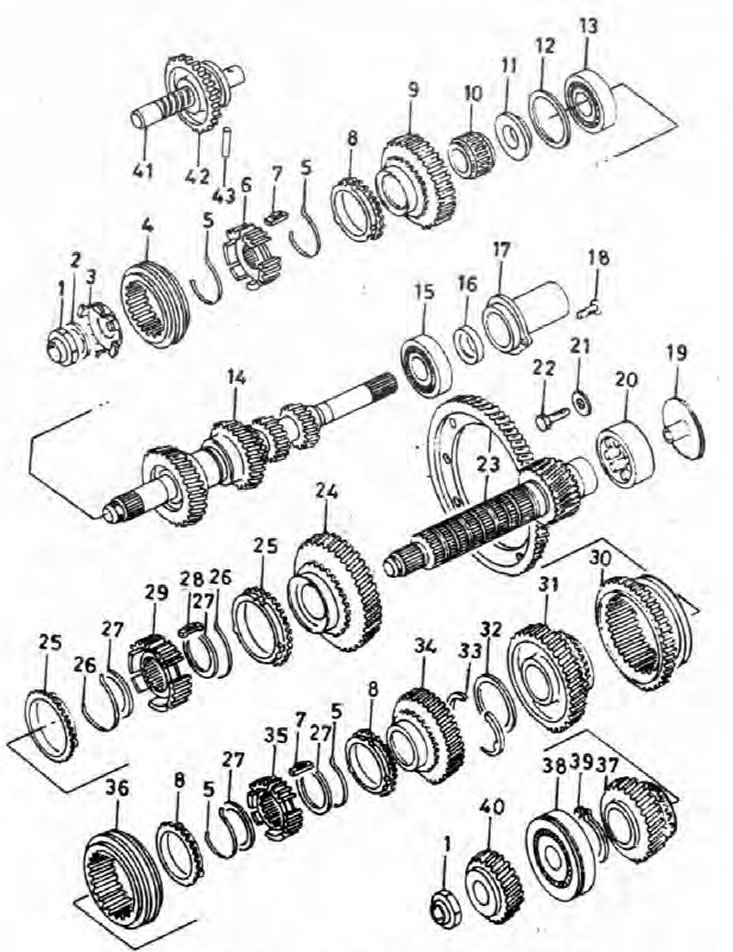
Fig. 7.2. Transmission shaft components
1. Nut; 2. Spring; 3. Thrust ring; 4. Synchronizer clutch; 5. Synchronizer spring; 6. Synchronizer hub; 7. Synchronizer hub cracker; 8. Synchronizer ring; 9. 5th gear pinion; 10. Bearing; 11. Spacer gasket; 12. Gasket (comes in different thicknesses); 13. Bearing; 14. Complete assembly of the input shaft; 15. Bearing; 16. Input shaft seal; 17. Release bearing guide sleeve; 18. Screw; 19. Backstage; 20. Bearing; 21. Gasket; 22. Bolt; 23. Output shaft; 24. 1st gear pinion; 25. Synchronizer ring; 26. Synchronizer spring; 27. Retaining ring; 28. Synchronizer hub cracker; 29. Synchronizer hub; 30. Synchronizer clutch; 31. 2nd gear pinion; 32. Holder; 33. Friction ring; 34. 3rd gear pinion; 35. Synchronizer hub; 36. Synchronous Dutch bushing; 37. 4th gear pinion; 38. Bearing; 39. Retaining ring; 40. 5th gear pinion; 41. Reverse gear shaft; 42. Reverse gear assembly; 43. Pin.
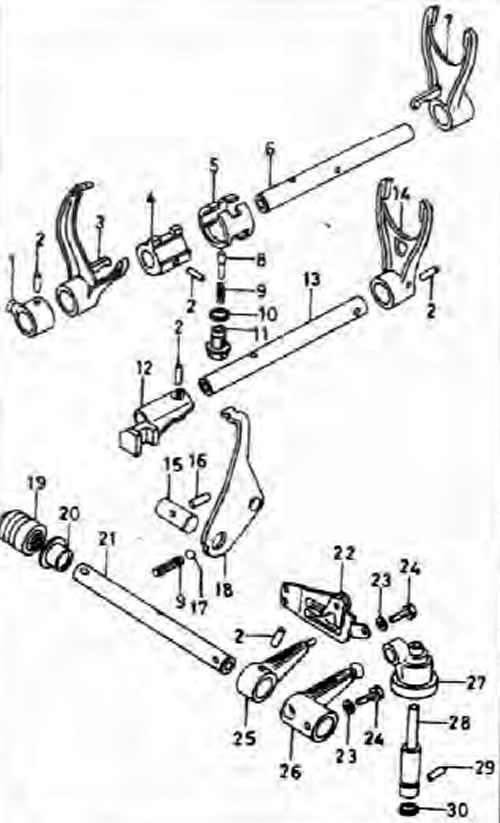
Fig. 7.3. Components of the transmission gear selection mechanism
1. Holder; 2. Cylindrical pin; 3. Fork for engaging 1st and 2nd gears; 4. Working projection; 5. Locking part; 6. Gear shift fork shaft; 7. Fork for engaging 3rd and 4th gears; 8. Limiter pin; 9. Spring; 10. Sealing washer; 11. Bolt; 12. Working grip; 13. Gear shift fork shaft; 14. 5th gear engagement fork; 15. Reverse gear lever pin; 16. Cylindrical pin; 17. Ball; 18. Reverse gear lever; 19. Protective cover for the leash roller; 20. Lead roller seal; 21. Leash roller; 22. Backstage; 23. Washer; 24. Bolt; 25. Backstage pin; 26. Gear shift lever; 27. Angle lever; 28. Angle lever pin; 29. Cylindrical pin; 30. O-ring seal.
(Information published on the website skodabook.ru)
Repairing a manual transmission is a difficult task for a novice auto mechanic. In addition to the fact that you will need to remove and install a large number of small parts, you will need to accurately measure and, if necessary, adjust numerous gaps by selecting gaskets. Therefore, it is recommended to entrust the overhaul of the transmission to a specialist or purchase an already rebuilt unit.
However, a car enthusiast with some experience and special tools can completely overhaul the transmission on his own. Work carefully and methodically so as not to miss anything.
The tools needed for rebuilding are pliers for removing the inner and outer locking ends, bearing pullers, a sliding hammer, a set of punches, a dial micrometer, and possibly a hydraulic press. In addition, a large, sturdy workbench and a vice will be needed.
While disassembling the transmission, carefully record the location of each component to facilitate subsequent installation.
Before disassembling the transmission, try to find out which of its components is malfunctioning (see Chapter "Troubleshooting").