



The injection pump is driven by the timing belt and rotates twice as slowly as the crankshaft. Diesel fuel is sucked by the pump from the tank and passed through the fuel filter. It is then supplied under very high pressure through individual lines to the injectors.
The injectors are spring-loaded mechanical valves that open when the pressure of the fuel supplied to them exceeds a certain specified value. When the valves open, the fuel is injected through the injector nozzles into the swirl chambers (indirect injection system). Note that the design of the injectors is such that as the pressure increases, the valves open in two stages, which allows for the most efficient combustion of the mixture.
The basic setting of the injection phases is determined by the position of the fuel injection pump on its support bracket. Adjustment (delay or advance) phases when the engine is running are produced by the pump itself mechanically, depending on the position of the gas pedal and engine speed.
The engine is stopped by means of a shut-off electromagnetic valve, which, when triggered, shuts off the fuel supply to the high-pressure fuel pump. On most models, this valve is included in the anti-theft system circuit. Until the immobilizer is disabled, starting the engine is not possible.
During a cold start, the engine idle speed is increased by means of an automatic idle speed increase device installed on the wall of the high-pressure fuel pump.
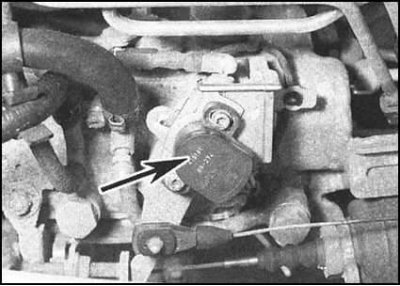
The engine is also equipped with a control unit that controls the glow plugs and exhaust gas recirculation (EGR). The unit is located next to the glow plug relay in the left rear corner of the engine compartment. Information about the current load on the range is supplied to the control unit by a potentiometer attached to the throttle actuator lever. The injection start valve installed in the high-pressure fuel pump transmits information about the fuel supply phases to the control unit.
The control unit includes a self-diagnosis unit for fuel injection pump failures. The diagnostic connector is located on the right under the instrument panel. Reading the information recorded in the unit's memory is only possible with the help of special equipment and should be performed by car service specialists. A description of the procedures for removing/installing the pump in order to eliminate the causes of the detected faults is given in the materials of the Chapter.
Precautionary measures
Warning! Diesel fuel is a highly flammable liquid. Special precautions must be taken when servicing fuel system components!
Do not smoke and do not approach the work site with an open flame source/unprotected lampshade carrier! Do not perform maintenance of power system components in rooms equipped with natural gas-powered heating devices and equipped with a control torch. Make sure that a loaded fire extinguisher is always at hand.
Avoid contact of fuel with eyes and exposed skin. Wear protective gloves and goggles. Wash off any accidental splashes with soap and water.
Remember that fuel vapors are no less, if not more, dangerous than the liquid fuel itself. Perform all work in a well-ventilated area.
Many of the procedures described in this Chapter involve disconnecting fuel lines, which inevitably results in fuel spills. Try to have all the necessary materials available to collect spilled fuel in advance.
Remember that the injector actuation pressure is very high and that serious injury may result from the jet from the nozzle hitting exposed areas of the body. The authors of this Manual recommend that all pressure tests on the system be performed by qualified service personnel.
Do not allow diesel fuel to come into contact with the cooling system hoses under any circumstances; remove any accidental splashes immediately with a clean rag. Hoses contaminated with fuel must be replaced.
The fuel system of a diesel engine is particularly sensitive to various types of contamination. When servicing system components, try to keep the components clean and prevent dirt from getting inside the tract. Before connecting hoses, wipe the fittings thoroughly. Place the removed components in clean containers. Use only lint-free rags to wipe the parts. Try not to use compressed air to blow out fuel system components in situ.