



Contents: Removal ⬇ Installation ⬇
Note. Checking the injection phase setting of the high-pressure fuel pump on diesel engines is performed statically. To assess the pump lift value, a plunger-type dial gauge is required. The phase setting is determined by the distance between the TDC mark on the flywheel and a fixed point on the engine, the measurement of which should be entrusted to qualified auto service specialists.
Removal
1. Disconnect the negative cable from the battery.
2. Remove the air cleaner inlet hose (see section Removal and installation the air cleaner assembly and intake tract components).
3. Due to extremely limited access to the pump, it would be wise to remove the radiator.
4. Acting in accordance with the instructions given in Chapter Engine repair follow these steps:
- a) Remove the camshaft cover and the outer timing belt cover;
- b) Bring the engine to TDC position;
- c) Remove the toothed belt from the toothed pulleys of the camshaft and fuel injection pump.
5. Now it is necessary to remove the gear wheel from the injection pump shaft. In the process of releasing the fastener, the gear wheel should be blocked from turning using a suitable device, which can easily be made from improvised means (see section Removal and installation the timing belt and its covers).
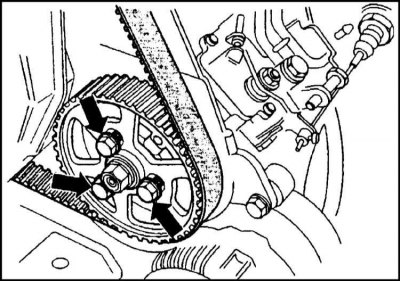
6. Loosen the three mounting bolts and remove the gear from the pump flange.
Caution! Do not loosen the central nut of the gear wheel under any circumstances, as this may result in the basic settings of the injection phases being disturbed.
7. After marking, disconnect the fuel supply and return hoses from the pump and also disconnect the control hose from the return fitting.
8. Using two wrenches (you may have to use a slotted wrench with a slotted head)loosen the union connections of the rigid fuel pipes at the rear of the injection pump and each of the injectors. Remove the pipe assembly from the engine.
Warning! Prepare to collect spilled fuel - place a rag under the dispensing nipple connections. Try not to allow the rigid fuel pipes to deform under any circumstances.
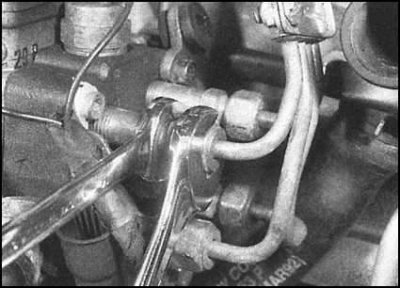
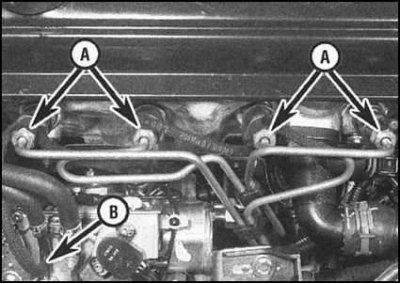
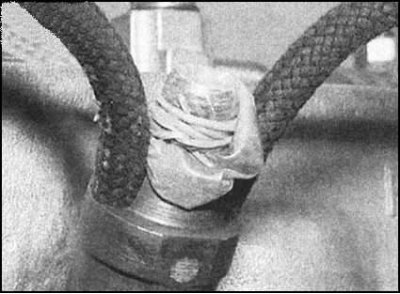
9. To prevent dirt from getting into the fuel system, immediately plug the open ends of the fuel pipes and fittings. Use a finger cut off from a rubber glove...
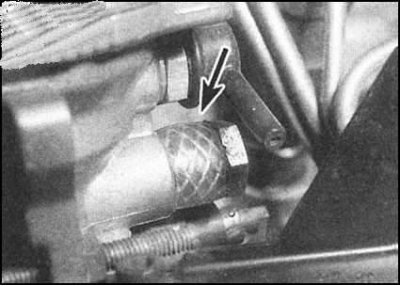
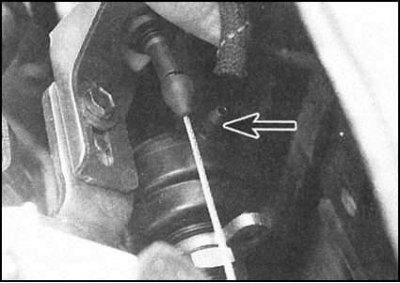
..., or plug the fittings using a hollow bolt unscrewed from it, previously tightly seated in a section of hose of a suitable diameter.
Source of the article web resource: www.skodabook.ru
10. Disconnect the vacuum tube from the idle speed increase device drive on the wall of the fuel injection pump.
11. Disconnect the accelerator cable from the fuel injection pump bracket (see section Removal, installation and adjusting the accelerator cable).
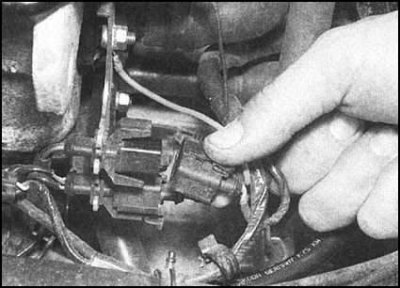
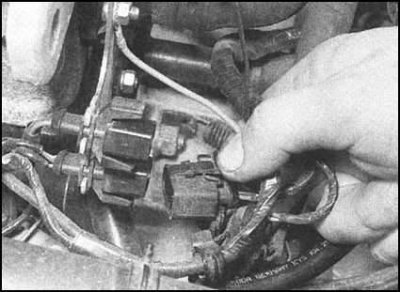
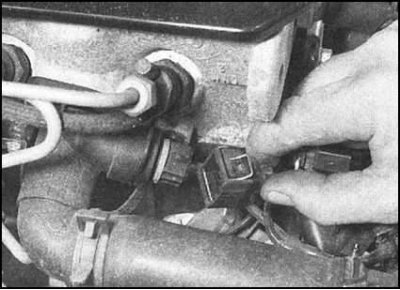
12. After marking, disconnect the electrical wiring from the following components:
- a) Oil pressure switch on the left end of the cylinder head;
- b) Oil temperature/pressure switch on the fuel filter support bracket;
- c) Two connectors installed in the bracket on the left wall of the cylinder block;
- d) Coolant temperature sensor on the cooling tract elbow in the front part of the cylinder head.
 |
 |
13. Before removing the fuel injection pump, mark the position of the mounting bolts in the oval holes - during assembly, the pump must be installed strictly in the previous position to avoid disruption of the basic settings of the injection phases.
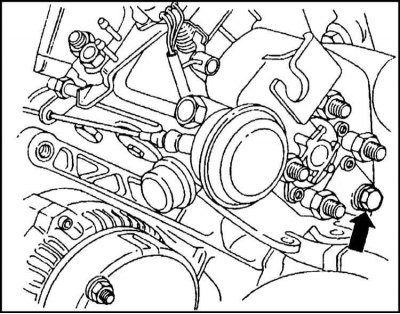
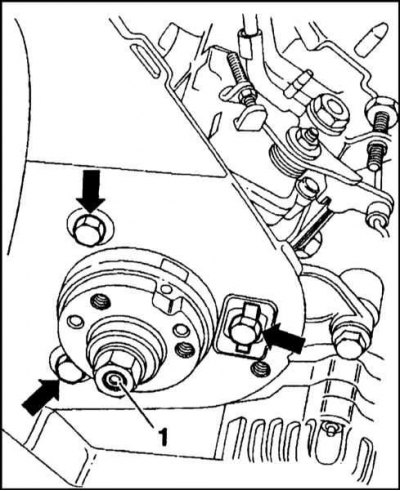
14. Remove the rear mounting bolt and three bolts from the front of the pump (see accompanying illustrations). Make sure nothing is left connected to the injection pump and remove the pump from the engine compartment.
 |
 |
Installation
1. Install the fuel injection pump in its regular place on the engine, tighten the fasteners with the required force.
Note: The pump mounting holes are oval in shape to allow adjustment of the pump position on the engine. When installing a new pump, the bolts should first be installed in the center of the holes to ensure maximum adjustment range. The old pump is installed strictly in the previous position in accordance with the markings applied during dismantling.
2. Perform the initial filling of the pump with clean diesel fuel through a funnel, alternately inserted into the fuel supply and return fittings (to collect spilled fuel, cover the fittings with rags).
3. Connect the fuel pipes to the injectors and pump. Tighten the unions with the required force using two wrenches.
4. Connect the fuel supply and return pipes to the injection pump (don't forget to replace the sealing washers). Tighten the hollow bolts of the union connections to the required torque.
5. In accordance with the markings made during dismantling, reconnect all disconnected electrical wiring.
6. Connect the vacuum tube to the idle speed increase device valve.
7. Connect and adjust the accelerator cable (see section Crankcase ventilation system - general information).
8. Replace the pump gear and secure it with three bolts - thread the bolts through the oval holes and tighten them only by hand for now.
9. Lock the gear wheel from turning by inserting a metal rod through the centering hole into the drilled hole in the pump hub. The play of the locked wheel should be minimal.
10. Install the timing belt and adjust its tension (see section Removal, condition check and installation of the front cover, timing chain and sprockets).
11. Now it is necessary to check the installation/adjustment of the injection phases of the high-pressure fuel pump in the conditions of the car service workshop. When installing a new high-pressure fuel pump, it is also necessary to connect the immobilizer of the anti-theft system to it.
12. Check the idle speed and adjust it if necessary. Then check the maximum engine speed setting (see section Exhaust system - general information and replacement of components) and fast idle speed (see section Catalytic Converter - General Information and Precautions).
13. Further assembly is carried out in the reverse order of dismantling.