



Checking and adjusting the drive belt
10. The drive belt should be visually inspected for fraying, cracking and delamination. If any of these damages are present, replace the drive belt.
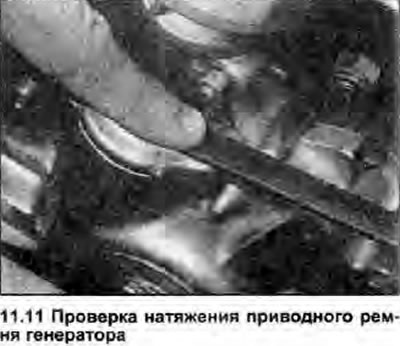
11. The drive belt tension is correct when, with a force of approximately 2 kg applied to it in the middle of the run between the generator and water pump pulleys, the belt deflects by 10-15 mm (photo).
12. To adjust the drive belt tension, loosen the bracket, pivot pin, and alternator clamp bolts and move the alternator back and forth until the correct tension is achieved (photo). This will be much easier if the pivot pin and clamp bolts are only slightly loosened so that some force is required to move the alternator. This will allow the correct drive belt tension to be achieved more quickly.
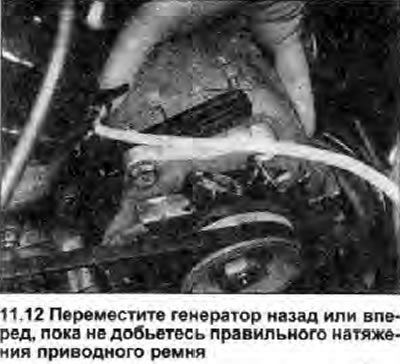
13. When the belt is tensioned correctly, tighten all loose bolts and recheck the tension.
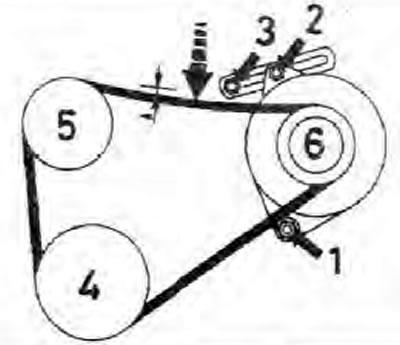
1. Generator pivot bolt
2. Generator clamp bolt
3. Generator bracket bolt
4. Crankshaft pulley
5. Water pump pulley
6. Generator pulley
A Drive belt deflection by 10-15 mm
Replacing the drive belt
14. To replace the drive belt if it is worn or stretched, loosen the mounting bolts, pivot shaft and clamp and move the generator as far as possible towards the water pump.
15. Remove the old drive belt from the crankshaft, generator and water pump pulleys.
16. Carefully place the new belt on the pulleys, being careful not to contaminate it with grease, and adjust the tension as described above.
Note: After replacing the belt, it is recommended to recheck its tension after approximately 400 km.