2. To remove the system or part of it, first jack up the front or rear of the car and place it on axle stands. Alternatively, place the car on an inspection pit or overpass.
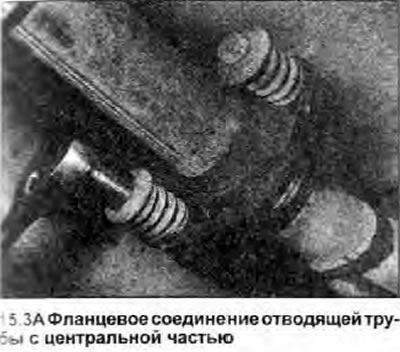
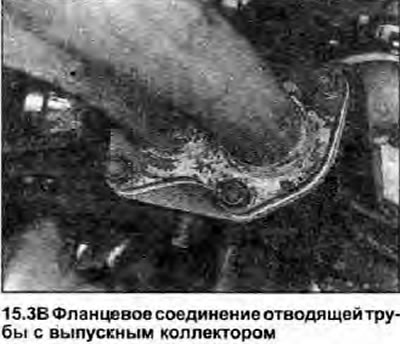
3. To remove the outlet pipe, loosen and remove the two nuts on the flange that connects the outlet pipe to the center section, and release the springs. Loosen the nuts on the flange that connects the outlet pipe to the manifold. Separate the outlet pipe from the connections at each end, then lower it and remove it from underneath the vehicle (see illustrations).
 |
 |
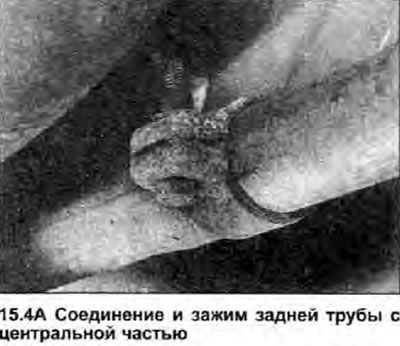
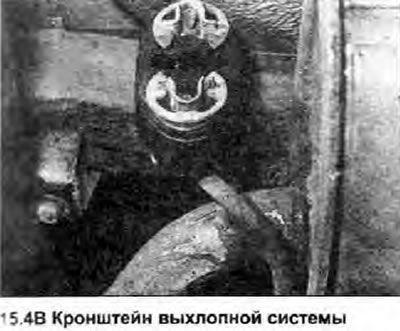
4. To remove the rear pipe, loosen the clamp that connects it to the central part, release the pipe from the brackets, and pull it back (see illustrations).
 |
 |
5. The center section can be removed together with the front exhaust pipe or separately. First separate the center section from the rear section (as described in the previous paragraph), then separate the center section from the outlet pipe or manifold, release the pipe from the hangers, and remove it from under the vehicle.
6. Replace all gaskets and seals after each removal; check and replace all fasteners, clamps and rubber hangers if necessary.
7. Install in the reverse order of removal, paying attention to the following:
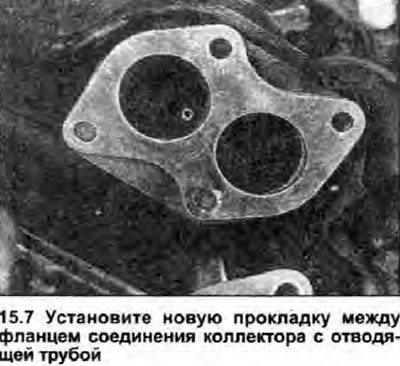
- a) Make sure the mating surfaces of the joint and flanges are clean. Always install a new gasket between the manifold and the exhaust outlet pipe (see illustration).
- b) Hang the system freely on its mountings and check that it does not touch any body parts or suspension, even with the rubber suspensions at maximum deflection.
- c) Apply a small amount of anti-lock compound to the threads of all nuts (except self-locking) and bolts, as well as on the connection bushings.
- d) After starting the engine, check the system for leaks and only then lower the car onto its wheels.