



Diesel engine lubrication system
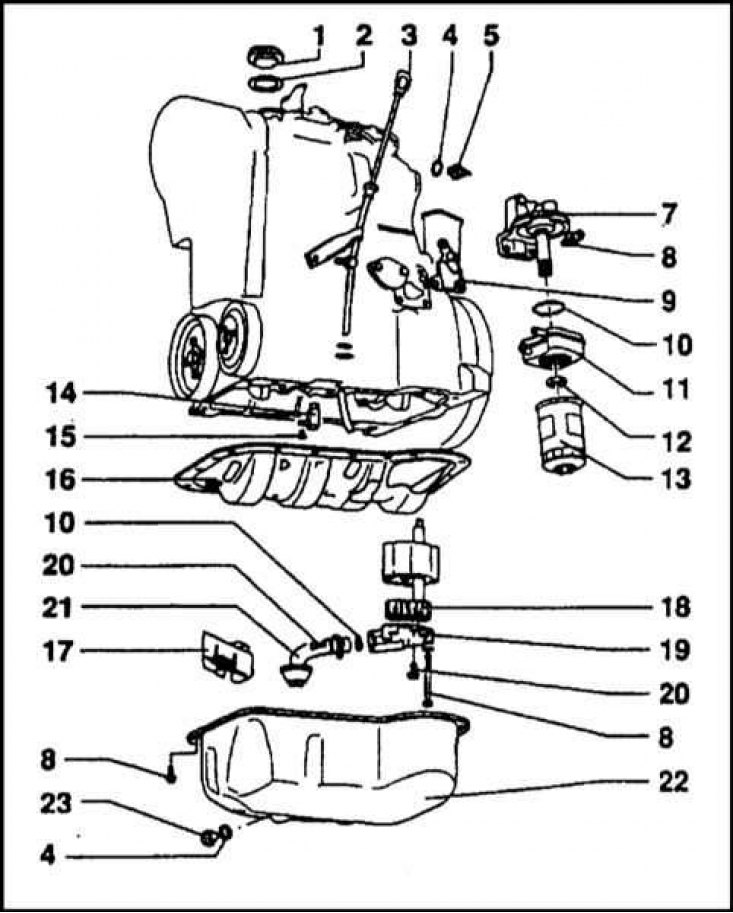
1 - Oil filler cap; 2 - Sealing gasket; 3 - Measuring probe; 4 - Sealing gasket; 5 - Oil pressure indicator lamp switch; 7 - Oil filter bracket; 8 - Bracket mounting bolt; 9 - Seal; 10 - Sealing ring; 11 - Heat exchanger; 12 - Heat exchanger fastening nut; 13 - Oil filter; 14 - Connecting rod oil jet; 15 - Jet mounting bolt; 16 - Oil deflector; 17 - Oil deflector; 18 - Oil pump gears; 19 - Lid; 20 - Mounting bolt; 21 - Oil intake; 22 - Oil pan; 23 - Drain plug
Oil pump components
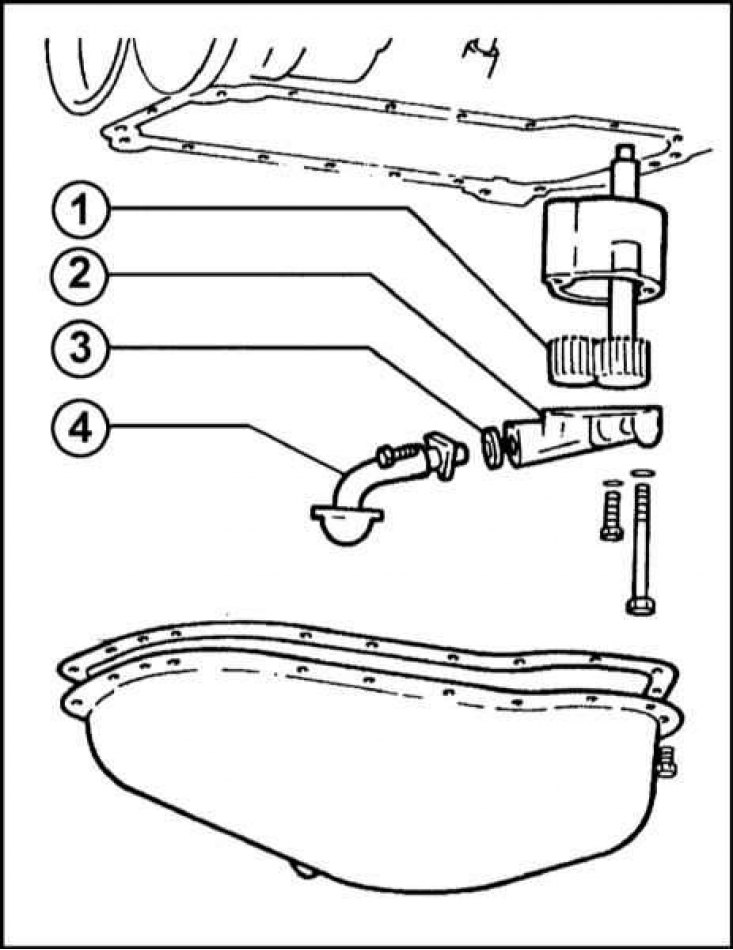
1 - Pump gears; 2 - Pump cover; 3 - Sealing ring; 4 - Oil intake pipe
Lubrication system - general information
The engine in question uses a combined lubrication system with a full-flow oil filter. The total volume of oil to be filled is 4.5 liters.
The required working oil pressure is created by a gear oil pump. The width of the gears is 36 mm. The oil intake is connected to the pump through a sealing gasket. The working oil pressure in the system is 0.57÷0.67 MPa. When the permissible value is exceeded, the pump's pressure reducing valve opens.
The indicator lamp switch sensor is mounted on the oil filter bracket.
Oil cooling is carried out in a heat exchanger connected to the engine cooling system.
The oil pump and oil intake assembly are located in the engine oil pan. The pump is driven by an intermediate shaft rotating at half the crankshaft speed.
Removal
1. Remove the engine oil pan (see section Pallet - removal, inspection and installation).
2. Unscrew the bolts securing the pump to the base of the cylinder block.
3. Lower the pump assembly with the oil intake, separating it from the block. If so equipped, remove the oil deflector plate.
Examination
1. Loosen the coupling flange mounting screws and remove the oil intake tube. Remove the sealing ring. Unscrew the mounting screws and remove the pump cover.
2. Clean the pump thoroughly and check the condition of its gear teeth.
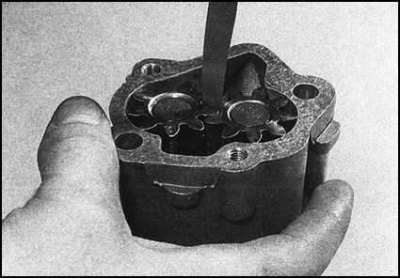
3. To assess the amount of engagement play, rotate the gears in different directions. Measure and compare the results with the requirements Specifications.
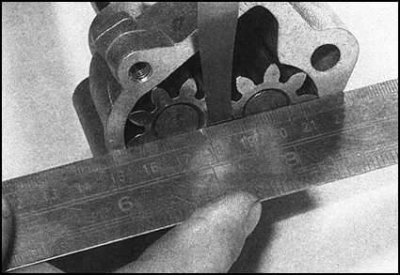
4. Using a steel ruler and a blade-type feeler gauge, determine the axial clearance of the gear fit. Compare the result with the requirements Specifications.
5. If the measurement results go beyond the permissible values, the pump must be replaced.
Installation
1. Install the pump cover, screw in and tighten the mounting screws to the required torque.
2. Install the oil pickup assembly onto the pump (don't forget to replace the o-ring). Tighten the mounting screws to the required torque.
3. Install the pump on the cylinder block, screw in and tighten the mounting bolts to the required torque.
4. Install the oil pan in place.