



Note: See Warnings given in Chapter 1 this Section before you begin working.
Removal
Note: Radiator repairs are best left to a professional, although minor leaks can be repaired using a sealant such as Holts Racfweld.
Radiator
1. Drain the cooling system (see Section 1).
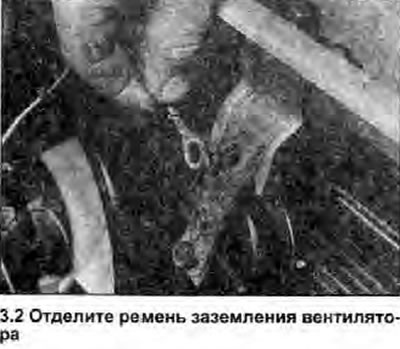
2. Loosen the mounting nut, separate the fan ground strap from the horn mounting stud (see photo), and remove the horn assembly.
3. Separate the cooling system hoses from the radiator.
4. Disconnect the wires from the electric fan thermal switch.
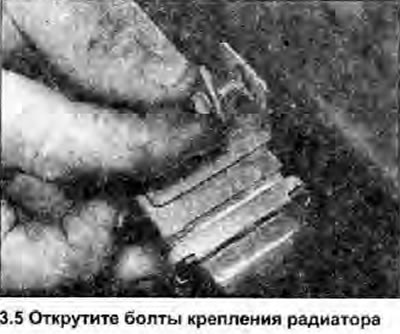
5. Unscrew the two upper radiator mounting bolts (see photo).
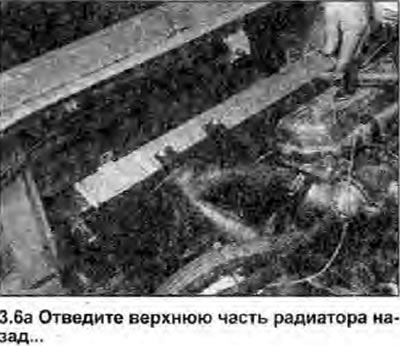
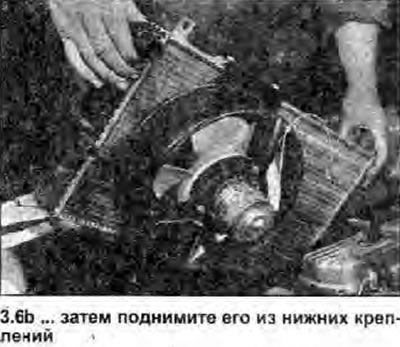
6. Pull the top of the radiator back, lift it out of the lower mounts and remove the radiator from the engine compartment together with the fan, being careful not to damage its core (see photo).
 |
 |
Expansion tank and its filler cap
7. Drain or pump out the coolant from the expansion tank, plug or pinch the connecting hose going to the radiator, then unscrew the mounting nuts and remove the tank from the engine compartment.
Inspection
Radiator
8. To be able to perform a complete inspection of the radiator, separate the fan from it as described in Chapter 5. If the radiator was removed due to clogging (caused by overheating), try washing it in the opposite direction (see Section 1) or, in particularly difficult cases, use a special cleaning agent strictly in accordance with its manufacturer's instructions. Make sure that the agent is suitable for use on an aluminum radiator.
9. Using a soft brush, a spray of water from a garden hose, or compressed air, clean the radiator core of leaves, dead insects, etc.
10. Minor radiator leaks can be repaired with Holts Radweld. Serious leaks and damage should be referred to a specialist or the radiator should be replaced.
11. If the radiator is to be repaired or replaced, before removing it, separate the thermal switch (see Chapter 6) and all cooling system hoses.
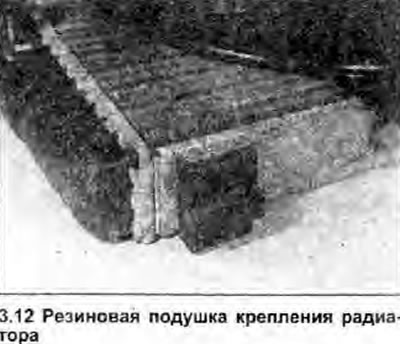
12. Check the condition of the radiator fasteners and replace them if necessary (see photo).
Expansion tank and its filler cap
13. Drain any remaining coolant from the reservoir and flush it with fresh water to clean it. If the reservoir is leaking, first try to repair it using a special sealant or suitable adhesive. If this fails, replace the reservoir.
14. The expansion tank filler cap should be cleaned and checked each time it is removed. Make sure that the sealing surfaces and threads of the cap are clean and undamaged and that they fit tightly against the corresponding part of the expansion tank.
15. The serviceability of the expansion tank cap safety valve can only be checked using a special leak tester (cooling system compression tester), equipped with a suitable adapter. The cover safety valve must retain the air pressure until it reaches the working value specified in Specifications, the valve should open.
16. If there is any doubt about the tightness of the cap or the serviceability of its valve, replace the cap. Make sure that the replacement you buy strictly corresponds to the required type.
Installation
Radiator
17. Install in the reverse order of removal, paying attention to the following:
- a) Make sure the radiator is positioned correctly without placing excessive load on its mountings.
- b) Place the hoses carefully so that they do not get tangled with other components and tighten their mounting clamps.
- c) Fill the cooling system (see Section 1).
Expansion tank and its filler cap
18. Install in the reverse order of removal, paying attention to the following:
- a) Make sure that the hoses, especially those running between the reservoir and the radiator, are routed correctly, without kinks or sharp bends, and are securely fastened with clamps.
- b) Fill the cooling system (see Section 1).