



Front Suspension Strut Components
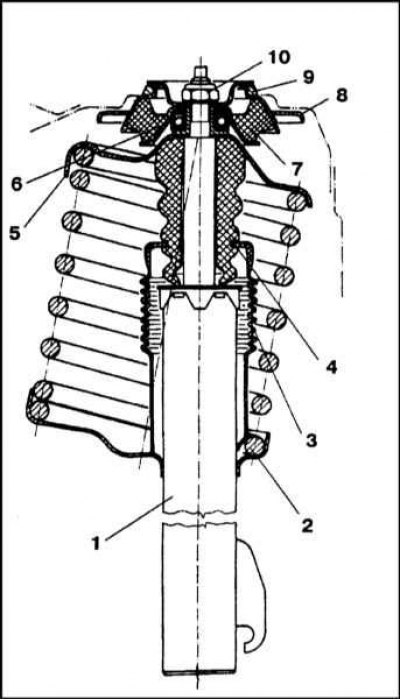
1 - Shock absorber; 2 - Coil spring; 3 - Protective case; 4 - Compression stroke buffer; 5 - Upper spring plate; 6 - Bearing; 7 - Rubber cushion; 8 - Upper support of the rack; 9 - Rubber ring; 10 - Nut M12
Note: You will need a special tool to compress the coil springs of the suspension. The authors of this manual recommend using an adjustable type tool - ask at an automotive accessory store. Any attempt to disassemble the struts without using a special tool is fraught with serious injury.
A new mounting plate nut will be required for assembly.
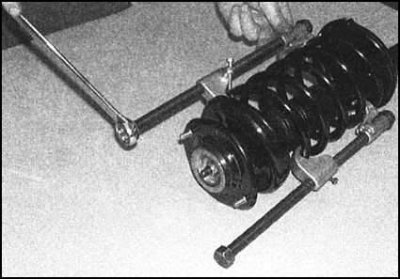
1. Remove the strut from the car, clean it from dirt, then clamp it vertically in a vice with soft jaws. Using a special device, compress the coil spring, completely removing the load from the plates. Make sure that the tool is correctly secured to the spring coils (follow the manufacturers instructions strictly).
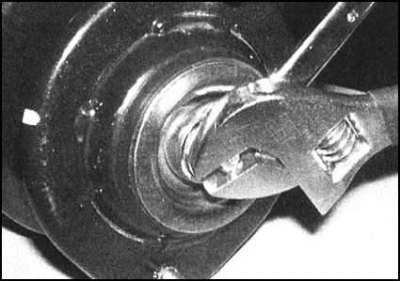
2. Use a wrench to prevent the piston rod of the rack assembly from turning and loosen the upper plate mounting nut.
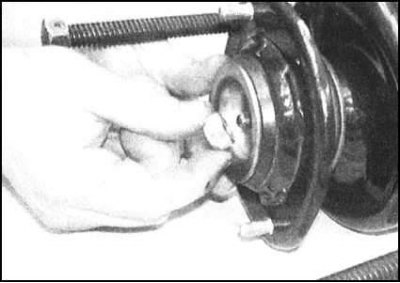
3. Remembering the installation position of the components, release the nut...
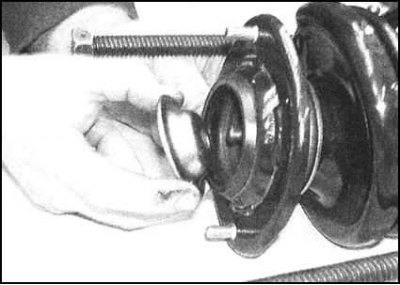
and remove the disc washer from the rack...
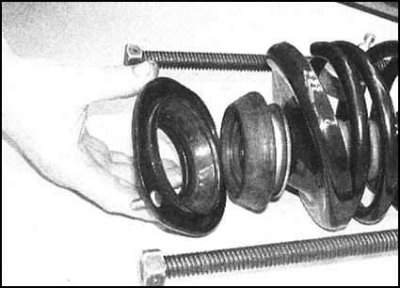
... and the mounting plate...
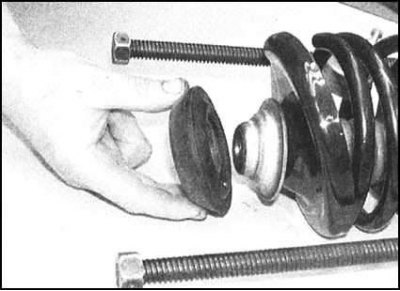
Note: The nut must be replaced during assembly.
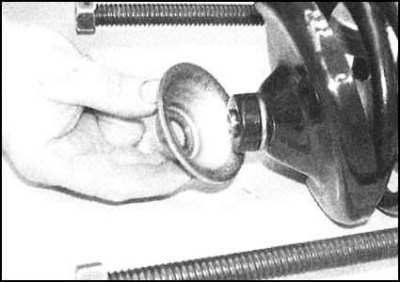
4. Remove the rubber bushing...
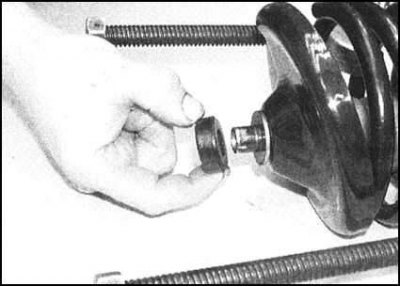
... bearing holder...
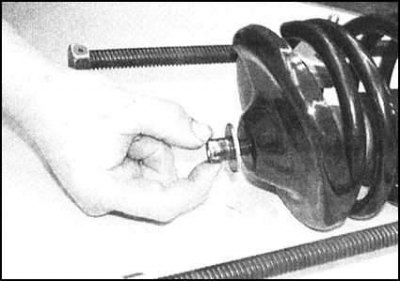
... bearing...
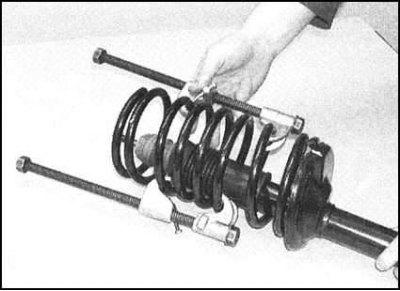
...the spacer sleeve and the upper spring plate...
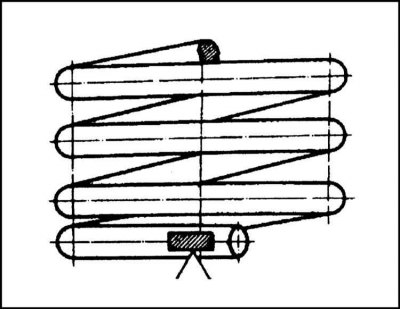
Then remove the coil spring...
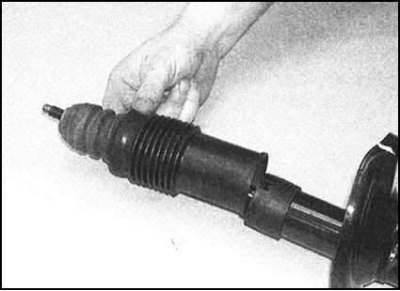
5. Remove the rubber protective cover and compression buffer from the shock absorber piston assembly.
6. Carefully inspect the shock absorber for signs of hydraulic fluid leaks. Check the piston for cavities and the shock absorber body for mechanical damage. Holding the shock absorber vertically, check its proper functioning first over the entire length of its stroke, then on short compressions with a stroke of 50 to 100 mm. In both cases, the compression resistance should be uniform and continuous. Otherwise, the shock absorber is faulty and must be replaced.
7. Check all components for signs of wear, deformation and mechanical damage, paying particular attention to the condition of the bearing and spacer sleeve. Replace defective parts.
8. Install the compression buffer and rubber protective cover on the shock absorber. Make sure that the lower edge of the cover is correctly seated on the shock absorber body.
9. Install the coil spring in place. Make sure that its lower end is correctly seated relative to the plate stop.
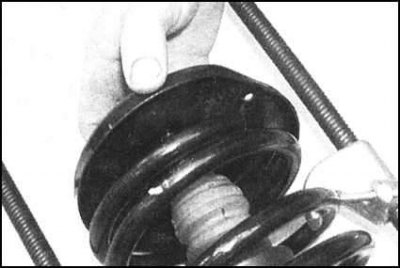
10. Fully extend the shock absorber, then install the upper plate on it, again correctly turning it with the stop relative to the end of the spring.
11. Install the spacer sleeve, bearing, bearing retainer and rubber bushing, then install the upper mounting plate.
12. Install the disc washer onto the piston, then screw on the new nut. While holding the piston from turning, tighten the mounting plate nut to the required torque.
13. After ensuring that the spring is correctly seated on the plate stops, release the compression tool and remove it from the stand.