



Examination
1. In case of malfunction of the system, the search for the cause of the failure is carried out by substituting known good components for the ones being checked, or using special diagnostic equipment in the conditions of the car service workshop. Some preliminary checks are described in the following paragraphs.
2. Check the condition of the two system fuses located in the left rear corner of the vehicle's engine compartment. One of the fuses is rated for 5 A, the other (larger) - 50 A. A blown 50-amp fuse indicates a serious problem with the circuit wiring - never try to simply replace a blown fuse without first identifying and eliminating the cause of the circuit overload - this practice is fraught with a fire.
3. Disconnect the wiring from the coolant temperature sensor (CTS), which will force the pre-glow system to operate in cold engine mode.
Note: Turning the ignition on with the CTS disconnected will cause a fault code to be written to the glow plug control unit, which can then be cleared by a technician using diagnostic equipment. You can leave the CTS connected and wait until the engine has cooled down completely.
4. Connect a voltmeter or 12-volt test light between the glow plug power supply wire and a good ground point on the engine block.
Caution: Ensure that the power terminal is at a safe distance from ground.
5. Ask an assistant to activate the preheating system (by turning the key to position II, or by opening and closing the driver's door of the car) and make sure there is battery voltage at the glow plug terminal (at the end of the preheating system operating period, the voltage will be switched off automatically).
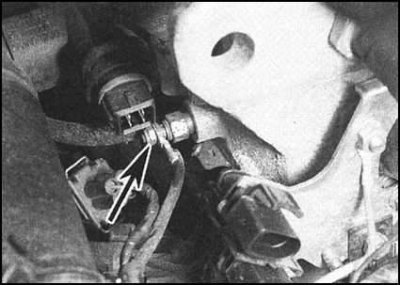
6. If there is no supply voltage, you should check the condition of the system relay and the power supply wire to the spark plugs.
7. To locate a faulty glow plug, disconnect the negative cable from the battery.
8. Refer to the next subsection and disconnect the power supply wire from the glow plug terminal. Now measure the electrical resistance between the glow plug terminal and ground. A reading of more than a few ohms indicates a faulty glow plug.
9. If you have a suitable ammeter handy, connect it between the glow plug and its power supply wire. Temporarily connect the battery.
10. If possible, start the engine in the normal way and, leaving it running at idle speed, take a reading (approximately 50% initial amplitude jump should be ignored). Compare the measurement result with the requirements of the Specifications. The nominal value for each of the spark plugs is a current of 8 A, so a reading of 32 A indicates that all four spark plugs are functioning properly, 24 A indicates that one of the spark plugs is out of order, 16 A indicates that two spark plugs are out of order, etc.
11. Finally, remove the glow plugs and visually inspect them.
Removal
1. If you have not already done so, disconnect the negative battery cable.
2. Remove the nuts and washers from the spark plug terminal bus. Remove the power supply bus/wire.
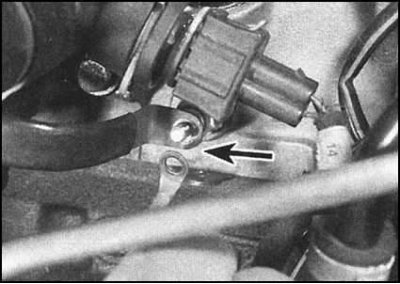
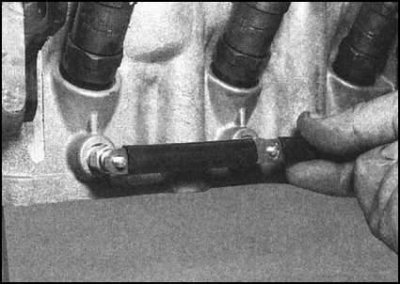
(Material is available on the website: skodabook)
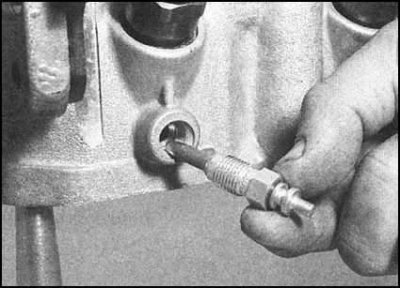
3. Remove the spark plugs.
4. Check the working elements of the spark plugs for signs of damage. Severe burnout of the dipstick usually indicates a malfunction of the corresponding fuel injection nozzle.
Attention! Never check the correct functioning of spark plugs removed from the engine - a working spark plug will heat up very quickly!
Installation
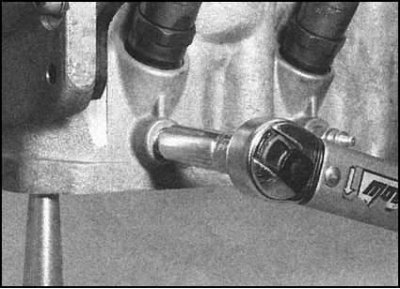
Installation is performed in the reverse order. The spark plugs must be tightened strictly with the required force. Do not forget to connect the wiring to the coolant temperature sensor (CTS).