



Layout diagram of the main components of the lubrication system
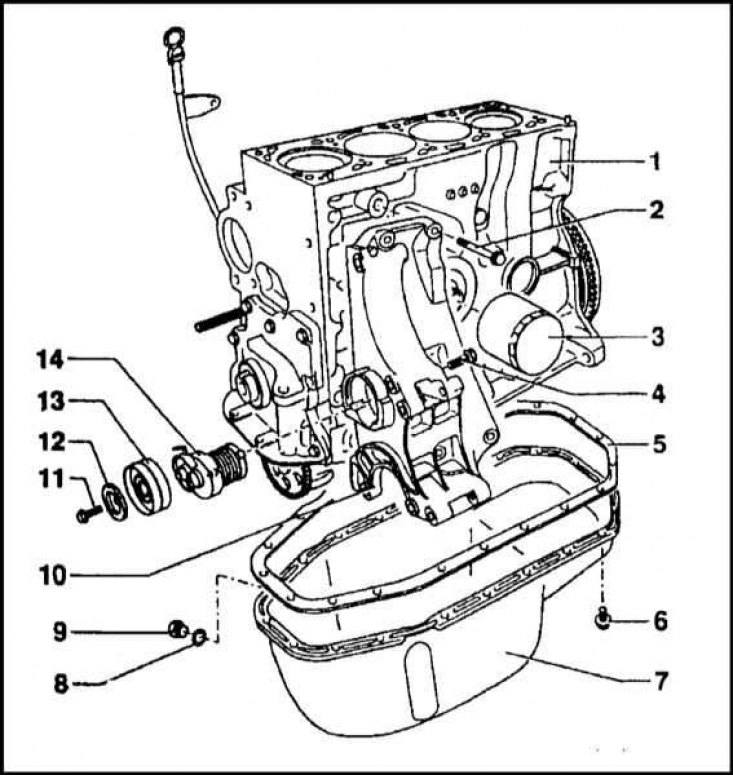
1 - Cylinder block; 2 - Bolt; 3 - Oil filter; 4 - Bolt; 5 - Sealing gasket; 6 - Bolt; 7 - Oil pan; 8 - Sealing gasket; 9 - Drain plug; 10 - Generator and steering pump bracket; 11 - Bolt; 12 - Washer; 13 - Roller; 14 - Tensioner
Oil pump components
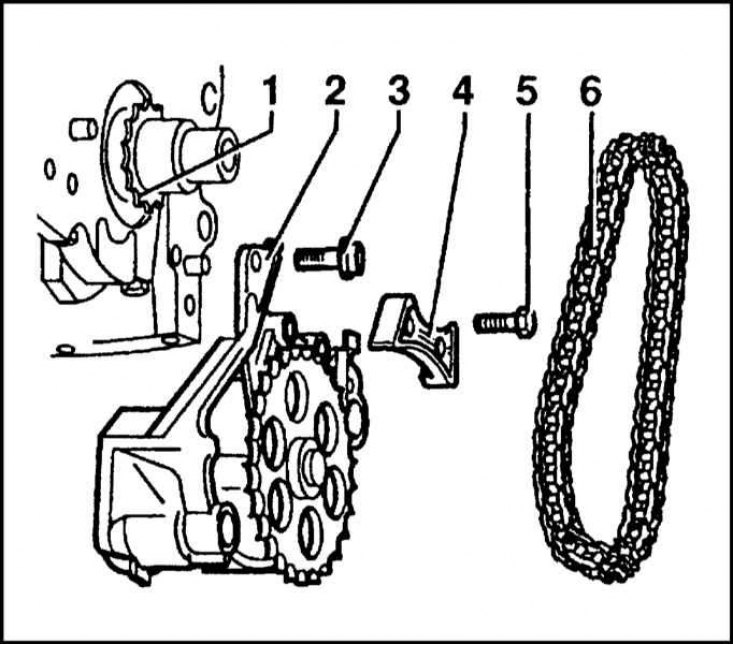
1 - Crankshaft gear; 2 - Oil pump; 3 - Mounting bolts; 4 - Guide bar (not provided on all models); 5 - Guide bar mounting bolts; 6 - Drive chain
Lubrication system - general information
Lubrication system - combined, with a full-flow oil filter. The total amount of oil is 3.5 l. The layout of the main components of the lubrication system is shown in the accompanying illustration.
The filler neck in the cylinder head cover is closed with a plug equipped with a sealing ring. The oil pan is cast from an aluminum alloy and is connected to the cylinder block through a sealing gasket. The pan is fastened to the block by twenty bolts. The drain plug is machined in the form of a hexagon for a 19 mm key.
The oil pressure switch sensor is installed in the cylinder head. The oil pressure indicator lamp on the instrument panel switches off when the pressure reaches 0.035 MPa. When checking the pressure in the system, it should not be lower than 0.2 MPa at an engine speed of 2000 rpm and an oil temperature of +80°C.
The gear oil pump is installed in the front part of the engine in the sump of its crankcase. An oil intake with a mesh filter is attached to the pump body. A pressure reducing valve is mounted in the pump body, which operates at a pressure of 0.4÷0.5 MPa. In case of failure, the oil pump is replaced as an assembly.
The replacement of the non-separable full-flow oil filter is carried out simultaneously with the change of engine oil.
Removal
1. Remove the oil pan (see section Removal and installation the engine oil pan).
2. Remove the front crankshaft oil seal with the housing (see section Replacing crankshaft seals).
3. Unscrew the bolts securing the pump to the cylinder block.
4. Unscrew the bolts securing the oil pickup pipe to the cylinder block bracket.
5. Remove the drive gear from the pump sprocket, then remove the pump assembly with the oil intake from the engine.
Examination
1. Loosen the screws and the connecting flange and remove the oil suction pipe and the pump cover. If so equipped, remove the sealing ring.
2. Clean the pump thoroughly and check the condition of its gear teeth.
3. Assess the degree of wear of the drive chain. If there is significant play in the links and the rollers are loose, replace the chain.
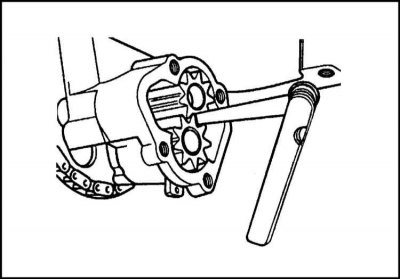
4. Using a blade-type feeler gauge, check the amount of play in the pump gear engagement.
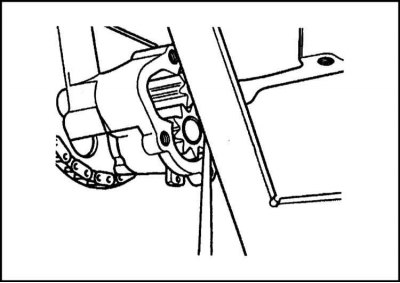
5. Check the axial clearance of the gears - use a flatness gauge (steel edge) rulers and a blade-type feeler gauge.
6. Compare the test results with the requirements of the Specifications. A worn pump must be replaced.
Installation
1. Install the oil intake pipe on the pump (don't forget to replace the o-ring). Tighten the mounting bolts to the required torque.
2. Place the chain on the pump drive sprocket and thread it onto the crankshaft sprocket.
3. Screw in the pump mounting bolts to the engine block and tighten them only by hand for now.
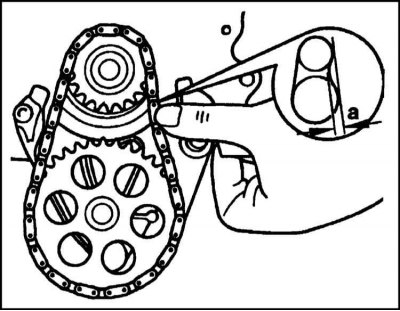
4. Tighten the chain by moving the pump in the bolt holes. Check the correct tension force by the amount of chain deflection when pressing on it with your finger in the area in the middle between the sprockets. After adjusting the chain tension, finally tighten the pump mounting bolts.
5. Attach the oil intake pipe to the engine crankcase bracket.
6. Install the front crankshaft oil seal with the housing in place (replace the oil seal and casing gasket) - see Section Replacing crankshaft seals.
7. Install the oil pan (see section Removal and installation the engine oil pan).