



Fuel injection system components for 1.0L, 37 kW and 1.4L, 50 kW petrol engines
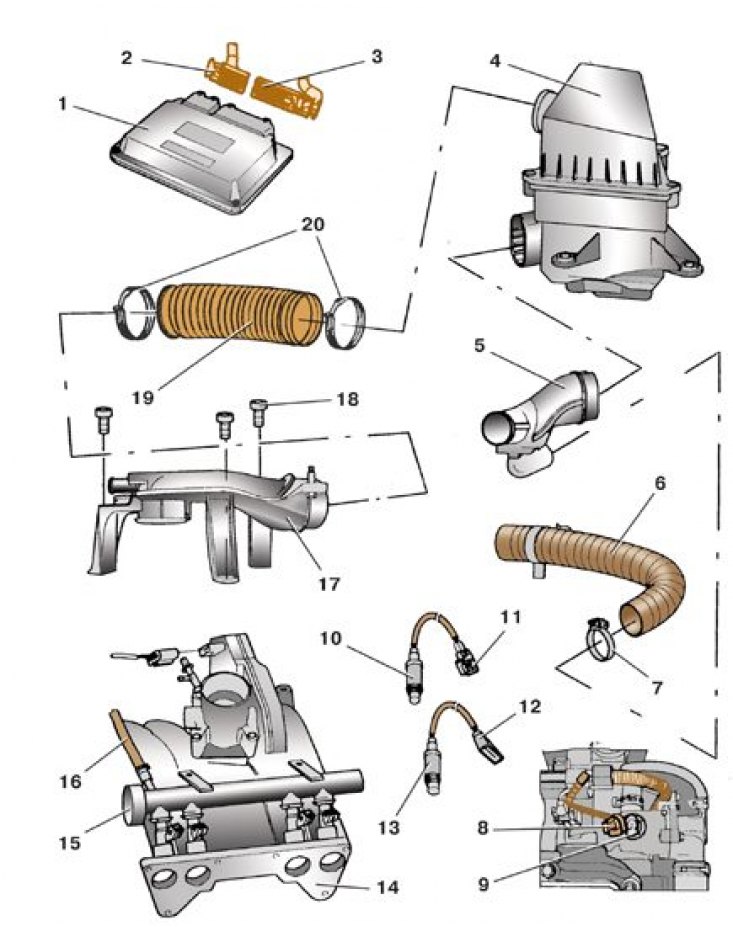
1 – engine control unit; 2 – 40-pin connector block; 3 – 81-pin connector block; 4 – air filter; 5 – air filter inlet pipe; 6 – warm air supply hose; 7 – screw clamp; 8 – sensor connection block; 9 – coolant temperature sensor; 10 – lambda probe (oxygen sensor); 11 – lambda probe connector; 12 – connecting block of the second lambda probe; 13 – second lambda probe (for engines that meet Euro-4 standards); 14 – engine intake pipe; 15 – fuel rail; 16 – fuel line; 17 – inlet pipe; 18 – branch pipe mounting bolt; 19 – air filter hose; 20 – spring clamps
Fuel rail with injectors for 1.0 l, 37 kW and 1.4 l, 50 kW engines
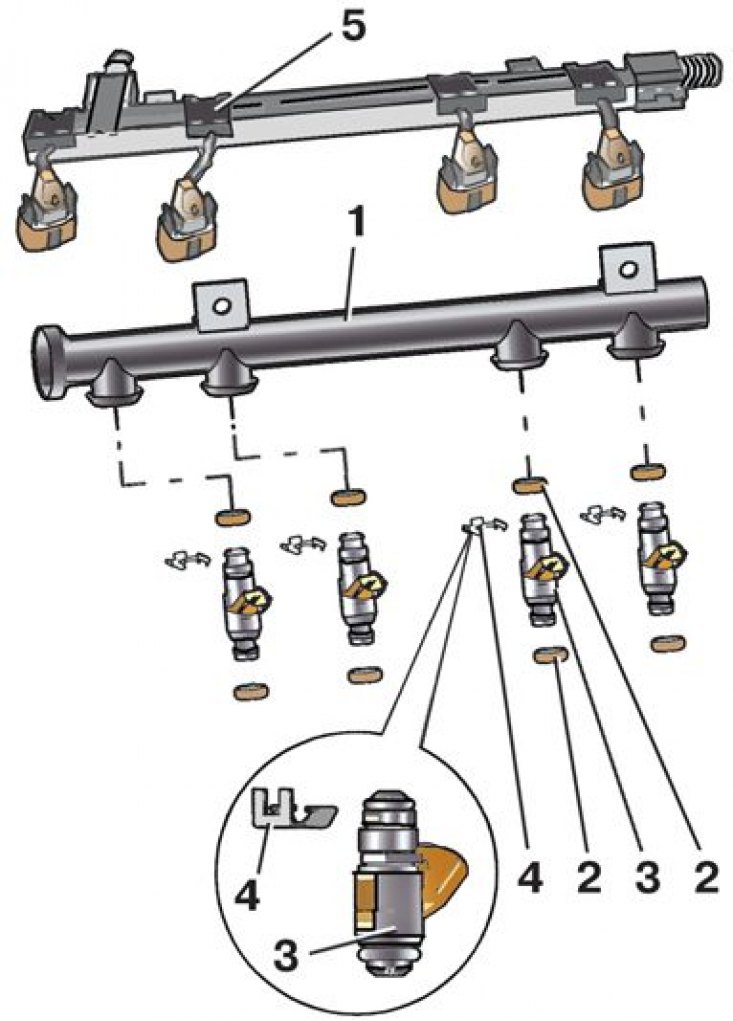
1 – fuel rail; 2 – injector sealing ring; 3 – nozzle; 4 – injector retainer; 5 – wire holder
1. Disconnect the wire from the "-" terminal of the battery.
2. Remove the upper engine cover (see subsection 2.1).
3. Unscrew bolts 18 and remove inlet pipe 17 from the engine inlet pipe.
4. Remove holder 5 (see the figure Fuel rail with injectors for 1.0 l, 37 kW and 1.4 l, 50 kW engines) injector wires, disconnecting the pads from the injectors and from the wiring harness.
5. Disconnect fuel line 16 (see figure: Fuel injection system parts for 1.0L, 37 kW and 1.4L, 50 kW petrol engines) from fuel rail 15.
6. Loosen the mounting bolts and pull the fuel rail 1 (see the figure Fuel rail with injectors for 1.0 l, 37 kW and 1.4 l, 50 kW engines) along the axes of the injectors, remove it. In this case, the injectors should come out of the holes in the engine intake pipe and remain on the ramp. If any injector remains in the intake pipe, its sealing rings 2 and retainer 4 must be replaced.
7. Remove the 4 injector retainers.
8. Pull and remove injectors 3 from fuel rail 1.
9. Replace the 4 injector retainers if you find any cracks on them.
10. Replace the 2 injector sealing rings that are torn, cracked or have lost elasticity.
11. Install the injectors in reverse order, lubricating their sealing rings with gasoline.