



Note: The material in this Section applies to non-ABS models only.
Examination
1. On models not equipped with ABS, the hydraulic circuit of each of the rear brake mechanisms is equipped with a pressure regulator valve, which prevents premature locking of the rear wheels of the car during sudden braking. Depending on the model configuration, either one regulator valve sensitive to the degree of vehicle load or two valves sensitive to changes in hydraulic pressure can be used.
2. Pressure-sensitive control valves are screwed directly into the outlet fittings of the rear brakes of the brake master cylinder. The design of the brake master cylinder ensures independent operation of two hydraulic circuits - primary and secondary, each of which acts on one front and one rear (diagonally located) rear wheels. The control valves act as limiters, preventing the hydraulic pressure acting on the rear brake mechanisms from rising above a certain limit. With this design, the braking force developed by the front wheels is always greater than that developed by the rear wheels.
3. The only valve-regulator sensitive to the degree of vehicle loading is installed on the bottom of the vehicle, in its rear part and is connected to the rear suspension bridge by a special spring. Based on the displacement of the bridge relative to the bottom, the valve determines the level of the weight load falling on the rear wheels and accordingly adjusts the value of the maximum permissible hydraulic pressure developed in the rear brake circuits.
4. The proper functioning of the control valves is checked using special diagnostic equipment and the car should be taken to a service station for this purpose. Restorative repair of failed control valves is not possible, and therefore defective components must be replaced as a whole.
Removal
Pressure sensitive control valves
Note: Before you begin the procedure, please read the warning text at the beginning of the Section System design, description of individual units and mechanisms.
1. To minimize hydraulic fluid loss, remove the master cylinder reservoir cap, place a piece of plastic film underneath it and screw it back on tightly.
2. Carefully wipe the regulator valve to be removed and the surface of the master cylinder around it.
3. Loosen the union nut, disconnect the brake pipe, then unscrew the regulator valve from the master cylinder. Remove and discard the old sealing washer, as it must be replaced during assembly. Immediately plug the open ends of the pipe and nipple to minimize hydraulic fluid loss and prevent dirt from entering the system. Wash off any spilled fluid immediately with plenty of cold water.
Load Sensitive Regulator Valve
1. Support the front wheels with chocks, then jack up the rear of the car and place it on supports.
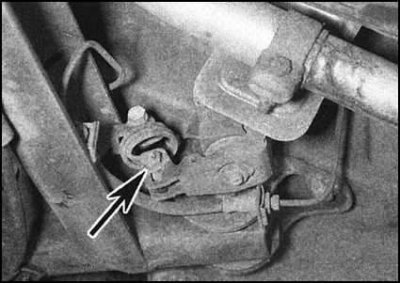
2. Mark the position of the valve spring bolt head in relation to the lever. Loosen the nut and remove the bolt securing the spring to the valve. Remove the washers.
3. Thoroughly wipe the brake line fittings and the surrounding surfaces, place a drain container under the fitting connections. To avoid confusion, mark the valve and the tubes connected to it.
4. Loosen the union nuts and disconnect the brake pipes from the valve. Immediately plug the open ends of the pipes and the holes in the valve to minimize the loss of hydraulic fluid and to prevent dirt from entering the system. Immediately wash off any spilled fluid with plenty of cold water.
5. Remove the mounting screws and remove the valve assembly from the support bracket.
Installation
Pressure sensitive control valves
1. Clean the threads of the union on the master cylinder and the valve. Replace the sealing washers. Screw the valve onto the union and tighten it securely.
2. Connect the brake pipe to the valve, firmly tightening the union nut.
3. Remove the plastic film from under the brake master cylinder reservoir cap and completely bleed the brake system (see section Bleeding the hydraulic system).
Load Sensitive Regulator Valve
1. Place the valve assembly in its proper place and secure it firmly with screws.
2. Connect the brake lines to their fittings on the valve (check with the markings applied during dismantling) and tighten the union nuts securely.
3. Install the valve spring bolt, making sure the washers are positioned correctly. Screw on the nut. Align the marks made when removing the bolt and tighten the nut to the required torque.
4. Remove the plastic film from under the brake master cylinder reservoir cap and completely bleed the brake system (see section Bleeding the hydraulic system). The authors of this Manual recommend that you take the vehicle to a service station to check the proper functioning of the regulator valve.