



Examination
1. To check the proper functioning of the brake booster, press the foot brake pedal several times to release the vacuum, then, holding the pedal down, start the engine. Almost immediately after starting the engine, as soon as the necessary vacuum is created in the intake manifold, the pedal should noticeably "fall through". Let the engine idle for at least two minutes, then turn it off. Now with each subsequent press, the pedal should become tighter and tighter with a simultaneous reduction in travel.
2. If the vacuum booster does not provide the operating mode described above, first of all, you should check the condition of its check valve (see section Removal, checking the condition and installing the brake booster check valve with a hose).
3. If the check valve is OK, then there is an internal defect in the servo drive. Restorative repair of the failed vacuum booster is not possible, and therefore the faulty unit must be replaced.
Removal
Note: New servo assembly mounting nuts will be required during assembly.
1. Remove the GTZ (see section Removal, major repair and installation of the master brake cylinder (MBC)). On ABS equipped models, move the hydraulic modulator away from the servo unit and secure it there, being careful not to overload the brake line tubes.
2. Carefully release the vacuum hose from the servo drive sealing bushing. Check the bushing condition, replace the defective one.
3. On right-hand drive models, working in the passenger footwell, remove the retainer and trim cover from the left pedal assembly bracket.
Note: To release the retainer, pull out the center part. Now release the fasteners of the carpet and bend the edge of the carpet, providing access to the lower nuts of the pedal bracket. Loosen the nuts of the left bracket. In the engine compartment, remove the mounting plate from the bulkhead.
4. On all models, remove the retainer and release the brake booster pushrod end cap from the foot brake pedal/pedal shaft.
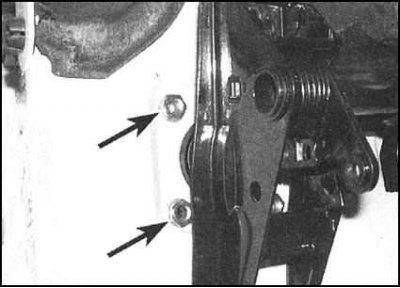
5. Loosen the servo unit mounting nuts, remove the washers, then release the rubber protective boot with the foam cover (if such is provided) from the back of the block.
Note: During assembly, nuts must be replaced without fail.
6. Go back to the engine compartment and remove the brake booster servo unit from its place on the bulkhead. Remove the gasket together with the unit. Check the condition of the gasket, and replace it if any defects are found. A failed booster cannot be repaired and must also be replaced.
Installation
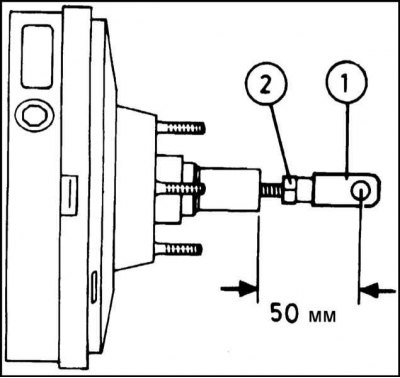
1. Before installing the block, make sure that the length of the push rod protrusion of its piston is correct; if necessary, adjust the position of the mounting tip on the rod accordingly. After completing the adjustment, do not forget to tighten the lock nut.
2. Thoroughly clean all mating surfaces, then install a new sealing gasket onto the rear of the servo unit. Position the unit into its original location on the engine compartment bulkhead.
3. From inside the vehicle, install the foam sealing cap or protective cover onto the rear of the unit, then properly connect the push rod to the brake pedal/pedal shaft.
4. Install the washers, screw on the new block mounting nuts and tighten them to the required torque.
5. Align the stem tip with the pedal and secure it with the clamp.
6. On right-hand drive models, have an assistant hold the lower mounting plate and install the pedal assembly bracket mounting nuts until they are securely tightened. Straighten the carpet and secure the edge with clips.
7. In the engine compartment, check the sealing bushing for proper fit in the block, then thread the vacuum hose through it.
8. Reinstall the GTZ (see section Removal, major repair and installation of the master brake cylinder (MBC)).
9. Finally, check the proper functioning of the brake system.