
Company vehicles Hyundai Company vehicles Kia Company vehicles Lada Company vehicles Mazda Company vehicles Mercedes-Benz Company vehicles Opel Company vehicles Mitsubishi
English Русский
Български
Беларускі
Український
Српски
Hrvatski
Română
Polski
Slovenský
Magyar
Articles   
Bookmark Contacts Sitemap
SkodaBook.ru


Fabia Rapid Octavia Superb Kodiaq Yeti Others
Favorit (1987-1994) Felicia (1994-2001)

Rear Brake Cylinder — Removal, Overhaul and Installation (Skoda Favorit)

  • Main
  • Skoda
  • Favorit (1987-1994)
  • Chassis (running gear)
  • Brake system
  • Rear Brake Cylinder — Removal, Overhaul and Installation
0
Contents: Removal ⬇ Bulkhead ⬇ Installation ⬇
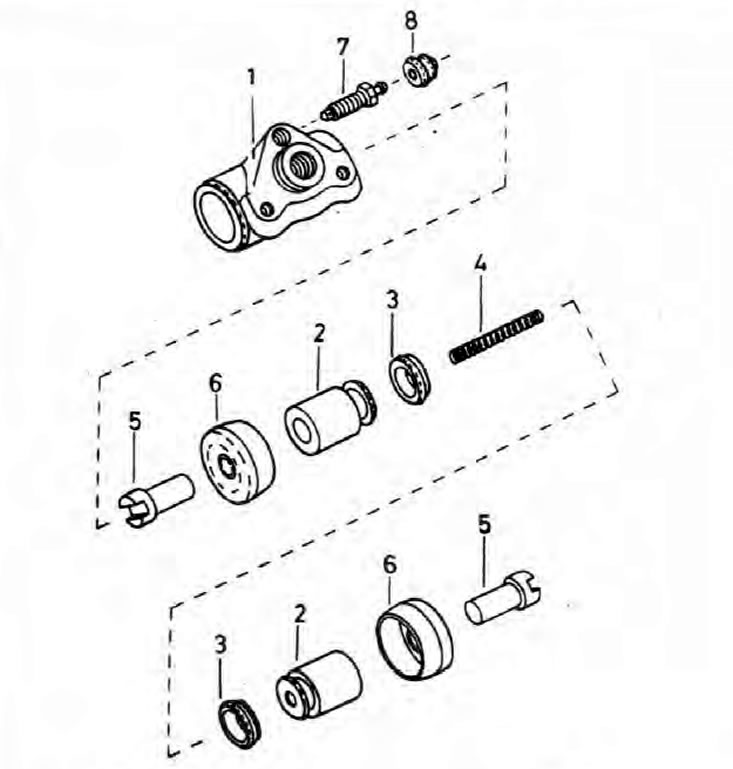
Fig. 9.15. Rear brake cylinder components

Fig. 9.15. Rear brake cylinder components

1. Cylinder; 2. Piston; 3. Piston seal; 4. Spring; 5. Plunger; 6. Rubber protective cover; 7. Bleed nipple; 8. Dust cap.
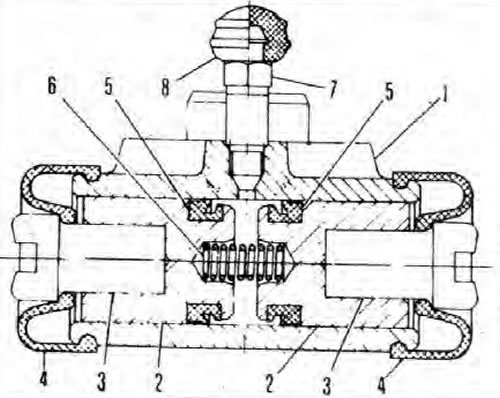

Fig. 9.16. Sectional view of rear brake cylinder

Fig. 9.16. Sectional view of rear brake cylinder

1. Cylinder; 2. Piston; 3. Plunger; 4. Rubber protective cover; 5. Piston seal; 6. Spring; 7. Bleed nipple; 8. Dust cap.


Note: Before you begin, please refer to the Note given at the beginning Chapters 9, and the Warning given at the beginning Chapters 21 (regarding asbestos dust).


Removal


1. Remove the brake drum (see Chapter 20).

2. Remove the brake pads (paragraphs 10-14 of Chapter 21).

(View the original on the website skodabook.ru)


3. Minimize fluid loss by removing the master cylinder reservoir cap and re-tightening it with a piece of polyethylene placed under the cap (do not damage the level sensor). This will create a tight seal and prevent fluid from escaping. Alternatively, clamp the hose with a clamp, vice or similar tool, or plug the metal brake pipe immediately after separating it from the cylinder (see Chapter 10). Unscrew the bleed nipple and plug both holes of the cylinder; work very carefully to prevent foreign particles from entering the system.

4. Remove the cylinder from the drum brake support shield (see photo).
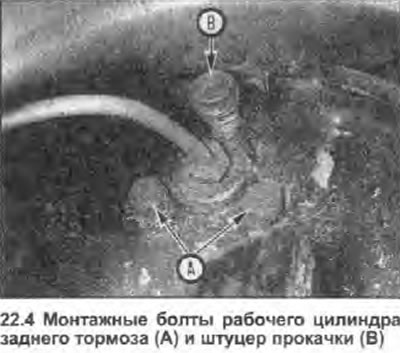
4. Remove the cylinder from the drum brake…


Bulkhead


Note: Before you start overhauling the cylinder, check the availability of the necessary components and their prices, compare them with the price of a new or already rebuilt cylinder in a workshop, and only then decide whether overhaul is advisable.


5. Remove the wheel cylinder and clean it completely.

6. Clamp the brake cylinder in a vice with soft-grip jaws, then remove the rubber protective caps and plungers. Remove the piston assemblies and spring.

7. Clean all components thoroughly. Use only methyl or isopropyl alcohol, or clean brake fluid. Never use mineral solvents such as gasoline or kerosene for this purpose - they will damage the rubber components of the brake hydraulic system. Dry the components using compressed air or a clean, dense (lint-free) cloth.


8. Inspect all components and replace any that are worn or damaged. Pay particular attention to the cylinder bore and pistons - the complete cylinder assembly should be replaced if they are scratched, worn or corroded. If there is any doubt about the condition of the assembly or any of its components, replace them accordingly. Ensure that the cylinder inlet and bleeder port are not clogged.

9. If the caliper is suitable for further use, purchase the components required for its assembly. Be sure to replace all rubber seals, cuffs and covers, as well as the dust cap - they should not be reused.

10. Soak the pistons and new seals in clean brake fluid. Lubricate the inner walls of the cylinder with clean fluid.

11. Install the new seals into the piston grooves without using any tools. Make sure that all components are installed in the correct order and orientation.

12. Insert the pistons into the caliper cylinder using a twisting motion to prevent them from getting stuck due to the sealing lips. Before installing the new rubber protective caps and plungers, apply a small amount of rubber component lubricant to each of the pistons.

13. Install the wheel cylinder.

Installation


14. Install in the reverse order of removal, paying attention to the following:
  • a) Tighten the cylinder mounting bolts to the specified tightening torque Specifications.
  • b) Install the bleed nipple, then connect the metal brake pipe to the cylinder (see Chapter 10) and install the brake shoes and drum (Chapters 21 and 20).
  • c) Bleed the system (see Chapter 9), then check its joints for leaks by asking an assistant to press the brake pedal all the way down. Rinse off any spilled fluid and recheck the system for leaks.
This article is available at russian, bulgarian, belarusian, ukrainian, serbian, croatian, romanian, polish, slovak, hungarian
Article verified: Eleonora Afanasyeva
Share with friends:
◀ Previous
Skoda Favorit: Brake system
Next ►

Rear Brake Pads — Inspection and Replacement
Rear Brake Drum — Removal, Inspection and Installation
Brake Pressure Regulating Valve (Pickup Models) — Removal, Overhaul and…
Brake Pressure Regulating Valve (Pickup Models) — Checking Serviceability
Front Brake Disc Guard — Removal and Installation
Drum Brake Support Shield — Removal and Installation
Handbrake lever — removal and installation
Handbrake cables — removal, inspection and installation
Brake light switch — adjustment
Brake system warning lights, sensors and switches
Read similar articles on other Skoda models

➧ Replacing the rear wheel drum brake cylinder Skoda Fabia 1 (1999-2007)
➧ Checking the tightness of the master brake cylinder Skoda Rapid 1 (2012-2022)
➧ Brake linings of the rear disc brake mechanism Skoda Octavia 1 (1996-2004)
➧ Repair and maintenance of rear brake mechanisms Skoda Superb 2 (2008-2015)
➧ Checking the tightness of the master brake cylinder Skoda Kodiaq 1 (2016-2024)
➧ Repair and maintenance of rear brake mechanisms Skoda Yeti (2009-2017)
Link to this article in various formats
Reviews and comments of visitors
No comments yet


Add two numbers: 11 + 23


Favorit (1987-1994) 
  • General information
  • Maintenance
  • Troubleshooting
  • Power unit
  • Engine in car
  • Engine overhaul
  • Cooling and heating
  • Fuel and exhaust system
  • Fuel injection system
  • Ignition system
  • Transmission
  • Clutch
  • Manual gearbox
  • Drive shafts
  • Chassis (running gear)
  • Brake system
  • Car suspension
  • Steering
  • Body and interior
  • Exterior (external elements)
  • Interior (salon)
  • Electrical equipment
  • Equipment and devices
  • Power devices
  • Electrical circuits
Felicia (1994-2001) 
  • General information
  • Introduction to guide
  • User manual
  • Maintenance (petrol)
  • Maintenance (diesel)
  • Power unit
  • Petrol engine 1.3 l
  • Petrol engine 1.6 l
  • Diesel engine
  • Engine overhaul
  • Cooling system
  • Fuel system (carburetor)
  • Central injection (SPFI)
  • Multipoint injection (MPFI)
  • Diesel power system
  • Decreased toxicity
  • Engine electrics
  • Transmission
  • Clutch
  • Car gearbox
  • Drive shafts
  • Chassis (running gear)
  • Brake system
  • Car suspension
  • Steering
  • Body and interior
  • Exterior (external elements)
  • Interior (salon)
  • Doors, locks and windows
  • Electrical equipment
  • Equipment and devices
  • Headlights and lighting
  • Electrical circuits
SkodaBook.ru © 2018–2026 | Mobile version | Articles on Skoda | Sitemap EN BG BY UA RS HR RO PL SK HU | Feedback | Site search | Bookmark
Fabia 1 (1999-2007) | Fabia 2 (2007-2014) | Rapid 1 (2012-2022) | Octavia 1 (1996-2004) | Octavia 3 (2013-2019) | Superb 2 (2008-2015) | Kodiaq 1 (2016-2024) | Yeti (2009-2017) | Favorit (1987-1994) | Felicia (1994-2001) |
By continuing to use the site, you agree to the use of cookies.